
Indiana Accredited Horticulture Initial Practice Exam
$69.00
- Buy to unlock unlimited access to all Quiz questions and Answers in this Quiz.
- After purchase you can print a PDF of the whole quiz at any point. The PDF will contain the questions and the correct answers.
About this Exam
The Indiana Accredited Horticulture Initial Practice Exam is designed for individuals seeking validation or foundational assessment in the diverse world of horticulture within the state. Whether you are looking to enter the green industry, advance your current career, or perhaps need to demonstrate fundamental knowledge for specific professional roles, this practice-oriented exam serves as a valuable resource. It allows candidates to familiarize themselves with the typical scope and depth of knowledge required for recognized horticultural practices and possible subsequent official certifications in Indiana. By engaging with this practice exam, professionals can gauge their readiness, identify knowledge gaps, and confidently approach official accreditation paths, reinforcing their commitment to quality and professionalism in the industry.
Ready to test your knowledge?
Buy Now to Access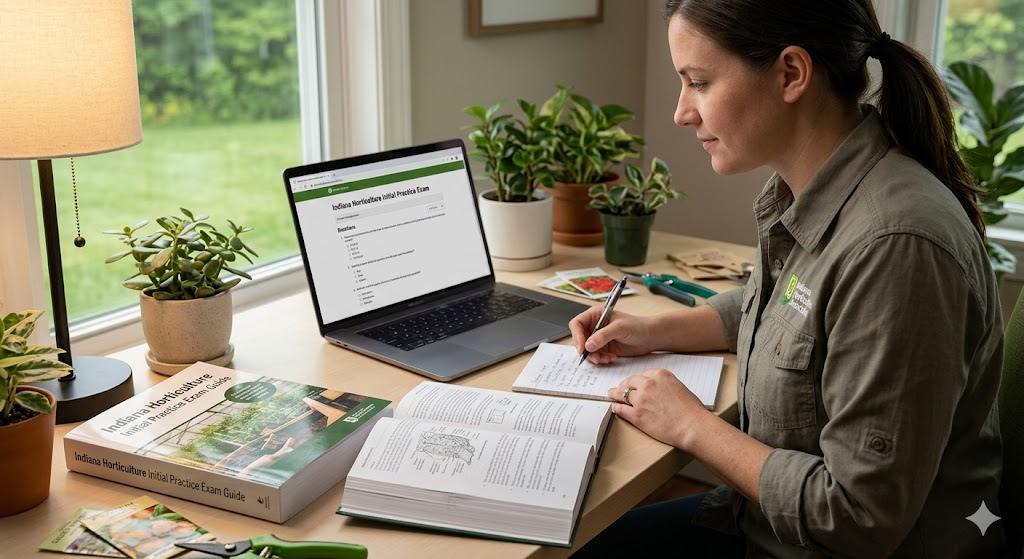
Additional Information
What the Course Entails and Exam Details
The content reflected in the Initial Practice Exam generally encompasses core knowledge areas crucial for effective and sustainable horticultural practices in Indiana. While there might not be a specific "course" purely for the practice exam itself, preparing involves studying fundamental horticultural principles. Key topics likely covered include:
Plant Identification and Science: Recognizing common trees, shrubs, perennials, and annuals (both native and non-native in Indiana), along with understanding basic botany, plant growth, and biology.
Soil Management and Nutrient Care: Comprehending soil properties, pH balance, composting, fertilizer application, and maintaining soil health for optimal plant growth.
Pest and Disease Management: Identifying common horticultural pests and diseases in the region, understanding Integrated Pest Management (IPM) principles, and basic knowledge of safe pesticide handling (though this may be more in-depth for specific pesticide applicator licenses).
Landscaping Principles: Basic understanding of landscape design concepts, plant selection for different environments, planting techniques, and proper maintenance practices like pruning and irrigation.
Turfgrass Management: Fundamentals of establishing and caring for lawns, including proper mowing, watering, and fertilization specific to typical Indiana turfgrass species.
Business Practices and Safety: Basic principles of running a horticulture business, including customer service, communication, ethical considerations, and safety protocols for employees and the public.
Regulations and Environmental Concerns: Awareness of relevant Indiana state regulations and general environmental considerations related to water usage, pesticide application, and plant selection.
What to Expect in the Final Exam
While the Initial Practice Exam itself acts as a simulation and is typically primarily in a written, often multiple-choice format, it is vital to know that final certification exams (which passing this practice material prepares you for) may vary but typically include:
Multiple-Choice Questions: The predominant format, testing knowledge across all key topic areas. Questions may be straightforward recall or require application of concepts.
Comprehensive Testing: The actual final exam will cover all core subjects in significant detail, demanding a thorough understanding rather than just superficial knowledge.
Passing Score Requirements: Candidates must achieve a specific passing percentage, often in the range of 70% or higher, on the final exam to attain official certification.
Time Limits: There will be specific time allocations for completing the exam, requiring effective time management skills during the test.
Examination Rules: Strict adherence to testing protocols is required, potentially including monitoring, secure testing environments (whether online or in-person), and rules regarding permitted materials (often none).
Potential for Practical Components: Depending on the specific type of advanced certification, some exams might include practical demonstrations of skills like plant identification, pruning techniques, or pesticide application equipment use, though the Initial Practice Exam is generally written.
How to Study and Exam Centers
Effectively preparing for both the practice and the potential final exams involves a multi-pronged strategy:
Utilize Official Study Guides and Resources: Seek out any officially recommended study materials or textbooks provided by the relevant Indiana state department, university programs (like Purdue University Horticulture), or the state horticulture association. These are tailored to the exam's specific content.
Review Sample Questions and Take Practice Tests: Directly engaging with sample questions or dedicated practice exams is one of the best ways to understand the exam format and your areas of weakness. Look for resources specific to Indiana horticulture.
Consult Standard Horticulture Textbooks: Supplement official guides with comprehensive horticulture textbooks covering all foundational topics in detail.
Attend Workshops and Seminars: Participate in relevant educational events offered by industry associations or extension services to gain practical knowledge and network with professionals.
Form Study Groups: Collaborating with other aspiring horticulturists can provide motivation, different perspectives, and opportunities for discussion.
Focus on Indiana-Specific Information: Pay close attention to plant varieties, pests, diseases, regulations, and best practices relevant to the Indiana region.
Exam Center Information: For taking the actual accreditation exam (and sometimes even specific practice versions), you can generally expect options such as:
Online Portals: Many exams are now administered through secure online platforms, allowing candidates to take them from home or specified locations, often monitored.
Pearson VUE or similar Testing Centers: Utilizing professional test administration companies for both in-person and remotely proctored online exams is common.
Authorized Schools or Organizations: Some state-accredited horticulture programs, community colleges, or the state department of agriculture itself may serve as physical testing locations or provide the connection to authorized centers.
Check Official Websites: Always consult the official website of the specific Indiana organization responsible for the horticulture accreditation (e.g., the Indiana Department of Agriculture, Purdue Pesticide Programs, or a dedicated state horticulture association) for the most accurate and up-to-date information on exam scheduling, registration, and authorized testing centers.
Job Opportunities from the Course
Gaining foundational horticultural knowledge, validated by the Initial Practice Exam and ultimately by full accreditation, opens doors to a wide range of rewarding career paths. Some specific job titles and opportunities that benefit significantly from or may require such validation include:
Certified Horticulturist
Professional Gardener
Landscape Designer/Architect (with additional education)
Landscape Installation Specialist
Garden Center Manager/Employee
Turfgrass Manager (e.g., for golf courses, parks)
Arborist
Plant Nursery Manager/Employee
Greenhouse Grower
Urban Agriculturist/Urban Farm Manager
Horticulture Educator (with further qualification)
Sales Representative (for horticulture products)
Consultant (for landscape/garden planning)
Pesticide Applicator (with relevant license, often linked to horticultural certification)
By embarking on this journey of learning and validation, you are not only enhancing your expertise but also demonstrating a commitment to professionalism that is highly valued within Indiana's green industry, paving the way for numerous fulfilling career opportunities. Best of luck on your initial practice exam and beyond!
Frequently Asked Questions
Reviews
5.0
Based on 0 reviews
Leave a Review
No reviews yet. Be the first to review!