
Indoor Air sciences CSMI Practice Exam
$69.00
- Buy to unlock unlimited access to all Quiz questions and Answers in this Quiz.
- After purchase you can print a PDF of the whole quiz at any point. The PDF will contain the questions and the correct answers.
About this Exam
The Certified Structural Mold Investigator (CSMI) certification is a highly respected credential designed for professionals specializing in indoor air quality and microbial investigations.
This certification validates your expertise in identifying, sampling, and addressing mold and moisture issues within the built environment.
It is specifically tailored for indoor air quality (IAQ) professionals, home inspectors, industrial hygiene technicians, and environmental consultants who want to prove their proficiency to clients and employers.
Earning the CSMI credential demonstrates that you possess the field experience and technical knowledge required to conduct thorough, scientifically backed investigations of structural mold.
Ready to test your knowledge?
Buy Now to Access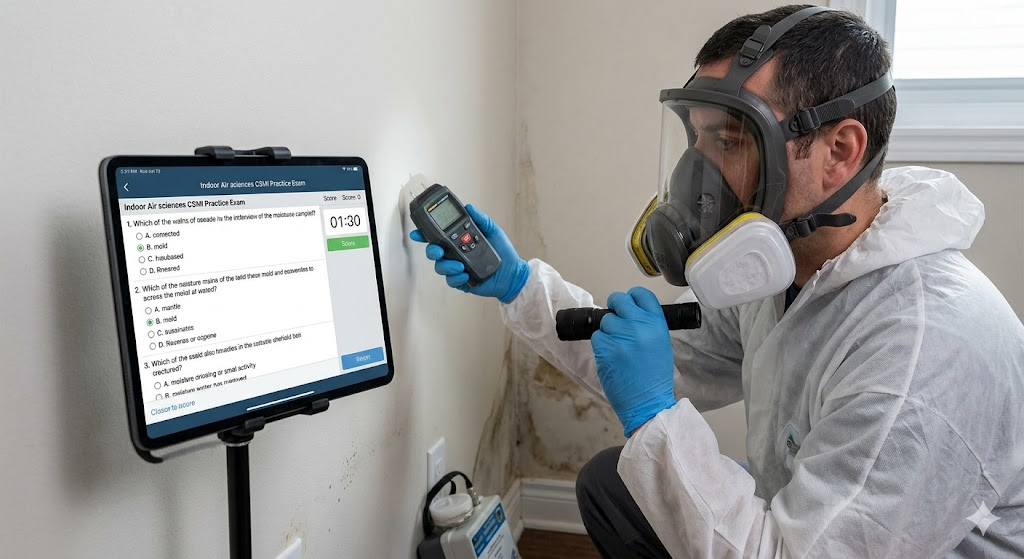
Additional Information
What the Course Entails and Exam Details
Preparing for the CSMI exam requires a deep understanding of several critical scientific and practical disciplines.
The core syllabus heavily focuses on building science, requiring candidates to understand moisture dynamics, building envelopes, and how water intrusion occurs.
You will dive into mold biology and ecology to understand how and why fungal amplification happens indoors.
A major portion of the course entails learning standardized sampling methodologies, including air, surface, and bulk sampling techniques, as well as the limitations of each method.
Furthermore, you will be trained on how to properly interpret laboratory results and translate those findings into actionable, professional reports for your clients.
Lastly, the curriculum covers the operation of HVAC systems and their profound impact on indoor air quality and mold dissemination.
What to Expect in the Final Exam
The final CSMI exam is a rigorous assessment designed to test both your theoretical knowledge and your practical application skills.
The format typically consists of 120 multiple-choice questions that cover all the core domains of indoor air science and mold investigation.
Candidates are generally given a strict time limit of three hours to complete the test, which requires steady pacing and thorough preparation.
To achieve certification, you must secure a passing score of at least 75%.
The exam is conducted under strict closed-book conditions, meaning no reference materials, notes, or unauthorized electronic devices are permitted inside the testing environment.
How to Study and Exam Centers
Success on the CSMI exam relies heavily on a structured and consistent study strategy.
Begin by taking a comprehensive CSMI practice exam to identify your current knowledge gaps and get comfortable with the wording of the questions.
You should intensely review the recommended reference texts provided by the certifying body, paying special attention to industry-standard guidelines published by the EPA, AIHA, and ASHRAE.
Flashcards for sampling protocols and moisture meter calibrations can be incredibly helpful for retaining specific data points.
When you are ready to test, the exam is typically administered through a third-party computer-based testing network, such as Kryterion High-stakes Testing Network.
You can schedule to take your exam at a specialized physical testing center located in various authorized schools and professional facilities worldwide, or you may opt for a secure, remotely proctored online exam from the comfort of your home office.
Job Opportunities from the Course
Achieving the CSMI certification unlocks a variety of lucrative and impactful career paths in the environmental and building sciences sectors.
Indoor Air Quality (IAQ) Consultant: You will work directly with homeowners and commercial property managers to assess and improve the air quality of their buildings.
Certified Mold Inspector: You will be the primary expert called in to investigate suspected mold outbreaks, conduct sampling, and determine the root cause of moisture intrusion.
Environmental Health and Safety (EHS) Specialist: You will help corporations and institutions maintain safe working environments by monitoring biological hazards and ensuring compliance with health regulations.
Industrial Hygiene Technician: Working alongside senior hygienists, you will conduct field tests and gather environmental data for large-scale commercial investigations.
Remediation Project Manager: You will oversee the safe removal of mold and the implementation of moisture control strategies, ensuring contractors follow proper containment and safety protocols.
Building Science Consultant: You will analyze building failures related to moisture and ventilation, providing expert advice on how to repair and prevent future structural degradation.
Frequently Asked Questions
Reviews
5.0
Based on 0 reviews
Leave a Review
No reviews yet. Be the first to review!