
Infantry Squad Leader Weapons and Fire Support Practice Exam
$69.00
- Buy to unlock unlimited access to all Quiz questions and Answers in this Quiz.
- After purchase you can print a PDF of the whole quiz at any point. The PDF will contain the questions and the correct answers.
About this Exam
This study guide is designed for infantry personnel preparing to take the Infantry Squad Leader Weapons and Fire Support Practice Exam. This is a critical assessment for soldiers aiming to validate their technical knowledge and tactical proficiency in the employment of organic weapons systems and the coordination of fire support. The exam is specifically tailored for current or aspiring Infantry Squad Leaders, ensuring they possess the necessary expertise to effectively lead and integrate various combat power assets during tactical operations. It serves as a benchmark for measuring a leader's ability to maximize firepower and synchronize lethal effects on the battlefield.
Ready to test your knowledge?
Buy Now to Access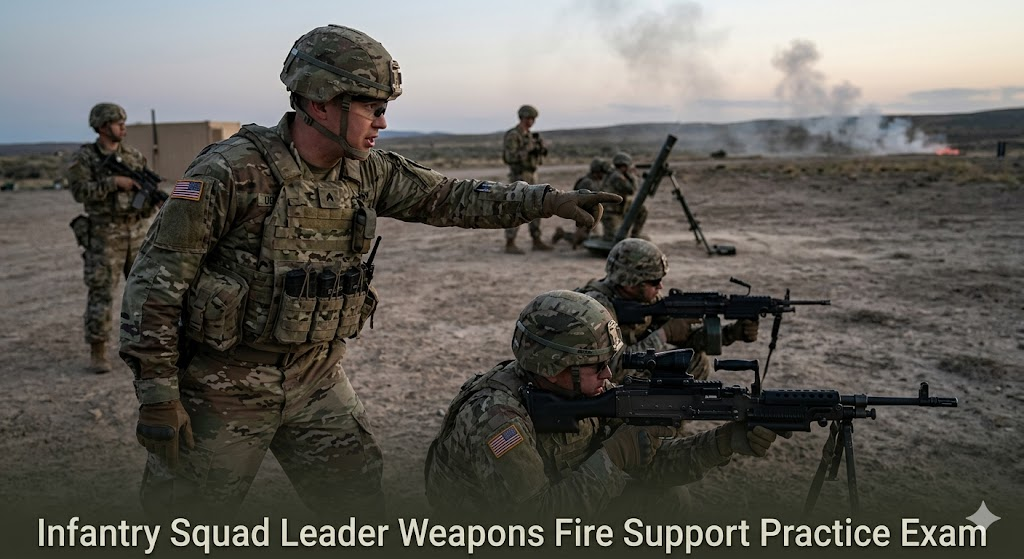
Additional Information
What the Course Entails and Exam Details
The materials associated with this practice exam encompass a wide range of weapon systems and tactical procedures. Subjects covered include the technical specifications, capabilities, and employment doctrines for organic infantry weapons such as the M249 Squad Automatic Weapon (SAW), M240-series medium machine guns, and the 60mm mortar system. Furthermore, it details the principles of fire support planning, requesting, and adjusting indirect fires from artillery, mortars, and naval gunfire. The exam ensures that candidates are proficient in creating range cards, sector sketches, and fire support plans that effectively suppress, neutralize, or destroy enemy forces.
What to Expect in the Final Exam
The actual exam generally consists of multiple-choice questions, scenario-based tactical decision games, and potentially practical application evaluations. Candidates must demonstrate not just memorization of weapon data, but the ability to apply that knowledge in a simulated operational environment. The questions are designed to test the individual’s understanding of effective engagement ranges, ammunition types, and fire control measures. A passing score is typically set to reflect high proficiency (e.g., 80% or above), and strict time limits are enforced to simulate the pressure of making rapid, accurate decisions during combat operations.
How to Study and Exam Centers
Effective preparation requires a combination of self-study and practical application. Candidates should thoroughly review relevant Field Manuals (FMs), Army Techniques Publications (ATPs), and technical manuals (TMs) for each organic weapon system. Utilizing flashcards for technical specifications and practicing the 'Call for Fire' process are highly recommended study strategies. Group study sessions focusing on tactical scenarios can also be beneficial. The practice exam itself is often administered through internal unit training programs or authorized military education centers. Formal certification exams may occur at designated Army training centers or the soldier's home station, depending on the specific program or course requirements.
Job Opportunities from the Course
Mastery of the concepts in this practice exam is essential for advancement within the infantry branch. Successful completion of the actual certification unlocks critical leadership roles and professional development opportunities, including:
Infantry Squad Leader
Weapons Squad Leader
Platoon Sergeant
Weapons Platoon Sergeant
Infantry Instructor
Range Safety Officer (RSO) for crew-served weapons
Subject Matter Expert (SME) in fire support coordination
Frequently Asked Questions
Reviews
5.0
Based on 0 reviews
Leave a Review
No reviews yet. Be the first to review!