
Infection Control and The Dental Radiographer Practice Test
$69.00
- Buy to unlock unlimited access to all Quiz questions and Answers in this Quiz.
- After purchase you can print a PDF of the whole quiz at any point. The PDF will contain the questions and the correct answers.
About this Exam
The core of a safe and effective dental practice rests on two critical pillars: meticulous infection control and precise dental radiography. This Dental Infection Control & Radiography Practice Exam is meticulously designed to serve as a comprehensive self-assessment tool for dental assistants, hygienists, and aspiring dental radiographers. Whether you are aiming for formal certification—such as the DANB RHS (Radiation Health and Safety) or ICE (Infection Control) exams, or a state-specific equivalent—or seeking to ensure your skills are current and compliant, this practice test provides essential preparation. This tool simulates the style and content of a real-world qualification exam, helping you evaluate your competence in the crucial knowledge areas necessary for protecting both patients and dental healthcare personnel.
Ready to test your knowledge?
Buy Now to Access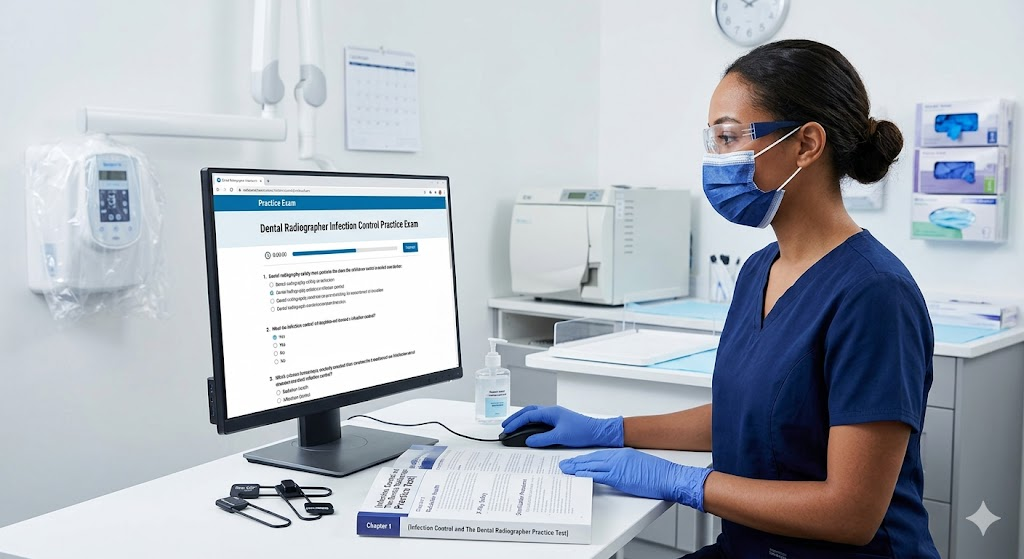
Additional Information
What the Course Entails and Exam Details
This comprehensive practice exam rigorously covers the multi-faceted topics that form the foundation of safe dental practice.
Infection Control Topics: You will be assessed on your knowledge of fundamental asepsis, universal precautions, and personal protective equipment (PPE) protocols. This includes the correct procedures for hand hygiene, surface disinfection, and the management of dental waste. Expect comprehensive questions on instrument sterilization and disinfection processes, from pre-cleaning to sterilization monitoring and the correct operation of autoclaves. Documentation and the fundamentals of occupational health and safety regulations are also crucial aspects covered.
Dental Radiography Topics: The exam evaluates your understanding of radiation safety principles, including the effects of ionizing radiation, patient protection techniques (like lead aprons and fast film), and operator safety protocols. You will be tested on dental x-ray machine components, image receptors, and techniques for both intraoral and extraoral imaging. This includes proper film placement, exposure factors, and processing or digital imaging techniques. The ability to identify common imaging errors and interpret basic anatomical landmarks is also tested, along with patient preparation and management for diagnostic-quality radiographs.
Practice Exam Details: The practice exam itself is typically a computerized, multiple-choice format designed for efficient evaluation of your knowledge across these domains. It provides immediate feedback and often includes explanations for correct and incorrect answers to enhance learning. This format lets you practice in a low-stakes environment while closely mimicking the knowledge requirements of official certification assessments.
What to Expect in the Final Exam
The actual final certification exam you will take, which this practice test prepares you for, typically shares common features with many standardized healthcare assessments.
Format: Most official exams, such as those from DANB, are computerized multiple-choice tests. You will select the best answer from the provided options. Depending on the specific certification (e.g., combining RHS and ICE, or taking them separately), the number of questions can vary, often ranging from 75 to over 100 questions per exam.
Passing Score: The passing standard is determined by the certifying body and is often a scaled score. This means the raw score (number correct) is adjusted for the difficulty of that specific version of the test. While exact percentages can vary, aim for a strong comprehension across all topic areas, as a scaled score comparable to a 75% raw correct rate is common, but you must check the official candidate guide for your specific exam.
Time Limit: Each exam section or combined exam has a specific time limit, commonly 60 to 90 minutes for separate RHS or ICE exams, and more for combined assessments.
Specific Rules: Expect standard test center or proctored exam regulations. You will not be allowed outside resources, mobile devices, or other aids during the test. Verification of identity and a secure environment are strictly maintained.
How to Study and Exam Centers
Preparation is the key to success. Utilize this practice exam as a timed simulation of the real event. Identify your weak areas and dedicate extra study time to those specific concepts.
Study Strategies: Create a structured study plan. Combine the practice test with other high-quality study materials, such as official textbooks, review courses, and flashcards. Focus on understanding the why behind each procedure, not just memorizing answers. Form study groups or seek mentorship from experienced colleagues. Consistent, active review is far more effective than last-minute cramming.
Exam Centers and Portals: Official certification exams are administered at authorized testing centers. For example, DANB partners with Pearson VUE, which operates numerous centers globally. Some states or institutions may manage their own authorized centers or online proctoring portals. Visit the official website of your specific certifying body (e.g., www.danb.org or your state's dental board) to find detailed information on examination requirements, how to apply, and a tool to locate the nearest official testing center or scheduling portal.
Job Opportunities from the Course
A strong grasp of infection control and dental radiography, validated by a practice test and official certification, unlocks diverse and rewarding career paths in the dental field.
Dental Assistant (unregistered or certified): Infection control and basic radiography are core competencies, and a certificate makes you far more competitive and versatile within any dental practice.
Certified Dental Assistant (CDA): This national certification, which often includes the RHS and ICE exams, is a significant career milestone, demonstrating advanced skill and dedication, and usually leads to higher pay and expanded responsibilities.
Dental Hygienist: While licensure involves comprehensive dental hygiene exams, a solid foundation from specific prep on these topics can ease the process and enhance your clinical proficiency and employability.
Dental Radiographer / Specialized Imaging Technician: In some jurisdictions, specialized roles for taking only dental radiographs exist, which strictly require these specific certifications to practice legally.
Dental Office Coordinator / Sterilization Coordinator: Advanced knowledge of infection control protocols can lead to administrative or lead clinical roles overseeing compliance and sterilization processes.
Dental Sales or Education: For those looking beyond clinical practice, expert-level knowledge provides a strong background for working in dental equipment sales, product training, or as an instructor for dental assisting programs.
By validating your expertise in infection control and dental radiography through rigorous practice and official certification, you solidify your role as a vital and competent member of the dental healthcare team.
Frequently Asked Questions
Reviews
5.0
Based on 0 reviews
Leave a Review
No reviews yet. Be the first to review!