
Integrated Personal Fitness Program Design Practice Exam
$69.00
- Buy to unlock unlimited access to all Quiz questions and Answers in this Quiz.
- After purchase you can print a PDF of the whole quiz at any point. The PDF will contain the questions and the correct answers.
About this Exam
Welcome to the definitive study guide for the Integrated Personal Fitness Program Design Practice Exam. This practice exam is specifically designed to validate and enhance the knowledge of aspiring and current fitness professionals who are passionate about the art and science of structured, holistic workout planning. An "integrated" approach is key, moving beyond simple exercise lists to combine diverse elements—from cardiovascular and strength training to flexibility, core, and recovery—into seamless, effective programs. This comprehensive tool is ideal for dedicated students preparing for a rigorous examination, trainers looking to formalize their programming skills, or any professional seeking to deeply understand and master the unique needs of every client. Preparing for this specialized test will sharpen your abilities to design truly personalized and effective fitness journeys.
Ready to test your knowledge?
Buy Now to Access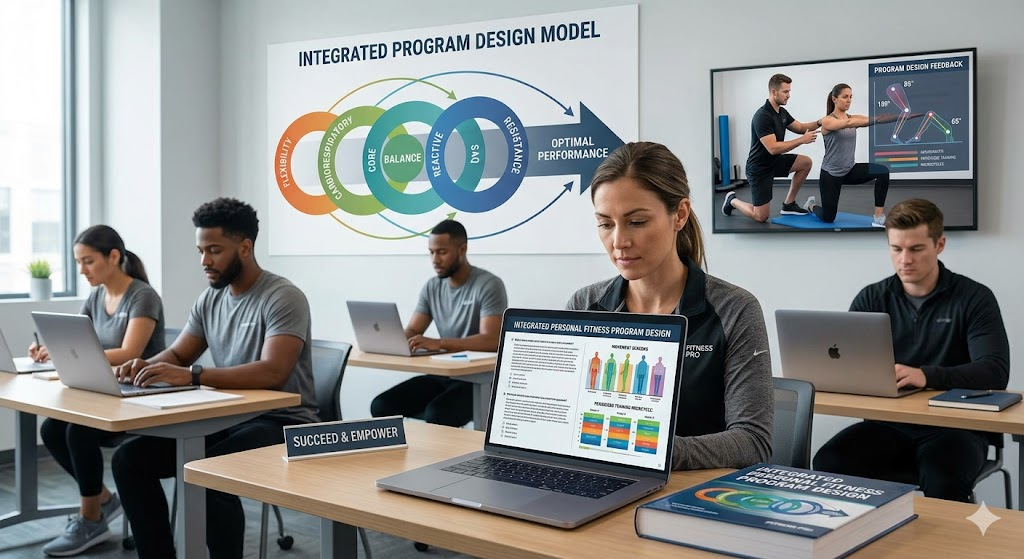
Additional Information
What the Course Entails and Exam Details
This practice exam covers the essential knowledge and practical skills required to design well-rounded, effective, and individualized personal fitness programs. Successful preparation for this exam will immerse you in:
Client Assessment & Needs Analysis: Mastering initial screenings, fitness tests (cardiorespiratory, muscular, movement, body composition), medical history review, goal setting, and behavioral psychology principles.
Exercise Science Principles: In-depth understanding of anatomy, physiology, biomechanics, kinesiology, and the various mechanisms of adaptation to different training modalities.
Program Design Models & Methodologies: Thorough comprehension of various periodization models (linear, undulating, block) and programming variables (frequency, intensity, time, type, volume, rest) for goals like hypertrophy, strength, endurance, and power.
Component Integration: Learning how to seamlessly blend essential training elements – including a proper dynamic warm-up, cardiorespiratory training, resistance training, core & stability work, balance and reactive training, speed/agility/quickness (SAQ) components, and an effective cool-down with various flexibility techniques.
Exercise Selection, Progression, & Regression: The principles for choosing appropriate exercises and strategically adjusting difficulty for different levels and objectives.
Considerations for Special Populations: Adapting program design for varied demographics, including youth, seniors, pregnant individuals, and those with specific health conditions or limitations.
Nutritional Principles for Performance & Wellness: Understanding the role of macronutrients, micronutrients, hydration, and nutrient timing to support fitness goals and overall health.
Professionalism & Legal Ethics: Core concepts of safety, emergency procedures, scope of practice, and professional conduct.
The details of this specific practice exam are structured to mirror typical comprehensive fitness certification exams. It includes a total of 100 multiple-choice questions and provides a time limit of 2 hours (120 minutes). The minimum passing score is typically set at 75%. These elements are indicative and representative of standard requirements for validating complex fitness knowledge, designed to provide a realistic and challenging practice experience.
What to Expect in the Final Exam
While specific exam parameters for this exact practice tool may vary, preparing within this illustrative framework ensures comprehensive readiness. You should anticipate a challenging test designed to evaluate your depth of understanding and practical application skills in program design.
Format: The final exam for this practice tool is comprised of a substantial number of multiple-choice questions. These will not merely require basic recall but will challenge you to apply your knowledge to realistic client scenarios and complex programming decisions.
Example Structure: You can expect multiple sections or domains, each focusing on key areas:
Domain 1 (e.g., 25%): Client Assessment & Goal Setting
Domain 2 (e.g., 35%): Science-Based Program Design & Component Integration
Domain 3 (e.g., 25%): Exercise Techniques, Progressions, & Special Populations
Domain 4 (e.g., 15%): Professional Responsibilities & Ethics
Scenario-Based Questions: A significant portion of the questions will present mock client profiles (e.g., "Designing a 6-week program for a 45-year-old with moderate fitness and time constraints"). You will then select the most appropriate assessment tool, training split, exercise sequence, or progression strategy from the given options.
Passing Requirements & Time Limits: A common passing standard for such thorough assessments is roughly 75%, within a 2 to 3-hour time window, to ensure proficiency and timed application of critical thinking. A clear clock and progression counter will be present throughout, demanding efficient pacing.
Prepare thoroughly by engaging with all course material, case studies, and this comprehensive practice exam itself, treating it with the same seriousness as a final official assessment. Be ready to justify why specific choices in program design are the most optimal based on standard principles.
How to Study and Exam Centers
Success in this comprehensive exam and the subsequent real-world application of program design requires a proactive, strategic study approach. This Integrated Personal Fitness Program Design Practice Exam is a crucial study tool itself.
Actionable Study Strategies:
Engage with Diverse Learning Materials: Use the provided course modules (if any), standard personal training textbooks (e.g., from NASM, ACE, ISSA, NSCA), online resources, and professional development courses focusing on integrated training and advanced program design.
Master Core Concepts with Flashcards: Create digital or physical flashcards for definitions, muscular anatomy, biomechanical principles, acute training variables (sets, reps, rest, intensity for each goal), and standard periodization models.
Implement Integrated Programs in Practice: Don't just read about them – design programs! Create dozens of mock client profiles with varying goals, fitness levels, limitations, and time constraints. Design 1-week, 4-week, and even 3-month macrocycles for these clients, and then have a knowledgeable peer or mentor review them.
Analyze Case Studies: Look for and carefully analyze existing fitness success stories and common client challenge scenarios. This application-level thinking will prepare you for scenario-based exam questions.
Utilize Practice Exams Effectively: Treat every attempt of this practice exam seriously. Complete it under timed conditions, without notes. Then, meticulously review all questions – especially those you answered incorrectly – and understand the correct answer and the rationale for it. Focus your subsequent studies on identified weak areas.
Form a Study Group: Collaborative study can be highly effective. Discussing complex topics, reviewing programs, and quizzing each other on standard knowledge can reinforce learning and uncover different perspectives.
Review Assessments and Data Interpretation: Re-familiarize yourself with the steps and norms for key fitness assessments and practice interpreting the resulting data to inform programming decisions.
Accessing the Exam (Practices and Standard Certification Exams):
Practice Exam Access: This specific Integrated Personal Fitness Program Design Practice Exam is typically accessible as a valuable resource online through the specific course portal, educational website, or authorized learning management system where you accessed it or the related course. You may need specific login credentials and might have access for a limited duration or a certain number of attempts.
Final Accredited Certification Exams: If this practice exam is a component of preparation for a final, officially recognized accredited certification (like from organizations such as NASM, ACE, NSCA, etc.), the procedure for the final official exam will be distinct. Those official, proctored exams are generally taken at authorized physical testing centers (e.g., Pearson VUE, Prometric – which are extensive international networks) OR via live remote online proctoring using a computer, webcam, and microphone. Check the specific guidelines and registration processes provided by the organization whose official certification you are seeking to attain after you have utilized this practice tool to its fullest.
Job Opportunities from the Course
Successfully preparing with the Integrated Personal Fitness Program Design Practice Exam and mastering advanced program design principles opens doors to numerous rewarding and impactful career paths. The ability to design truly personalized and effective programs is a premium skill in high demand across the wellness industry. Consider these dynamic roles and career trajectories:
Certified Personal Trainer (Advanced Focus): Demand for specialized expertise is booming. Highlight your program design mastery to command higher rates and attract motivated clients. You could specialize in niche areas like athletic performance, corrective exercise, weight loss, or general wellness.
Fitness Coach: Focus on holistic wellbeing by integrating nutrition, lifestyle, and movement into programs for long-term behavior change.
Corrective Exercise Specialist: Leverage your deep understanding of assessment and movement mechanics to help clients address imbalances and prevent or recover from injuries.
Sports Performance Coach: Design periodized programs that optimize the speed, power, agility, and endurance of athletes, working with teams or individuals.
Corporate Wellness Program Coordinator: Develop and implement diverse, integrated fitness initiatives for employee health and productivity within a corporate setting.
Online Fitness Coach & Program Designer: Reach a global audience by designing personalized, digital programs and providing ongoing support and accountability remotely. This role offers scalability and flexibility.
Small Group Training Instructor: Plan and lead multi-person integrated workouts, balancing individual needs within a group dynamic.
Facility Director or Manager: Demonstrate the strategic vision and practical knowledge to lead and mentor teams of trainers and manage comprehensive fitness programming within a large gym or studio.
Fitness Content Creator / Educator: Share your knowledge through articles, videos, social media, and workshops, inspiring and educating both clients and peers. You could even develop your own specialized courses.
Strength & Conditioning Coach (School/University/Pro Level): Work with competitive athletic programs to design training that enhances performance and minimizes injury risk.
Mastering integrated program design, with the critical skill validation offered by tools like this practice exam, provides a robust foundation for success in any client-focused fitness role, empowering you to make a meaningful difference in countless lives and build a sustainable, fulfilling career in the dynamic fitness and wellness sector.
Frequently Asked Questions
Reviews
5.0
Based on 0 reviews
Leave a Review
No reviews yet. Be the first to review!