
Interior Design IRC Practice Practice Test
$69.00
- Buy to unlock unlimited access to all Quiz questions and Answers in this Quiz.
- After purchase you can print a PDF of the whole quiz at any point. The PDF will contain the questions and the correct answers.
About this Exam
Welcome to your comprehensive guide for the Interior Design IRC Practice Test!
This essential prep resource is meticulously designed for aspiring and established residential interior designers who aim to demonstrate and reinforce their understanding of crucial building codes. The test focuses specifically on the International Residential Code (IRC), ensuring that your interior design knowledge encompasses essential safety, accessibility, and structural integrity standards for residential spaces.
Whether you are preparing for a specific code certification or seeking to bolster your confidence in applying regulations, this guide will empower your journey toward professional excellence. The test is ideal for interior design students, new graduates, and experienced professionals who want to ensure their designs are not only beautiful but also compliant and safe. Embrace this opportunity to solidify your expertise and take a significant step forward in your interior design career.
Ready to test your knowledge?
Buy Now to Access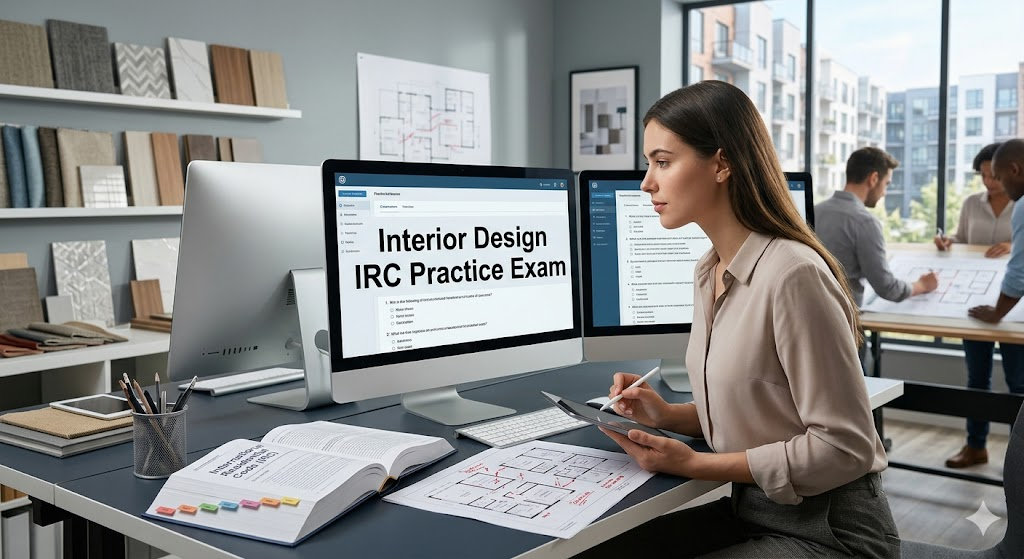
Additional Information
What the Course Entails and Exam Details
While this is a practice test, the actual knowledge and potential certification often relate to courses and exams on mastering the application of the International Residential Code (IRC) for interiors. This practice test mirrors those crucial concepts.
The knowledge required, and the areas this practice test covers, typically include:
IRC Structure and Fundamentals: Understanding the organization of the code and its applicability to residential projects.
Life Safety Systems: Crucial regulations regarding fire safety, smoke detection, means of egress, and accessibility within a residential context.
Building Environment and Services: Navigating codes related to lighting, ventilation, and essential building systems like mechanical, electrical, and plumbing as they intersect with interior design.
Construction Materials and Methods: Familiarity with residential building materials, assemblies, and the requirements for their safe and effective use.
Interior Finishes and Products: Specific rules on flame spread, product safety, and other critical considerations for interior elements.
Preparing for this type of assessment ensures you possess the essential skills to create residential interiors that are not only aesthetically pleasing but also technically sound and fully compliant with current safety regulations.
What to Expect in the Final Exam
Actual code-related exams and the best practice tests are typically well-structured to accurately assess your proficiency. Here's a glimpse of what to expect in a typical professional exam of this nature (or sections within broader design exams like the NCIDQ).
Format: Commonly multiple-choice questions. These may include case-study scenarios, image-based interpretations of code issues, and knowledge-based queries. The questions are designed to test not just recall, but your ability to apply code knowledge in practical situations.
Questions: Expect around 50 to 100 questions.
Time Limit: Usually 60 to 120 minutes.
Passing Score: A passing score is typically determined to ensure minimum competency and safety understanding, often set around 70-75%, but always check with the specific certifying body. Some are scaled scores.
Specific Rules: Most professional, high-stakes exams are proctored (either in-person or online). They strictly forbid referencing full code books or external materials unless specifically stated. Familiarize yourself with all test center or platform rules beforehand to avoid any issues.
This practice test is an invaluable tool for getting accustomed to the question format, time constraints, and types of concepts you will encounter in an actual certification setting. Practice will help you approach your final exam with confidence.
How to Study and Exam Centers
Maximize your chances of success with these proven study strategies.
Obtain and Master the IRC: Secure a current copy of the International Residential Code (IRC), and identify the most critical chapters for residential interiors. Study the code itself! Focus on provisions regarding space planning, life safety, finishes, and systems.
Use Practice Tests Strategically: Take this practice test repeatedly. Review not only your incorrect answers but also the reasoning behind the correct ones. This simulates the exam experience and highlights areas for improvement.
Create Study Aids: Develop flashcards for key definitions, fire safety categories, code numbers, and significant structural principles. Summarize complex code language into user-friendly summaries.
Engage in Scenario-Based Learning: Practice applying the code to different residential interior design scenarios you might encounter.
Join a Study Group or Find a Mentor: Collaborate with peers or seek guidance from experienced designers or code officials to gain deeper insights and alternative perspectives.
Exam Centers and Locations
While this specific practice test is a self-study resource you can access online, actual certification exams, or the full design licensing exams that contain code sections, are administered through various methods.
Online Proctoring Platforms: Many professional certifications utilize secure, remotely proctored online testing platforms.
Authorized Testing Centers: Organizations like Pearson VUE or others have physical centers worldwide where you can take computer-based exams.
Educational Institutions or Associations: Some schools or interior design associations (like ASID, IIDA, or specific state groups) might serve as authorized locations or point to accredited testing bodies like CIDQ (for NCIDQ) for the full professional exam.
Always check the official website of the specific certifying body or exam provider for precise details on how to register and the exact locations for your required exam.
Job Opportunities from the Course
A strong command of the International Residential Code for residential interiors, as demonstrated by potentially passing such a certification or scoring well on practice tests, can open doors to exciting career paths and increase your professional credibility. Consider these potential job opportunities and specialized roles:
Residential Interior Designer
Certified Residential Designer (with relevant overall certification and experience)
Building Code Compliance Specialist / Consultant (for design firms or independent practice)
Plan Reviewer for Residential Interior Projects (potentially working with local jurisdictions)
Residential Interior Design Project Manager
Interior Design Business Owner (leveraging your code expertise as a key differentiator)
Interior Draftsperson / Construction Detail Specialist (residential focus)
Instructor for Building Codes or Interior Design
Interior Finishes Specialist (understanding code implications for material choices)
Your expertise in IRC for interiors is a significant asset that enhances safety and compliance in every project, directly impacting public health, safety, and welfare. Mastering these standards is a powerful step in your professional development.
Get Started with Your Practice Test Now!
Success is within reach. Embrace the challenge, utilize your resources, and approach your study with dedication. We wish you the very best on your journey to mastering the IRC and excelling in your interior design career!
Frequently Asked Questions
Reviews
5.0
Based on 0 reviews
Leave a Review
No reviews yet. Be the first to review!