
Interior Design Systems (INDS) Practice Test
$69.00
- Buy to unlock unlimited access to all Quiz questions and Answers in this Quiz.
- After purchase you can print a PDF of the whole quiz at any point. The PDF will contain the questions and the correct answers.
About this Exam
The Interior Design Systems (INDS) Practice Exam is an essential tool designed for interior design students and professionals seeking to master the technical side of the industry. This exam evaluates a candidate's understanding of complex building systems and how they integrate within an interior space to affect function, safety, and aesthetics. This certification is ideal for those moving beyond pure decoration to a comprehensive understanding of built environments, positioning themselves as technical experts capable of collaborating effectively with architects and engineers.
Ready to test your knowledge?
Buy Now to Access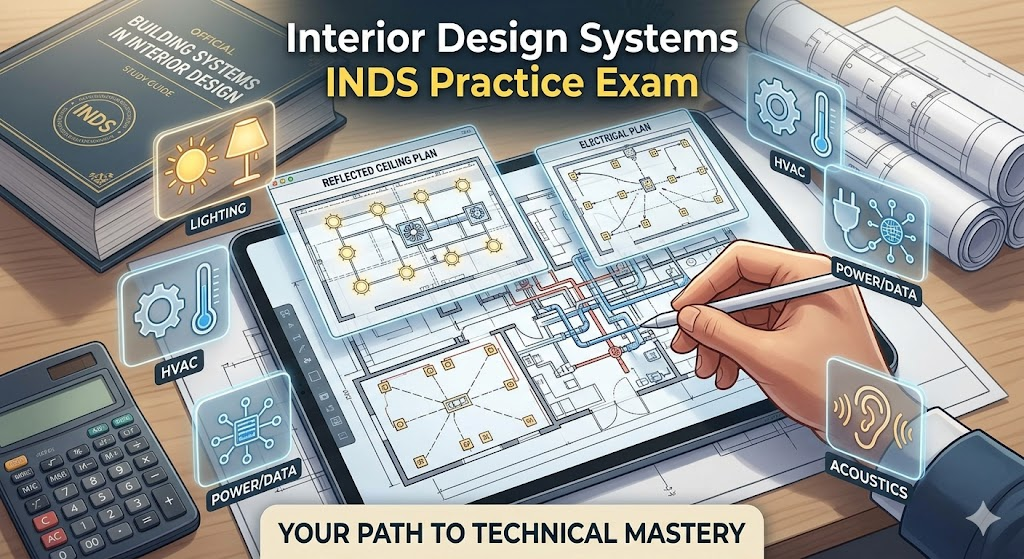
Additional Information
What the Course Entails and Exam Details
The INDS curriculum provides an in-depth examination of the essential physical systems that form the backbone of modern interior spaces. The course covers a wide range of critical technical topics, including:
HVAC systems (heating, ventilation, and air conditioning) for indoor air quality and comfort.
Lighting design, including natural and artificial sources, electrical systems, and controls.
Electrical distribution networks for power and data.
Plumbing networks for residential and commercial applications.
Acoustical performance and sound attenuation in varied environments.
Fire safety systems and relevant building codes.
Integration of smart technologies for security and energy efficiency.
Students will learn how these systems interact with design choices, how to interpret technical drawings, and how to coordinate layouts with other building professionals.
What to Expect in the Final Exam
While specific parameters can vary slightly by testing body, the final INDS exam is a comprehensive assessment that usually takes the form of a rigorous multiple-choice test. Candidates should expect a series of technical questions that require critical thinking to solve real-world design problems, such as determining appropriate lighting levels, placing HVAC diffusers, or ensuring code compliance for a given space. The exam typically includes technical diagram analysis and scenarios assessing the practical application of building systems knowledge. We recommend that students verify exact details such as the number of questions, time limit, and minimum passing score directly with their specific testing provider to be fully prepared.
How to Study and Exam Centers
Effective preparation is key. We suggest a multifaceted approach:
Utilize this INDS Practice Test repeatedly to identify knowledge gaps and get comfortable with the exam format.
Review official textbooks and study guides, focusing on detailed diagrams and technical data.
Study the International Building Code (IBC) and other relevant regulations, as system safety is paramount.
Practice translating architectural and engineering plans to understand how various systems overlap.
Registration and administration are typically handled via specific academic institutions or through large, authorized professional testing networks. You will need to check with your course provider to determine if the exam is proctored in a physical testing center or available via an online portal. Ensure you have the necessary identification and equipment confirmed well in advance of your test date.
Job Opportunities from the Course
A strong grasp of Interior Design Systems unlocks many specialized and lucrative career paths where technical knowledge is a premium. The understanding of systems enables you to work on complex commercial and residential projects that go far beyond aesthetics. Potential job titles include:
Commercial Interior Designer
Specialist in Healthcare Design
Hospitality Interior Designer
Kitchen and Bathroom Design Specialist
Lighting Designer
Acoustical Consultant
Fit-Out Manager
Sustainable Design Consultant
Facilities Manager
Interior Architect/Systems Coordinator
By demonstrating mastery in these technical areas, you will differentiate yourself in a competitive job market and be prepared to take on greater responsibility and leadership roles in your career. Good luck on your path to mastering interior systems!
Frequently Asked Questions
Reviews
5.0
Based on 0 reviews
Leave a Review
No reviews yet. Be the first to review!