
Interior Gas Piping Safety Inspection Manual Practice Test
$69.00
- Buy to unlock unlimited access to all Quiz questions and Answers in this Quiz.
- After purchase you can print a PDF of the whole quiz at any point. The PDF will contain the questions and the correct answers.
About this Exam
The [Interior Gas Piping Safety Inspection Manual Practice Test] is an essential study resource for professionals seeking certification in interior gas piping safety inspection.
This exam is primarily designed for individuals in the plumbing, HVAC, and building inspection trades, as well as property managers responsible for the safety of residential, commercial, and industrial facilities.
Achieving this certification demonstrates a mastery of critical safety codes, standard operating procedures for leak detection, and appropriate responses to abnormal operating conditions.
It validates your competence in identifying potential hazards to prevent natural gas emergencies within buildings.
By focusing on the official inspection manual, this practice test ensures you are thoroughly prepared for the theoretical and regulatory aspects of the final, official examination.
Ready to test your knowledge?
Buy Now to Access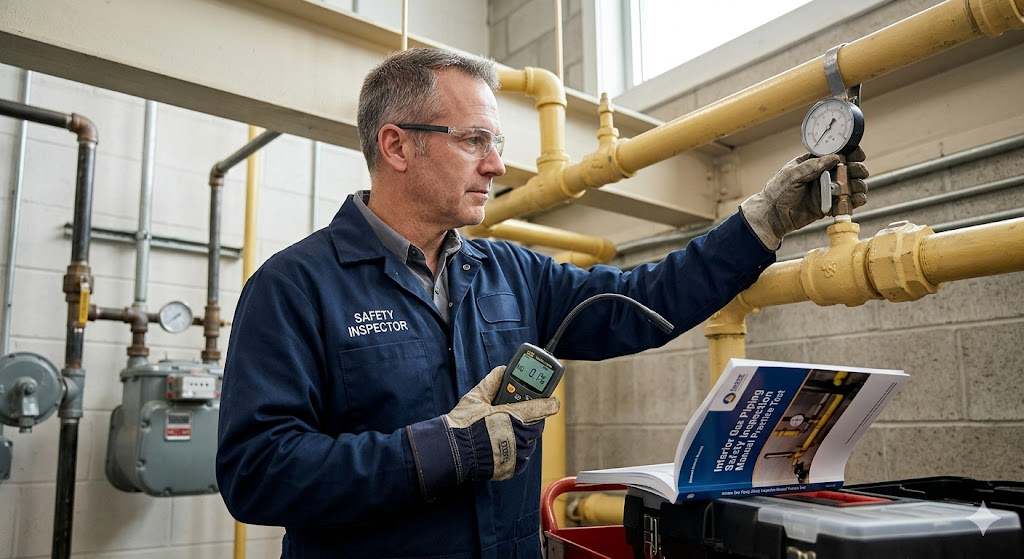
Additional Information
What the Course Entails and Exam Details
This comprehensive study guide and the corresponding manual cover the complete lifecycle and safety oversight of interior gas piping.
You will master the fundamental properties of natural gas, including its chemical composition, lower (LEL) and upper (UEL) explosive limits, specific gravity, and the necessary odorization processes.
The manual outlines the detailed procedures for conducting a successful leak survey and visual inspection.
You will learn to identify the crucial boundaries between Department of Transportation (DOT) jurisdictional piping (beginning at the building’s Point of Entry) and Authority Having Jurisdiction (AHJ) piping (following the gas meter outlet).
Key regulatory topics include standard operating conditions and the proper protocols for responding to and reporting "Abnormal Operating Conditions" (AOCs), such as severe corrosion or illegal connections.
The course also covers the correct use and calibration requirements for specialized equipment, such as Combustible Gas Indicators (CGI).
Furthermore, you will be tested on proper material specifications, joint connections, pressure testing requirements, regulator placement, and essential venting standards.
What to Expect in the Final Exam
The official certification exam is typically administered in a closed-book, multiple-choice format.
Candidates should expect a precise focus on safety regulations and standard emergency protocols derived directly from the official inspection manual.
A high minimum passing score (often 70% or 80%) is generally required to ensure you can apply these safety standards flawlessly in the field.
While specific time limits and the total number of questions can vary slightly by jurisdiction, a representative exam often allows between 60 and 90 minutes.
It is important to understand that some municipal versions of this test may include a practical component, where you must demonstrate your ability to use safety equipment and identify defects in a controlled, hands-on environment.
How to Study and Exam Centers
Effective preparation for this exam requires a disciplined approach to studying the underlying safety codes and practical procedures.
Your first step is to obtain the current, official [Interior Gas Piping Safety Inspection Manual] recognized by your state or municipality (e.g., the NYS Public Service Commission or NYC Department of Buildings).
When using the [Interior Gas Piping Safety Inspection Manual Practice Test], do not just memorize answers; understand the rationale behind every correct and incorrect choice.
Focus heavily on the sections describing emergency responses, the specific physical properties of gases, and correct equipment usage.
Create flashcards for terminology and precise regulatory numbers, such as minimum clearances, required pressure levels, and mandatory calibration schedules for your CGI.
The final exam is typically administered through official testing portals for computer-based testing, which may include major provider networks like Pearson VUE or specific state and city government licensing centers.
Before registering, confirm the correct location or digital portal with your employer or the corresponding regulatory agency to ensure you are scheduling the correct examination version for your jurisdiction.
Job Opportunities from the Course
Successfully earning this certification opens advanced career paths focused on safety, compliance, and energy regulation.
Potential job titles include:
Interior Gas Piping Safety Inspector
Building and Plumbing Code Inspector
Gas Utility Compliance Officer
HVAC Safety Supervisor
Property Management Safety Coordinator
Construction Site Safety Manager (Energy Sector)
Fire and Life Safety Inspector
Municipality Regulatory Auditor
Frequently Asked Questions
Reviews
5.0
Based on 0 reviews
Leave a Review
No reviews yet. Be the first to review!