
InterNACHI Electrical Practice Exam
$69.00
- Buy to unlock unlimited access to all Quiz questions and Answers in this Quiz.
- After purchase you can print a PDF of the whole quiz at any point. The PDF will contain the questions and the correct answers.
About this Exam
The InterNACHI Electrical Practice Exam is a crucial stepping stone for aspiring and current home inspectors aiming to master residential electrical systems.
This specialized certification exam is designed by the International Association of Certified Home Inspectors (InterNACHI) to validate your understanding of safe and accurate electrical inspection procedures.
It is tailor-made for home inspectors, contractors, and building consultants who want to ensure they can effectively identify electrical defects, safety hazards, and code violations in a residential setting.
Passing this exam proves your competence in one of the most critical and potentially dangerous aspects of home inspection.
Ready to test your knowledge?
Buy Now to Access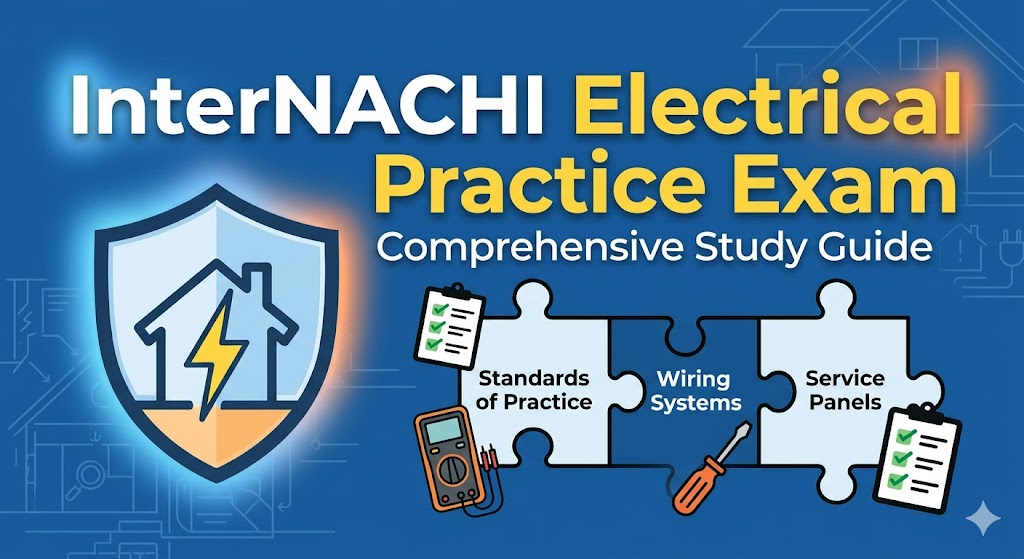
Additional Information
What the Course Entails and Exam Details
The training and coursework leading up to this exam cover the entire spectrum of residential electrical systems.
Students learn the fundamentals of electricity, including voltage, current, resistance, and power.
The syllabus dives deep into evaluating service drops, entrance conductors, and the main service disconnects.
You will also explore the intricacies of grounding and bonding systems, which are vital for safety.
Furthermore, the course trains you on inspecting electrical panels, identifying improper wiring methods, and testing safety devices like Ground-Fault Circuit Interrupters (GFCIs) and Arc-Fault Circuit Interrupters (AFCIs).
By the end of the coursework, you will be well-equipped to recognize outdated or dangerous wiring, such as knob-and-tube or solid aluminum branch circuits.
What to Expect in the Final Exam
The final exam is a rigorous assessment of the knowledge you have acquired during your coursework.
It typically consists of a multiple-choice format, presenting realistic scenarios that a home inspector would encounter in the field.
To pass, you must achieve a minimum score of 80%, which demonstrates a firm grasp of the safety and technical standards required by InterNACHI.
While the exam is open-book, it is strongly recommended that you do not rely heavily on your notes, as the system may have time limits that require quick, confident answers.
Expect questions that ask you to identify specific defects from descriptions or images, testing both your theoretical knowledge and practical application.
How to Study and Exam Centers
To succeed, you need a highly strategic study plan that goes beyond simply reading the course materials.
Start by taking the InterNACHI Electrical Practice Exam multiple times to familiarize yourself with the question formats and identify any weak areas in your knowledge.
Create flashcards for essential terms, clearance requirements, and common electrical defects to build quick recall.
Make sure to carefully review the InterNACHI Standards of Practice, as many exam questions are directly tied to what an inspector is and is not required to do.
Because InterNACHI is a global organization, the examination process is highly accessible.
You do not need to travel to a physical Pearson VUE center or authorized school; the final exam is administered entirely online through the secure InterNACHI member portal.
This allows you to test your skills from the comfort of your own home or office, provided you have a stable internet connection.
Job Opportunities from the Course
Successfully passing this exam and completing the related certification opens up several lucrative and rewarding career paths in the real estate and construction industries.
Certified Home Inspector Earning this credential significantly boosts your credibility and allows you to command higher fees as an independent or agency-based home inspector.
Residential Property Inspector You can specialize in evaluating residential properties for buyers, sellers, or property management companies to ensure structural and electrical safety.
Commercial Property Inspector With additional training, the foundational electrical knowledge you gain can smoothly transition into inspecting larger commercial properties.
Building Compliance Consultant Your expertise will allow you to consult for contractors, homeowners, and real estate investors regarding safety standards and electrical system upgrades.
Electrical Systems Evaluator While not a licensed electrician, you can offer specialized consulting services to identify potential electrical hazards before extensive renovations or property purchases.
Frequently Asked Questions
Reviews
5.0
Based on 0 reviews
Leave a Review
No reviews yet. Be the first to review!