
InterNACHI How to Inspect Attic Ventilation and Interior Practice Test
$69.00
- Buy to unlock unlimited access to all Quiz questions and Answers in this Quiz.
- After purchase you can print a PDF of the whole quiz at any point. The PDF will contain the questions and the correct answers.
About this Exam
Welcome to your comprehensive study guide for the InterNACHI "How to Inspect Attic Ventilation and Interior" course and certification exam. This program is a vital step for both new and experienced home inspectors wishing to master two of the most critical, yet frequently misunderstood, systems within a residential property. An attic that is improperly ventilated can lead to a host of expensive problems, from structural rot to severe mold, while a thorough interior inspection is essential for ensuring a home’s safety and function. This certification equips you with the technical knowledge to identify these issues, protect your clients' investments, and generate superior inspection reports that stand out in the industry.
Ready to test your knowledge?
Buy Now to Access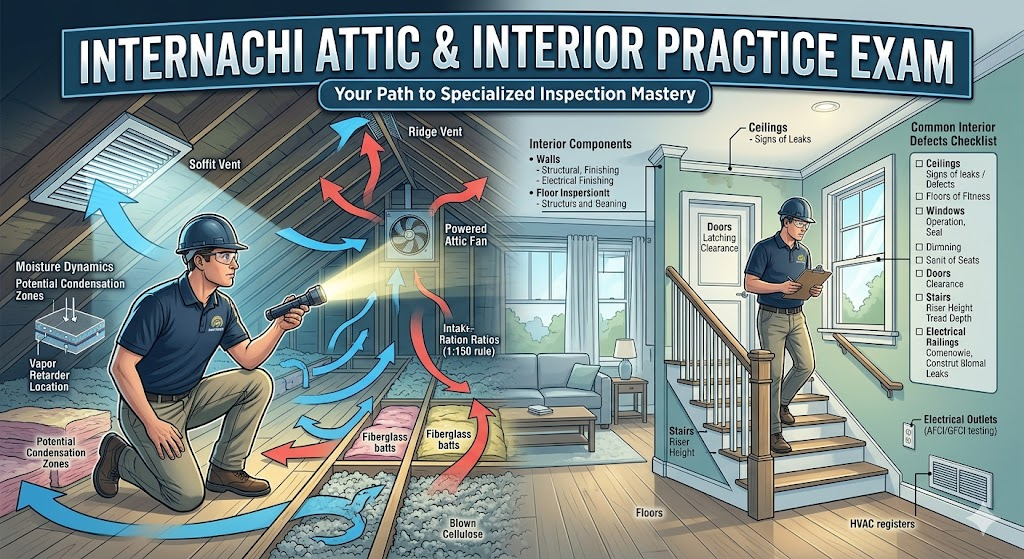
Additional Information
What the Course Entails and Exam Details
This specialized InterNACHI course is designed to provide you with a deep understanding of standard inspection practices and code requirements for residential attics and interiors. The curriculum is detailed, technical, and directly applicable to the field. You will learn to evaluate the complex relationship between insulation, ventilation, and moisture control.
Core topics and skills covered include:
Types of Attic Ventilation: Differentiating between passive systems (soffit, ridge, gable, and static vents) and active systems (powered fans and turbine vents).
Assessing Ventilation Adequacy: Calculating required free vent area and identifying common calculation errors.
Insulation Types and Values: Recognizing different materials (fiberglass batts, blown-in cellulose, spray foam) and understanding R-value requirements.
Common Attic Defects: Identifying structural issues, moisture intrusion, mold growth, pest infestations, and improper ventilation installations (e.g., vents blocked by insulation).
Interior Component Inspection: Systems and components required to be inspected, including walls, ceilings, floors, windows, doors, stairs, railings, garage doors, and the visible portions of the electrical and HVAC systems (registers and air flow).
Moisture Dynamics: Understanding how air movement and vapor barriers impact the longevity of a building's structure.
Inspector Safety: Best practices for navigating tight attic spaces and identifying potential hazards.
What to Expect in the Final Exam
While you are preparing with the practice test, it is crucial to understand the format of the actual InterNACHI certification exam that follows the course. The official final exam is a comprehensive assessment of the material presented throughout the course.
Exam Format: The test consists primarily of multiple-choice and true/false questions based directly on the course readings, videos, and image galleries.
Method: This is an online, self-proctored exam. You can take it at your convenience from any computer with an internet connection.
Passing Score: To earn your certification, you must achieve a passing score of 80% or higher.
Time Limit: The exam is timed, typically giving you between 60 to 90 minutes to complete all questions, forcing you to have efficient recall of the key concepts.
Retake Policy: Should you not pass on your first attempt, InterNACHI typically allows for additional attempts after a mandatory waiting period, giving you time to review the course material again.
How to Study and Exam Centers
Preparation is the key to success. Because the final exam is online and open-book, effective studying means you must be able to navigate the information quickly and understand the underlying concepts, rather than just memorizing facts.
Actionable Study Strategies:
Engage with All Material: Do not skim. Read every section, watch every video, and click through every diagram within the course module.
Utilize the Practice Test: Take the official "How to Inspect Attic Ventilation and Interior Practice Test" multiple times. It is your best tool for familiarizing yourself with the style and phrasing of the actual exam questions.
Analyze Your Results: After taking the practice test, do not just look at your score. Review the questions you got wrong and return to the specific course section to master that topic.
Create Your Own Quick-Reference Guide: As you study, make cheat sheets for key numbers, such as ventilation ratios (e.g., 1/150 or 1/300 rules), common code requirements for stair geometry, and typical insulation R-values for your climate zone.
Leverage the InterNACHI Message Boards: The forum is an invaluable resource where you can ask experienced inspectors how they apply these concepts in the field.
Exam Center Information: There are no physical testing centers for InterNACHI-administered online courses. The final certification exam is taken entirely through the InterNACHI online learning portal. This offers unparalleled flexibility, allowing you to study and test on a schedule that works best for you.
Job Opportunities from the Course
Earning the InterNACHI Attic Ventilation and Interior Inspection Certification can significantly enhance your professional opportunities and earning potential. This credential demonstrates specialized expertise, unlocking numerous career paths within the real estate and building sciences sectors.
Upon successful completion, you will be qualified for roles such as:
Certified Residential Home Inspector: General practice home inspector with specialized, verifiable expertise in attic and interior systems.
Certified Commercial Property Inspector: Expanding your skills to include multifamily and light commercial property assessments.
Specialized Attic and Ventilation Auditor: Working directly with homeowners or insulation companies to solve complex moisture and energy efficiency issues.
Weatherization Specialist / Energy Auditor: Evaluating homes for heat loss, air leakage, and ventilation effectiveness, often for state or utility company programs.
Quality Control Manager for New Construction: Reviewing builder performance on critical ventilation and interior finishing details.
Property Manager or Building Superintendent: Managing the maintenance and system health of residential portfolios.
Insurance Claims Adjuster or Risk Assessor: Specifically evaluating properties for damage resulting from improper ventilation (e.g., ice dams, mold growth) or interior defects.
Frequently Asked Questions
Reviews
5.0
Based on 0 reviews
Leave a Review
No reviews yet. Be the first to review!