
International Plumbing Code Practice Test
$69.00
- Buy to unlock unlimited access to all Quiz questions and Answers in this Quiz.
- After purchase you can print a PDF of the whole quiz at any point. The PDF will contain the questions and the correct answers.
About this Exam
The International Plumbing Code (IPC) sets the standard for plumbing systems around the globe, ensuring safety, efficiency, and health through consistent, well-vetted regulations. For plumbing professionals, inspectors, engineers, and designers, mastering the IPC is not just about compliance—it's about demonstrating expertise and a commitment to quality and public safety. This article provides a comprehensive study guide, focusing on a critical component of preparation: the International Plumbing Code Practice Test. This test is designed as a powerful preparatory tool for those aiming to achieve official IPC-based certifications, validating their code knowledge and paving the way for career advancement. Whether you are an aspiring plumber, a seasoned pro looking for a license upgrade, or a dedicated inspector, this practice resource can significantly enhance your confidence and performance in the final examination.
Ready to test your knowledge?
Buy Now to Access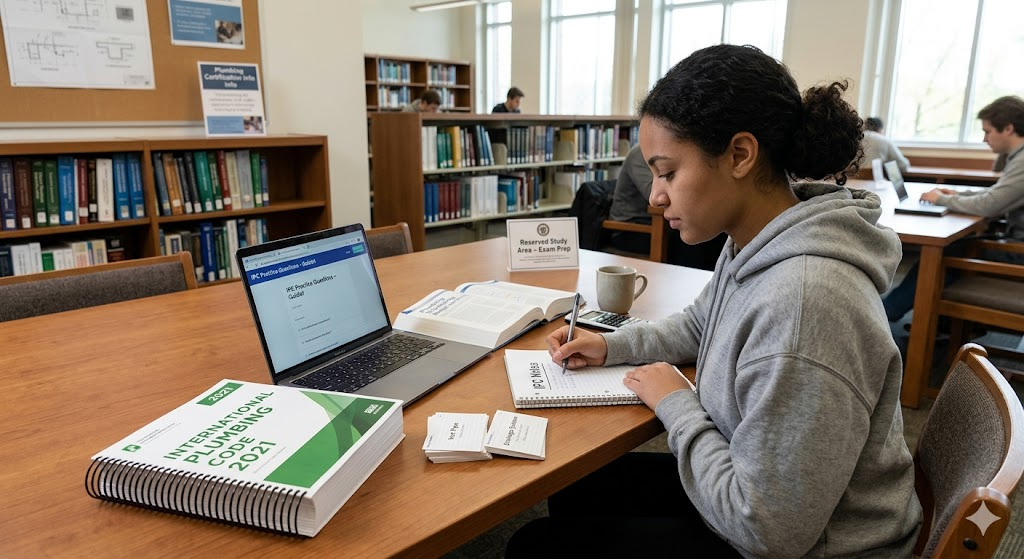
Additional Information
What the Course Entails and Exam Details
This practice exam serves as a robust educational tool, simulating the type of content you will encounter in official IPC certification and licensing assessments. While not a formal taught "course" in itself, the structure and the associated practice questions are meticulously designed to cover the core topics and essential skills outlined within the vast IPC body of knowledge.
The practical content covered in the International Plumbing Code Practice Test, reflecting the breadth of the actual code and certification exams, entails the comprehensive study and application of the following areas:
Code Organization & Administration: Understanding the structure of the IPC, key definitions, administrative procedures, and the process for amendments and compliance.
General Plumbing Regulations: Knowledge of basic requirements applicable to all plumbing systems, including materials, connections, and system protection.
Plumbing Fixtures, Fittings, & Connections: Specific code standards for various plumbing fixtures (sinks, toilets, showers, etc.), flow rates, water conservation, and accessibility.
Water Supply & Distribution: Design and installation of potable and non-potable water supply systems, including piping, sizing, valves, protection against backflow, and water hammer prevention.
Sanitary Drainage: Proper sizing, material selection, installation, and cleanout placement for drainage systems, ensuring safe waste disposal.
Vents & Venting Systems: Crucial knowledge of venting methods, sizing, and requirements to ensure drainage system performance and prevent sewer gas entry.
Storm Drainage: Understanding code requirements for roof drains, conductors, sub-soil drains, and system sizing.
Traps, Interceptors, & Separators: Proper installation and application to prevent system blockages and contamination.
Fuel Gas (often included): In many jurisdictions, the plumbing code/exam will also cover the relevant sections of the International Fuel Gas Code.
Special Plumbing & Piping Systems: Requirements for diverse systems such as medical gas, industrial waste, and special application plumbing.
Plan Reading & Calculations: Developing the ability to read plumbing drawings and perform essential sizing, slope, and loading calculations.
This practice resource allows you to focus on each of these critical areas, understanding the "why" and "how" behind each code provision.
What to Expect in the Final Exam
While the International Plumbing Code Practice Test is a key preparatory tool, it's vital to understand the typical structure and requirements of the actual final IPC certification or licensing examination that you are working towards. These actual examinations are designed to rigorously assess your knowledge and are generally structured as follows:
Format: The final examination is primarily multiple-choice. Candidates must select the best possible answer from several given options for each question. The questions are often based directly on the International Plumbing Code book. In many cases, these exams are open-book, meaning you are allowed to have and use a specified, current copy of the IPC. A significant portion of the test is then about your ability to quickly and accurately navigate the code to find and apply relevant sections.
Content & Number of Questions: The actual number of questions varies significantly depending on the specific certification level (e.g., journeyman, master, commercial inspector, residential inspector) and the jurisdiction (national, state, or municipal). A comprehensive exam can range from 60 to over 130 questions. The questions are weighted across the various code topics mentioned in section 2.
Calculations & Practical Aspects: While multiple-choice is the predominant format for the written portion, some exams (particularly for higher-level licenses like Master Plumber or specific practical certifications) might include, or be paired with, separate practical assessments or more detailed design/calculation problems. Written questions often require you to perform calculations or interpret tables and charts within the code (e.g., sizing pipes based on fixture units).
Passing Score: To achieve certification or a license, you typically must achieve a specific minimum passing score. This is generally around 70% to 75% for many IPC-based examinations, though this can vary. It is a rigorous requirement, making comprehensive preparation essential.
Time Limit: All actual final examinations are timed. The specific time limit is set by the certifying body or jurisdiction and is carefully calibrated based on the number and complexity of the questions. Time limits can range from two to over four hours. Managing your time effectively—including the critical skill of efficiently looking up codes in an open-book setting—is crucial for success.
Scoring & Results: The final examination is typically computer-administered. In many instances, you will receive your unofficial results immediately upon completion. Official results are typically processed and delivered within a few days to a few weeks, though significant changes (like beta exams) can involve longer waiting periods.
By understanding this format and utilizing the practice exam to build both code familiarity and test-taking speed, you will be significantly better prepared for the demands of the final examination.
How to Study and Exam Centers
Successfully mastering the International Plumbing Code requires a multi-faceted and dedicated study approach. Utilizing the International Plumbing Code Practice Test is a crucial step, but it must be integrated into a broader strategy.
Effective Study Strategies:
Code Book Mastery: This is essential. Whether the exam is open-book or not, you must be incredibly familiar with the International Plumbing Code book itself. Obtain the correct, current edition. Read it systematically. Focus on definitions, the structure of chapters, and understanding how the different chapters interconnect. For open-book exams, create a logical indexing or highlighting system to navigate quickly and efficiently.
Highlighting & Tabulation: Many students find success by carefully highlighting key provisions, definitions, and important tables within their code book. Use clear tabs for the most frequently referenced sections and tables (e.g., fixtures, water sizing, drainage, venting).
Active Learning & Practice: Take numerous practice tests, like this International Plumbing Code Practice Test, throughout your study. This helps you apply knowledge, practice calculation methods, identify weak areas, and build test-taking stamina and speed.
Simulate Real Conditions: As you get closer to the final exam, take complete practice tests under timed conditions without excessive breaks to truly simulate the real test environment.
Review Mistaken Answers: Critically review not just the answers you got wrong in your practice tests, but also the ones you were unsure about. Locate the correct code section and understand the reasoning.
Utilize Official Resources: Check the website of the certifying body (like the International Code Council - ICC or your specific state/local licensing board) for their official study guides, candidate bulletins, and practice exam options.
Join Study Groups/Courses: If available and fitting your learning style, consider joining a plumbing code study group or taking an exam preparation course. Structured learning and peer discussion can be highly beneficial.
Understand Key Concepts & Calculations: Pay specific attention to understanding core concepts like Drainage Fixture Units (DFUs), sizing tables, backflow prevention methods, and venting calculations.
Develop a Study Schedule: Create a consistent study plan and dedicate specific time each day or week leading up to the final examination. Consistency is key.
How and Where to Take the Final Certification Exam:
Final IPC-based examinations (certification and licensing) are typically taken through the following methods and locations:
Authorized Physical Testing Centers: Many examinations, particularly for national certifications (like those from the ICC), are administered through large, secure testing network providers such as Pearson VUE or Prometric. These centers are located in numerous cities. You must register in advance through the certifying body and then schedule your specific appointment time and location with the testing provider.
Online Proctoring: For certain certifications, certifying bodies may offer exams through live remote proctoring services. This allows you to take the exam on your own computer with a live proctor watching you via webcam and microphone, all while following strict security protocols and rules.
Physical Locations Specific to the Certifying Body/Jurisdiction: Some local or regional licensing boards may hold exams at their own offices or specific designated public buildings/authorized schools on certain dates.
Authorized Educational Institutions: Occasionally, local colleges, trade schools, or approved training academies might be authorized testing locations for certain plumbing exams, particularly as part of a formal program or certification course.
You must always check the candidate bulletin or website for the specific certification or licensing body you are applying to for exact details on the examination process, scheduling, approved testing locations, and required documentation.
Job Opportunities from the Course
While completing the International Plumbing Code Practice Test itself is not a job-unlocking credential, successfully passing the actual IPC-based certification or licensing examinations with the knowledge gained can open doors to diverse and rewarding career paths within the plumbing and building industry.
Possessing a valid IPC-based certification or license dramatically enhances your employability and can lead to specific roles, including:
Journeyman Plumber (requires further experience for full licensure)
Master Plumber
Licensed Plumbing Contractor
Plumbing Inspector
Code Enforcement Officer (specializing in plumbing)
Plumbing Instructor (in trade schools or community colleges)
Plumbing Plans Examiner
Building Inspector (with plumbing knowledge)
Facilities Manager/Maintenance Technician (with a focus on advanced plumbing systems)
Plumbing Estimator
Plumbing System Designer/Engineer (often with additional engineering background)
Medical Gas Installer/Inspector
Water Supply Specialist
A comprehensive and validated understanding of the International Plumbing Code is a highly valued asset, signaling competence, safety, and a commitment to professional standards across all these essential career choices. Invest in your knowledge, use practice resources effectively, and unlock the numerous opportunities that await in the vital field of plumbing.
Frequently Asked Questions
Reviews
5.0
Based on 0 reviews
Leave a Review
No reviews yet. Be the first to review!