
Interprofessional Education & Collaborative Practices Practice Test
$69.00
- Buy to unlock unlimited access to all Quiz questions and Answers in this Quiz.
- After purchase you can print a PDF of the whole quiz at any point. The PDF will contain the questions and the correct answers.
About this Exam
Interprofessional Education (IPE) is a pivotal approach where students and professionals from two or more health professions learn with, from, and about each other to enable effective collaboration and improve health outcomes. This certification exam, and the practice tests preparing for it, are designed for healthcare students (such as nursing, medicine, pharmacy, social work) and current professionals. It validates and enhances your understanding of core competencies needed for successful team-based care, leading to safer patient experiences and better overall efficiency in modern healthcare settings.
Ready to test your knowledge?
Buy Now to Access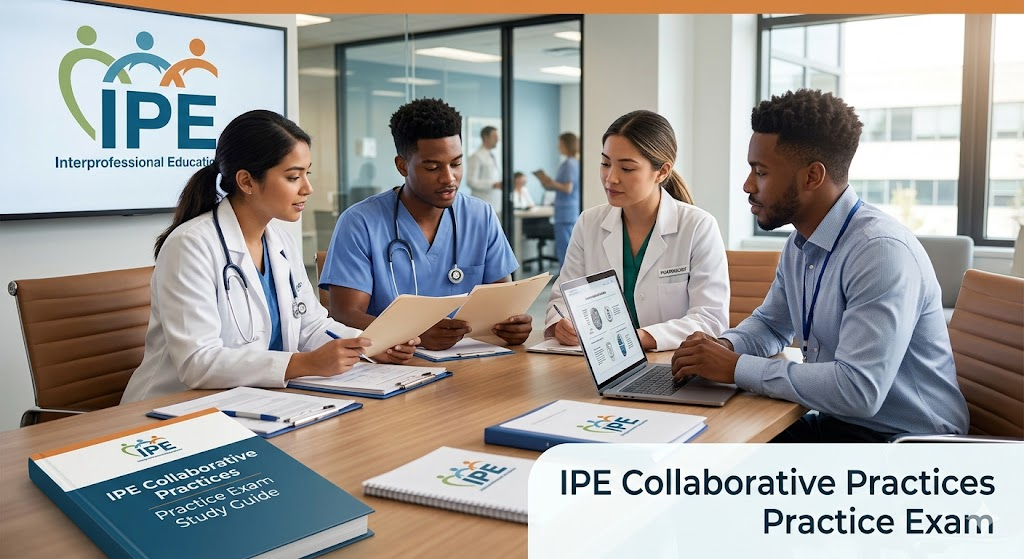
Additional Information
What the Course Entails and Exam Details
This course prepares you with critical knowledge and practical skills essential for effective collaborative practice. Key domains typically covered include Teamwork and Team Dynamics, Interprofessional Communication, Roles and Responsibilities of various healthcare team members, and Ethical Principles and Values for Interprofessional Practice. You will learn strategies for effective leadership, shared decision-making, conflict resolution, and understanding the unique contributions each profession brings to the table. The exam details involve assessing your competence in these areas to ensure readiness for diverse, multi-disciplinary work environments.
What to Expect in the Final Exam
The final exam is typically delivered in a computerized format. Expect a series of multiple-choice questions, which may include clinical scenarios or case studies requiring application of collaborative principles. Some exams might incorporate situational judgment questions based on team interaction. While specific questions and scoring methods vary by certifying body or institution, you must demonstrate a strong understanding of interprofessional core competencies. Passing scores are set by the organization and are generally achievable with diligent study and a solid grasp of team dynamics. The exam has a set time limit, and it is usually a closed-book assessment.
How to Study and Exam Centers
Studying effectively involves various strategies. Start by thoroughly reviewing the official IPE frameworks, such as the IPEC Core Competencies for Interprofessional Collaborative Practice. Utilize comprehensive study guides and take multiple practice exams like this one to familiarize yourself with the question formats and assess your knowledge gaps. Participate in interprofessional workshops or case-study discussions if available. Online courses and simulation exercises can provide practical insights. The actual certification exam is typically administered through secure online testing platforms, often proctored, or at physical testing centers depending on the offering institution. Candidates must register directly through the designated exam provider or their institution's portal.
Job Opportunities from the Course
Gaining certification or demonstrating mastery in Interprofessional Collaborative Practices opens up numerous doors. The ability to work effectively within diverse teams is highly sought-after across all healthcare environments. Possible job roles include:
Interprofessional Team Lead
Care Coordinator or Patient Navigator
Interprofessional Practice Specialist or Coordinator
Healthcare Quality Improvement Coordinator
Patient Safety Manager
Educator or Faculty in Interprofessional Programs
Clinical Team Leader (in various departments)
Collaborative Practice Consultant
Roles within healthcare management and administration focusing on team performance and integration.Here is your comprehensive study guide and SEO-optimized content for the Interprofessional Education & Collaborative Practices Practice Test.
A strong understanding of Interprofessional Education and Collaborative Practices is increasingly vital for modern healthcare careers. This certification validates your ability to contribute to multi-disciplinary teams, which is a priority for hospitals and health systems.
Possessing these skills makes a candidate highly competitive for leadership roles within team-based care environments.
Frequently Asked Questions
Reviews
5.0
Based on 0 reviews
Leave a Review
No reviews yet. Be the first to review!