
Intracranial Pressure (ICP) HCC III Practice Exam
$69.00
- Buy to unlock unlimited access to all Quiz questions and Answers in this Quiz.
- After purchase you can print a PDF of the whole quiz at any point. The PDF will contain the questions and the correct answers.
About this Exam
The Intracranial Pressure (ICP) module within the Health Care Concepts III (HCC III) curriculum is a critical and rigorous assessment designed for advanced nursing students and critical care trainees.
This specialized exam evaluates a healthcare professional’s ability to recognize, monitor, and manage life-threatening neurological conditions.
Because elevated intracranial pressure is a medical emergency that can lead to permanent brain damage or death, this certification ensures that students possess the acute clinical judgment required to save lives.
It is perfectly tailored for those aspiring to work in high-acuity environments, such as the Intensive Care Unit (ICU), emergency departments, and neuro-trauma centers.
Ready to test your knowledge?
Buy Now to Access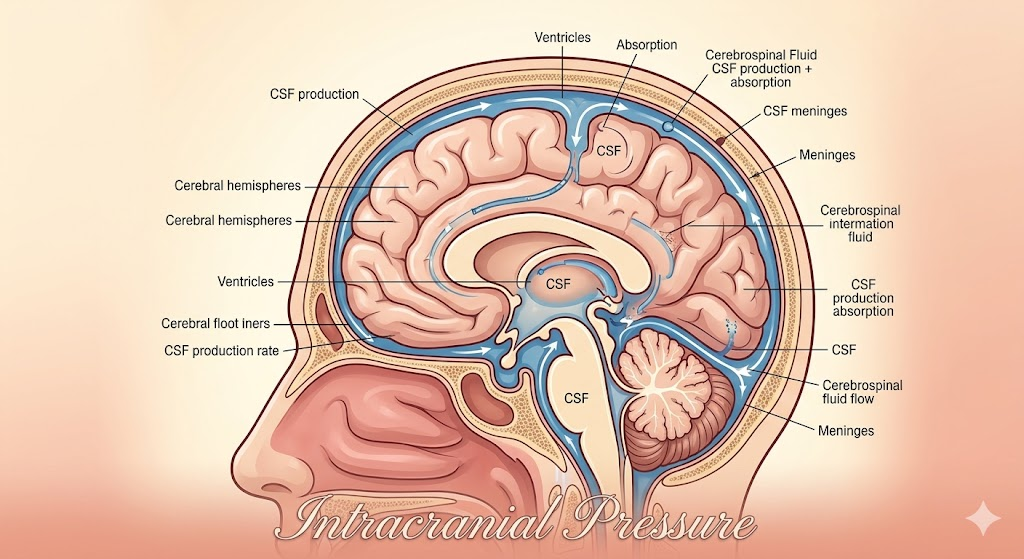
Additional Information
What the Course Entails and Exam Details
The HCC III course provides an in-depth exploration of advanced neurological concepts and the pathophysiology of the brain.
Students will cover the Monro-Kellie hypothesis, calculating and interpreting Cerebral Perfusion Pressure (CPP), and understanding the standard parameters for normal ICP (typically 5 to 15 mmHg).
The syllabus heavily emphasizes clinical manifestations of increased ICP, including early signs like altered levels of consciousness and late signs such as Cushing’s Triad (bradycardia, widened pulse pressure, and irregular respirations).
Furthermore, the course delves into pharmacological interventions, such as the administration of osmotic diuretics like mannitol and hypertonic saline, as well as surgical interventions like ventriculostomies and craniotomies.
Students will also master essential nursing care practices, such as maintaining proper patient positioning (elevating the head of the bed), minimizing environmental stimuli, and strict fluid management.
What to Expect in the Final Exam
The final practice exam is structured to mimic real-world clinical scenarios and high-stakes licensure tests, such as the NCLEX-RN.
You can expect a rigorous format consisting primarily of complex multiple-choice questions and "Select All That Apply" (SATA) alternate-format items.
The exam heavily utilizes case studies where you must prioritize patient care, identify early signs of neurological deterioration, and choose the correct immediate interventions.
Generally, students are given a strict time limit, typically ranging from 60 to 90 minutes, depending on the exact number of questions.
To achieve a passing score, students usually need to secure at least a 75% to 80%, reflecting the high standard required for critical care competency.
Calculators may be permitted for determining CPP or medication dosages, but strict academic integrity rules apply regarding the use of outside resources.
How to Study and Exam Centers
Mastering this material requires moving beyond rote memorization and developing deep clinical reasoning.
A highly effective study strategy is to break down complex case studies and practice with NCLEX-style questions focused specifically on neurological emergencies.
Create flashcards for vital signs, normal ICP ranges, and Glasgow Coma Scale (GCS) scoring.
It is also incredibly beneficial to form study groups where you can verbally explain the pathophysiology of brain herniation and the rationale behind each nursing intervention.
Regarding test locations, this specific HCC III exam is typically administered through your nursing school’s secure online testing portal (such as ExamSoft, ATI, or Canvas) or at your institution's designated computer lab.
If this is part of a broader national certification (like the CCRN), the exam will be proctored at an authorized physical testing center, such as Pearson VUE, which requires advanced scheduling and strict photo identification upon entry.
Job Opportunities from the Course
Successfully mastering the concepts in the ICP HCC III module unlocks a variety of exciting, high-paying, and deeply rewarding career paths in critical care.
Earning this expertise prepares you for the following job titles:
Neuro Intensive Care Unit (Neuro ICU) Nurse: Specializing exclusively in caring for patients with severe brain injuries, strokes, and post-neurosurgical interventions.
Critical Care Registered Nurse (CCRN): Working in general ICUs managing the most hemodynamically unstable patients who require continuous advanced monitoring.
Emergency Room (ER) Nurse: Acting as the first line of defense in triaging and stabilizing trauma patients with acute head injuries.
Trauma Center Nurse: Working in Level I trauma centers to manage catastrophic multi-system injuries, including severe traumatic brain injuries (TBIs).
Flight Nurse / Transport Nurse: Providing highly specialized, critical care monitoring of neurological patients during helicopter or fixed-wing transit between medical facilities.
Post-Anesthesia Care Unit (PACU) Nurse: Monitoring patients as they recover from major neurological surgeries, ensuring they wake up safely without sudden spikes in ICP.
Frequently Asked Questions
Reviews
5.0
Based on 0 reviews
Leave a Review
No reviews yet. Be the first to review!