
Introduction to the Space Environment & Space Systems (Space 100) Practice Test
$69.00
- Buy to unlock unlimited access to all Quiz questions and Answers in this Quiz.
- After purchase you can print a PDF of the whole quiz at any point. The PDF will contain the questions and the correct answers.
About this Exam
The Introduction to the Space Environment & Space Systems (Space 100) certification and its associated practice test serve as the essential gateway for professionals, students, and space enthusiasts seeking a comprehensive understanding of the final frontier. This course is designed to provide a foundational knowledge base, demystifying the complex factors that influence operations beyond Earth's atmosphere. Whether you are aiming for a career in the rapidly growing commercial space sector, military space operations, or aerospace engineering, Space 100 equips you with the fundamental vocabulary and conceptual framework needed to succeed. The practice test is a critical tool to assess your readiness for the final examination and solidify your grasp of key concepts.
Ready to test your knowledge?
Buy Now to Access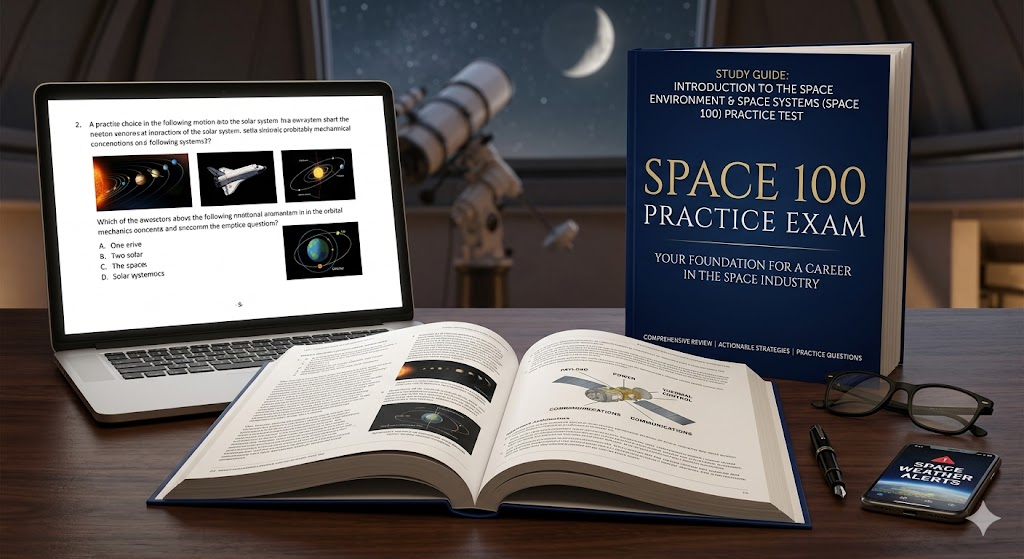
Additional Information
What the Course Entails and Exam Details
The Space 100 course is structured to deliver a holistic overview, blending the physical sciences of the space environment with the engineering principles of space systems. This course entails a deep dive into several core areas. First, you will explore the physical characteristics of space, including an understanding of where "space" begins, the solar system’s structure, and the dynamics of the Sun. Second, it focuses on the hazards of the space environment, such as the solar wind, ionizing radiation, the Van Allen radiation belts, and their effects on both technology and human physiology. Third, the curriculum covers the fundamental components of space systems, explaining the architecture of a typical spacecraft, including payloads, power, thermal control, and communication subsystems. Finally, you will receive an introduction to the concepts of orbital mechanics, learning how objects remain in orbit and the different types of orbits.
The associated exam is a comprehensive assessment that validates your mastery of this foundational knowledge. The primary objective is to ensure you can recognize and explain the relationship between the space environment and the design, function, and limitations of space systems.
What to Expect in the Final Exam
While the exact structure of the final exam for the Space 100 qualification can vary depending on the certifying body, it is predominantly delivered in a multiple-choice format. This design allows for a broad and efficient testing of a wide range of concepts across the syllabus. You can expect a considerable number of questions to require conceptual application rather than simple rote memorization. Candidates are typically given a specific time limit to complete the exam, often ranging from 90 minutes to two hours, which necessitates a strong, immediate recall of the material. A typical passing score is around 70% to 80%. There are usually no prerequisites to sit for the introductory-level exam, but prior study is mandatory. Using a high-quality Space 100 practice test is one of the most effective methods to understand the typical question style, identify areas of weakness, and manage your time effectively before the high-stakes final test.
How to Study and Exam Centers
Preparation for the Space 100 final exam requires a strategic approach. We recommend a structured study plan that begins with a thorough review of the standard course materials and any provided study guides. Create detailed flashcards for key terms, definitions, and equations related to space physics and systems engineering. Actionable study strategies include forming study groups to discuss complex topics like orbital dynamics and space weather effects. Crucially, integrate the use of a reliable Space 100 practice test throughout your preparation. Use the practice test as a diagnostic tool: take the full test to identify knowledge gaps, and then focus your review on those specific areas before attempting another practice run.
Regarding exam centers, for the final, official examination, candidates typically register and take the test through authorized portals or certified physical testing locations. Since Space 100 is often a prerequisite or entry-level requirement within specific organizations (such as the National Security Space Institute or commercial aerospace training programs), the exam may be proctored internally or through their established testing partners. Always verify the specific testing requirements with your course provider or organization.
Job Opportunities from the Course
A strong performance on the Space 100 exam and the subsequent certification provides a verified foundation that is highly valued by employers across the entire space enterprise. This qualification unlocks a clear path to numerous entry-level and intermediate career opportunities in government, military, and commercial sectors. The knowledge you gain can transition directly into roles such as a Space Operations Specialist, an Aerospace Engineering Technician, a Mission Control Operator (entry-level), a Space Policy Analyst, or a Systems Engineer (foundational level). Furthermore, a Space 100 certification serves as a critical stepping stone for advancing your career and is often a mandatory prerequisite for advanced specialized training, such as the Space 200 and Space 300 courses, which lead to higher-level, more complex positions within the industry. By successfully completing this practice test and the final exam, you are actively launching your career into a high-demand and dynamic field.
Frequently Asked Questions
Reviews
5.0
Based on 0 reviews
Leave a Review
No reviews yet. Be the first to review!