
Iowa FFA Greenhand Practice Test
$69.00
- Buy to unlock unlimited access to all Quiz questions and Answers in this Quiz.
- After purchase you can print a PDF of the whole quiz at any point. The PDF will contain the questions and the correct answers.
About this Exam
Welcome to the exciting world of FFA and the first momentous milestone on your journey – the Greenhand FFA Degree! This foundational certification is specifically designed for first-year FFA members, typically high school freshmen or sophomores. The Greenhand Degree offers a vital introduction to the organization’s rich history, core values, diverse opportunities, and foundational knowledge. In Iowa, a state deeply rooted in agriculture, earning your Greenhand Degree is more than just passing a test; it's a badge of commitment to the industry and your key to unlocking a future in the dynamic field of agricultural leadership and beyond. This comprehensive article provides an essential study guide, outlining everything you need to know about what the course entails, what to expect in the final exam, actionable study strategies, potential career paths, and how to effectively prepare for success, particularly with the help of a focused practice exam.
Ready to test your knowledge?
Buy Now to Access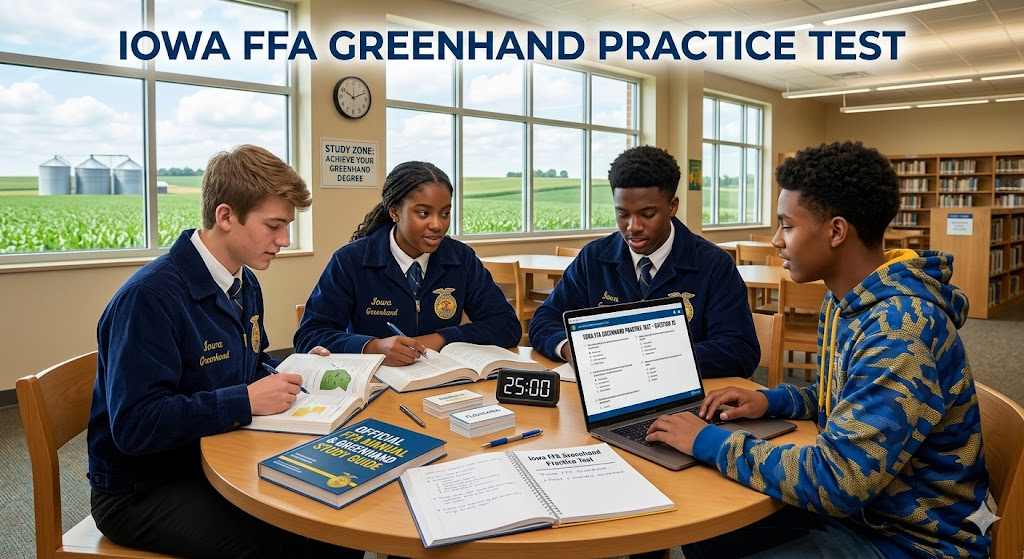
Additional Information
What the Course Entails and Exam Details
The Greenhand Exam (or the foundation knowledge tested within your local chapter) isn't typically a formal "course" with a dedicated textbook, but rather the essential knowledge every new member should acquire during their first semester in FFA. The material draws heavily from the Official FFA Manual, which is your primary study resource. Your agricultural education teacher and chapter advisor will guide you through this foundational information, covering topics including:
FFA History: Key dates, figures, and historical events that shaped the National FFA Organization and the Iowa FFA Association.
The FFA Creed: Understanding its five paragraphs and their significance to agricultural education. You will likely need to understand its meaning and answer questions, and may even have a separate speaking requirement to recite it.
The FFA Motto & Salute: Knowing and understanding the meaning of "Learning to Do, Doing to Learn, Earning to Live, Living to Serve" and the National Salute (The Pledge of Allegiance).
The FFA Emblem: The symbolic meanings of each element – the cross-section of an ear of corn, the rising sun, the plow, the eagle, and the owl – and the colors National Blue and Corn Gold.
Organizational Structure: Understanding the local, district, state, and national levels of membership and leadership roles within chapters.
Basic Parliamentary Procedure: Understanding fundamental rules and terminologies for conducting formal meetings (e.g., gavel taps, making motions, voting methods).
FFA Code of Ethics & Dress Code: Guidelines for professional conduct and the proper use and components of official FFA dress, including the iconic Blue Corduroy jacket.
Types of Membership: Awareness of active, alumni, collegiate, and honorary membership.
Supervised Agricultural Experience (SAE): A basic understanding of the required SAE program component and how to begin planning one.
Exam Details for the Standard Degree:
Administered: Locally within your high school chapter by your agricultural education advisor.
Format: Primarily a written exam with Multiple Choice, True/False questions, and possibly some short answers or matching.
Passing Score: Requirements can vary by chapter but are generally in the range of 70-80%.
Time Limit: Usually completed within a standard class period or a dedicated chapter meeting time.
Language: Typically available in English, aligning with the FFA Manual.
Note: For the competitive Greenhand Quiz Career Development Event (CDE), the test format is often more formal and can lead to district, state, and even national recognition, but this guide focuses on the foundational chapter degree requirements.
What to Expect in the Final Exam
On your final chapter Greenhand Exam, expect to see direct questions designed to assess your recall and basic understanding of the fundamental FFA knowledge listed above. The tone is meant to be foundational, so approach it with confidence after dedicated study. You will likely encounter questions like:
"What year was the Future Farmers of America established?"
"What are the official colors of the FFA?"
"What do the rising sun and the owl symbolize on the FFA emblem?"
"In the FFA Creed, which paragraph emphasizes 'life and work on a good farm'?"
"How many taps of the gavel call a meeting to order?"
"Describe three things that make up proper official dress."
You should also expect to understand basic terminology related to FFA and parliamentary procedure. Focus on understanding and recalling the core information present in the Official FFA Manual, which serves as the ultimate source for all Greenhand foundation knowledge questions.
How to Study and Exam Centers
Here’s your comprehensive plan for acing the Greenhand FFA Degree requirements, including the crucial chapter test:
Actionable Study Strategies:
Master the FFA Manual: This is your absolute core resource. Get a copy, physical or online, and study the foundational sections diligently. Pay close attention to the symbols, colors, creed paragraphs, history timeline, and basic parliamentary rules.
Practice the Creed: Don't just memorize the words; understand its meaning. Practice reciting it clearly and confidently, paying attention to interpretation and pronunciation, which may be part of your overall degree assessment.
Flashcards Are Your Friend: Create flashcards for historical dates, emblem symbols and meanings, key figures, FFA terminology, and simple parliamentary procedure terms.
Form a Study Group: Work with fellow new FFA members. Quiz each other on history, creed meanings, and officer duties.
Use Practice Tests: Leverage practice tests specifically designed for the Greenhand knowledge foundation. A well-constructed practice exam, like the one this study guide supports, is an invaluable tool to identify areas where you need more study. Look for multiple practice tests from reliable FFA educational sources.
Review Sample Questions: Ask your ag teacher for any example questions they might share or review sample questions from past years if available from reliable Iowa FFA or National FFA sources.
Participate in Class/Meetings: Actively engaging in agricultural education classes and chapter meetings where these foundational topics are discussed is an excellent way to reinforce your learning.
Ask Your Advisor: Don't hesitate to ask your FFA advisor or ag teacher any questions you have about the material. They are there to support your learning journey.
Exam Centers:
For the Greenhand Degree Test administered by your local chapter, you will take the exam right in your own high school agricultural education classroom or a chapter-designated area, supervised by your advisor. There are no commercial, independent proctored "exam centers" like Pearson VUE or specialized facilities for this foundational degree requirement. Your advisor schedules and manages this test within your local context.
For more structured competitions like the Greenhand Quiz CDE in Iowa, these typically begin at the local or district level, often held within participating schools or a centralized location for several districts, before culminating at the state level. Details about locations for these competitive events are always communicated clearly by the Iowa FFA Association through your chapter advisor. Always check with your local FFA chapter advisor for the most up-to-date and specific information regarding your Greenhand Degree test dates and competition schedules.
Job Opportunities from the Course
While earning your Greenhand FFA Degree is a crucial first step on your educational and leadership journey, it doesn't directly unlock specific "job titles." However, this foundational knowledge, and the continued involvement in FFA it facilitates, helps build a powerful foundation of skills, experiences, and a professional network that are invaluable across many diverse career paths, particularly in the sprawling field of agriculture and beyond.
Think of it as unlocking a universe of potential rather than a single job. Skills developed through FFA – leadership, communication, problem-solving, and specific agricultural knowledge – are highly sought after by employers.
Potential future career directions and job opportunities (which this degree initiates your journey towards) include:
Agricultural Sales Representative: (Typically requires college education and networking)
Agribusiness Professional / Manager: (Typically requires higher education)
Agricultural Science Teacher: (Requires college degree and certification)
Farm & Ranch Manager / Owner: (Combined with SAE experience and likely further study)
Wildlife Conservationist or Specialist: (Often requires college education and relevant experiences)
Agricultural Journalist or Communicator: (Leverages communication skills learned in FFA, often requires higher ed)
Greenhouse or Nursery Manager: (Beneficial skills from SAEs and continued study)
USDA or State Department of Agriculture employee: (Often requires further education, benefits from ag understanding and leadership)
In conclusion, prepare diligently for your Iowa FFA Greenhand Practice Exam, study your Official FFA Manual, learn your Creed, and embrace this first step! You are joining an organization with a powerful legacy and a bright future, and this degree is your gateway to an amazing experience filled with personal growth, leadership, and boundless opportunities in the great world of agriculture. Good luck!
Frequently Asked Questions
Reviews
5.0
Based on 0 reviews
Leave a Review
No reviews yet. Be the first to review!