
IPMBA Public Safety Cycling Practice Test
$69.00
- Buy to unlock unlimited access to all Quiz questions and Answers in this Quiz.
- After purchase you can print a PDF of the whole quiz at any point. The PDF will contain the questions and the correct answers.
About this Exam
The International Police Mountain Bike Association (IPMBA) offers the premier certification for public safety professionals who use bicycles in the line of duty.
This demanding and comprehensive program is designed specifically for police officers, EMS personnel, and security officers. It equips them with the specialized skills, knowledge, and tactical understanding necessary to operate safely and effectively on two wheels.
Earning this certification demonstrates a commitment to professionalism, enhances officer safety, and improves emergency response capabilities within the communities they serve.
Ready to test your knowledge?
Buy Now to Access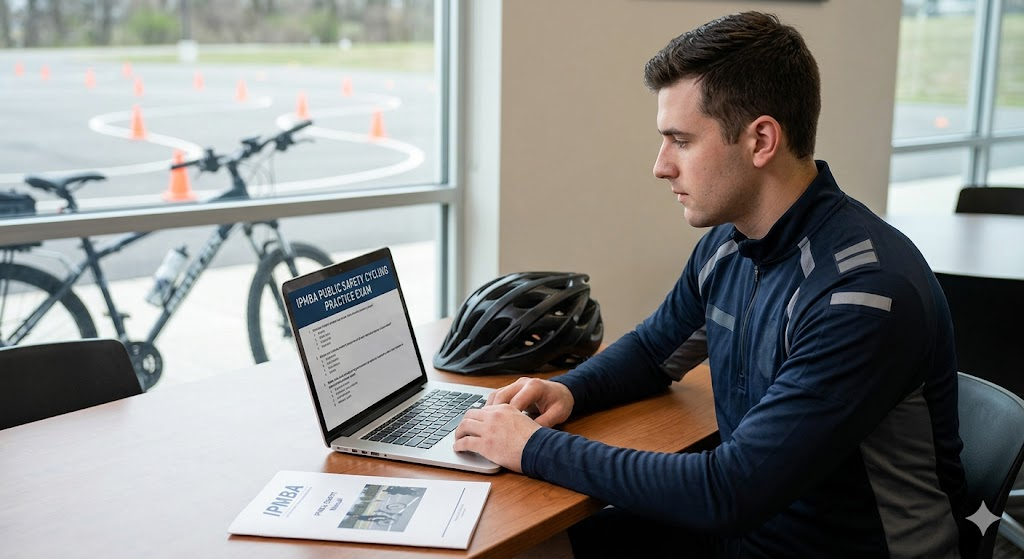
Additional Information
What the Course Entails and Exam Details
The IPMBA certification is awarded following the successful completion of an intensive training course, typically spanning 32 to 40 hours.
The course curriculum is highly structured, blending classroom instruction with extensive practical on-bike time. Candidates must master a wide range of topics that distinguish public safety cycling from recreational riding.
Core competency areas covered in the course include:
Effective Cycling Techniques: Advanced bike handling skills, including slow-speed control, tight maneuvering, and effective braking.
Vehicular Cycling and Traffic Laws: Navigating diverse traffic environments safely and understanding relevant cycling laws.
Bicycle Maintenance and Repair: Basic field mechanics, including fixing flat tires, chain maintenance, and safety inspections.
Public Safety Tactics: Patrol procedures, single- and multi-officer formations, dismounting under pressure, and suspect contact.
Emergency Response: Specialized skills for EMS medics riding with heavy loads, and tactical dismounts for police officers.
Night Operations: Safe riding practices and tactical considerations during low-visibility conditions.
Physical Conditioning: Nutrition and fitness tailored to the demands of full-shift bicycle patrol.
What to Expect in the Final Exam
To obtain full IPMBA certification, candidates must successfully pass a two-part final examination that tests both theoretical knowledge and practical proficiency.
The final exam process is thorough and consists of:
Part I: The Written Examination
This component is a standardized, multiple-choice test. It covers the theoretical principles presented throughout the course, including bicycle mechanics, legal issues, safety procedures, nutrition, and tactics. Candidates must achieve a minimum score of 76% to pass.
Part II: The Practical Skills Evaluation
Often the most challenging part of the process, this section requires candidates to demonstrate mastery of essential on-bike skills. Candidates must satisfactorily perform a series of specific maneuvers, which typically include complex cone courses, emergency braking, evasive turns, obstacle clearing, and a vehicular cycling road ride. A rating of "satisfactory" from a certified instructor on all tested skills is mandatory.
How to Study and Exam Centers
Preparation is vital for success in both parts of the IPMBA exam. Actionable study strategies include:
Study Methods:
Read the Official Guide: Study "The Complete Guide to Public Safety Cycling," which is the core textbook for the IPMBA curriculum.
Practice Practical Skills Daily: Physical mastery is key. Dedicate time to repeating the cone drills and maneuvering skills taught in the course. Focus on balance and slow-speed control.
Review Course Notes and Manuals: Thoroughly review all materials provided by your instructor.
Take Practice Tests: Use IPMBA practice tests to identify knowledge gaps in the theoretical portion and familiarize yourself with the question format.
Exam Centers:
IPMBA exams are not held at standard computer-based testing centers. Instead, they are administered exclusively through authorized training sites, police or fire academies, or by individual IPMBA-certified instructors, typically concluding an official training course. To find upcoming training courses and certified instructors in your region, candidates must visit the official IPMBA website and use their "Find a Course" or "Find an Instructor" tools.
Job Opportunities from the Course
Earning an IPMBA certification unlocks numerous career paths and specialized roles within public safety and security organizations. Possessing this specialized training is often a requirement or a significant advantage for those looking to join a bicycle unit.
Key job opportunities and career paths include:
Bike Patrol Officer (Police and Sheriff Departments)
Special Events and Crowd Control Security
Bicycle EMS Medic (Emergency Medical Services)
Corporate or University Campus Security Cyclist
Community Policing and Bicycle Liaison Officer
Park Ranger and Conservator (on bicycle)
Bicycle Safety and Education Instructor
Frequently Asked Questions
Reviews
5.0
Based on 0 reviews
Leave a Review
No reviews yet. Be the first to review!