
IRI Mold Specialist Practice Exam.
$69.00
- Buy to unlock unlimited access to all Quiz questions and Answers in this Quiz.
- After purchase you can print a PDF of the whole quiz at any point. The PDF will contain the questions and the correct answers.
About this Exam
The IRI Mold Specialist Practice Exam is a comprehensive tool developed for aspiring mold remediation and assessment professionals. It serves as a simulation of the actual certification exam administered by the International Restoration Institute. The certification itself is tailored for individuals working in industries like home inspection, restoration, construction, and HVAC, who require formal recognition of their expertise in identifying, evaluating, and remediating mold contamination.
This practice exam is not just an assessment tool; it’s an educational resource. It aims to boost the confidence of candidates by familiarizing them with the types of questions, the scope of topics, and the time pressure they will face during the official examination. Earning the IRI Mold Specialist certification demonstrates a commitment to professional standards and environmental safety.
Ready to test your knowledge?
Buy Now to Access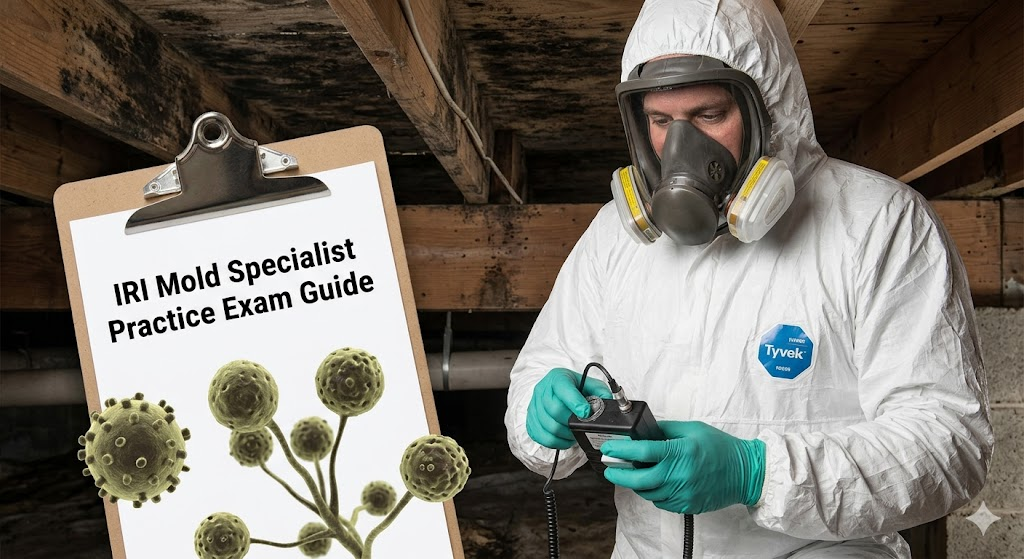
Additional Information
What the Course Entails and Exam Details
The core focus of the Mold Specialist curriculum, which this practice exam mirrors, covers the full spectrum of mold-related issues. The course material typically includes:
Principles of Mycology: Understanding fungal growth cycles, common mold species, and their biological characteristics.
Health Effects and Indoor Air Quality (IAQ): Learning about respiratory issues, allergies, and toxic reactions associated with mold exposure.
Assessment and Inspection Techniques: Identifying moisture sources, visible mold, hidden contamination, and utilizing moisture meters and thermal imaging.
Sampling Protocols: Mastery of surface (tape/swab) and air sampling methodologies, including proper chain of custody.
Remediation Planning and Procedures: Following industry standards like the IICRC S520, establishing containment (negative air pressure), and utilizing specialized equipment (HEPA vacuums, air scrubbers).
Personal Protective Equipment (PPE): Correct selection and use of respirators, gloves, and protective clothing.
Post-Remediation Verification (PRV): Techniques for ensuring a successful cleanup and passing final inspections.
The details of the official exam and this practice tool are designed to align with these critical domains.
What to Expect in the Final Exam
The official IRI Mold Specialist certification exam is rigorous, reflecting the technical nature of the work. Candidates should expect the following format:
Format: The exam typically consists of multiple-choice questions. These questions range from direct knowledge recall to scenario-based problem-solving, requiring candidates to apply remediation principles.
Question Count: While the exact number may vary slightly, candidates should prepare for a comprehensive assessment (often 100+ questions) covering all aspects of the curriculum.
Time Limit: A strict time limit is enforced (often 2-3 hours), requiring candidates to have a strong recall of technical information.
Passing Score: The required passing score is generally 70% or higher.
Specific Rules: The exam is typically proctored, whether taken online or in person. Standard testing protocols, such as no open books or external assistance, strictly apply.
The practice exam mimics this environment to provide realistic training.
How to Study and Exam Centers
How to Study
Achieving success on the IRI Mold Specialist exam requires a dedicated study plan.
Review the Core Material: Thoroughly study the comprehensive IRI training course material. This is your primary source of truth.
Focus on Key Standards: Dedicate extra time to understanding key industry standards, particularly the IICRC S520 (Reference Guide for Professional Mold Remediation).
Utilize Practice Exams: Take the IRI Mold Specialist Practice Exam multiple times. Treat it as a real testing environment—time yourself and review your incorrect answers to identify knowledge gaps.
Flashcards for Terminology: Mold remediation involves a lot of technical terminology and sampling methods. Create flashcards for fungal names, equipment uses, and PPE requirements.
Scenario-Based Thinking: Practice applying remediation steps to real-world scenarios. What containment is needed? How would you verify the work?
Exam Centers and Registration
The IRI Mold Specialist exam is typically administered online, allowing for flexibility for working professionals. Candidates must first register for the certification course through the International Restoration Institute (IRI) official website or authorized training providers.
Once the course is completed, the exam is unlocked within the online portal. Because the testing environment is often strictly controlled (proctored online), candidates need a stable internet connection, a quiet environment, and a computer with a functional webcam. Always check the official IRI documentation for the most current information regarding testing procedures and technology requirements.
Job Opportunities from the Course
Earning the IRI Mold Specialist certification can significantly advance your career and open doors to diverse roles. This credential unlocks numerous career paths in environmental services, insurance, and the built environment. Here are several prominent job opportunities this certification can help you achieve:
Mold Remediation Technician
Certified Mold Inspector
Indoor Air Quality (IAQ) Consultant
Restoration Project Manager
Water Damage Restoration Specialist
Industrial Hygienist (specifically for mold related projects)
Environmental Field Technician
Health and Safety Compliance Officer (within restoration/construction firms)
Insurance Claims Adjuster (with specialization in mold damage)
Lead Inspector/Remediator (when combined with additional licenses)
By leveraging this practice exam and the official certification, you are investing in a future specialized in creating healthier indoor environments.
Frequently Asked Questions
Reviews
5.0
Based on 0 reviews
Leave a Review
No reviews yet. Be the first to review!