
ITEC Facial Machines Practice Exam
$69.00
- Buy to unlock unlimited access to all Quiz questions and Answers in this Quiz.
- After purchase you can print a PDF of the whole quiz at any point. The PDF will contain the questions and the correct answers.
About this Exam
The ITEC Facial Machines qualification is a prestigious, internationally recognized certification designed for aspiring beauty therapists and skincare specialists who want to master advanced facial electrical treatments.
This comprehensive exam assesses your knowledge and practical skills across various specialized facial machines, positioning you for success in the competitive beauty and aesthetics industry.
Whether you're starting your career or looking to upscale your existing services, this qualification demonstrates your commitment to professional excellence and safety.
Ready to test your knowledge?
Buy Now to Access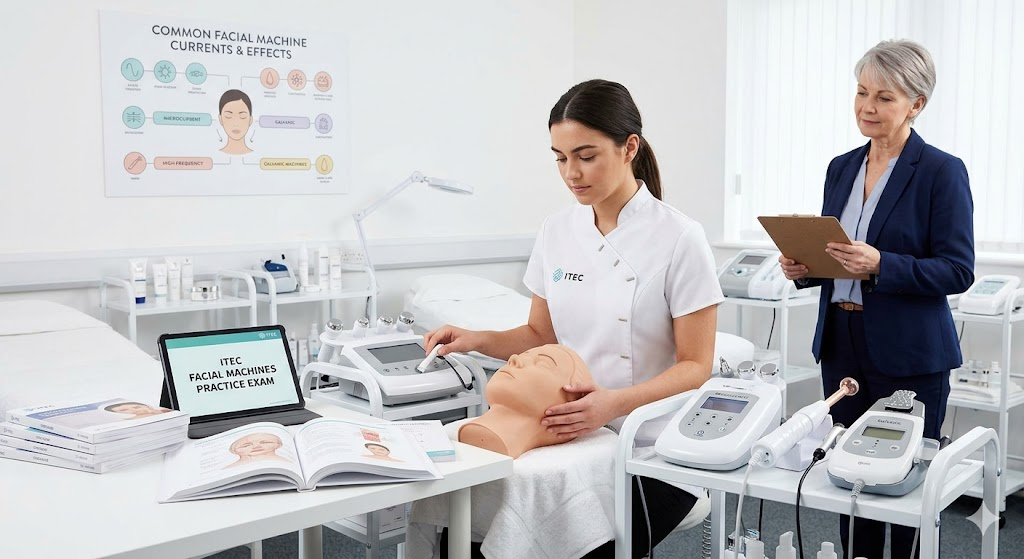
Additional Information
What the Course Entails and Exam Details
This course provides you with the crucial knowledge and hands-on experience required to confidently and effectively operate key facial electrical equipment.
You will study the principles of different electrical currents, safety protocols, client consultation techniques, contraindications, and the specific application of various machines.
The typical course syllabus includes in-depth training on essential devices: Galvanic (for deep cleansing and active ingredient penetration), High Frequency (for bacterial reduction and skin rejuvenation), Vacuum Suction (for lymphatic drainage and toxic removal), and sometimes Microcurrent (for non-surgical lifting and toning) and Faradic (for muscle stimulation).
ITEC exams associated with this qualification usually comprise both a practical examination where you demonstrate your treatment skills and often multiple-choice theoretical question papers testing your understanding of anatomy, physiology, machine principles, and salon hygiene. The exact configuration might vary slightly by specific ITEC level and provider.
What to Expect in the Final Exam
The final ITEC Facial Machines assessment is a rigorous process designed to confirm your professional competence and readiness to practice.
You should prepare for a thorough practical exam, typically lasting several hours, where an ITEC examiner will observe you perform various facial treatments on a model using the required machinery.
You will be assessed on your client care, professional hygiene, ability to perform a detailed skin analysis, selection and safe application of appropriate machines, treatment efficacy, and aftercare advice.
Additionally, expect to sit for comprehensive theory exam(s), usually in a multiple-choice format, which cover topics ranging from electrical safety and machine functions to specific anatomy and physiology relevant to facial treatments and common contraindications. The passing score for ITEC theoretical and practical components is generally set to a high standard, typically a specific percentage requirement (e.g., 60% or more, depending on the specific unit and year, although always aim for distinction).
How to Study and Exam Centers
Preparation is key. Ensure you have access to official ITEC study materials and textbooks. Utilize this very study guide and take practice exams and mock practical assessments to identify areas for improvement.
Practice your practical routines repeatedly on models or a training head, ensuring smooth, effective machine application and adhering strictly to safety standards and contraindications.
Create detailed anatomy, physiology, and electrical theory flashcards and study guides, focusing on understanding the 'why' behind each machine's effects and risks.
For the final exam, ITEC practical assessments must be taken at an ITEC Approved Center, typically a specific college or private beauty school that has the necessary specialized equipment and facilities. Theory exams are also generally held at these centers, but some theoretical components may have online options – always confirm the specific delivery method with your training provider.
Job Opportunities from the Course
Upon successful completion and earning your ITEC qualification, a wide array of career paths in the thriving beauty and wellness sectors becomes accessible.
Opportunities include:
Qualified Skincare Specialist: Working in salons, spas, or specialized aesthetic clinics, performing advanced facial electrical treatments.
Medical Aesthetician Assistant: Supporting dermatologists or cosmetic surgeons by providing preparatory and post-treatment skincare and complementary services (depending on local regulations and additional training).
Salon/Spa Manager or Owner: Utilizing your qualified understanding of advanced treatments and salon operations to lead or own a successful beauty business.
Beauty Product Representative/Trainer: Working for skincare or beauty machinery companies, demonstrating products and providing expert training to other professionals.
Cosmetics Educator: Sharing your knowledge in beauty schools or as a workshop leader, teaching the next generation of therapists.
Independent Mobile Therapist: Offering high-demand, portable advanced facial treatments directly to clients.
Working aboard cruise ships: Providing luxury spa treatments to an international clientele in a unique setting.
Frequently Asked Questions
Reviews
5.0
Based on 0 reviews
Leave a Review
No reviews yet. Be the first to review!