
JROTC Etiquette Practice Test
$69.00
- Buy to unlock unlimited access to all Quiz questions and Answers in this Quiz.
- After purchase you can print a PDF of the whole quiz at any point. The PDF will contain the questions and the correct answers.
About this Exam
Are you currently enrolled in the JUNIOR RESERVE OFFICERS' TRAINING CORPS (JROTC) program and preparing for your unit's etiquette assessments? The JROTC Etiquette Practice Exam is a comprehensive study resource designed specifically for cadets at all levels of the JROTC program. This practice test is an essential guide for individuals aiming to demonstrate their understanding of military courtesy, professional conduct, and general social protocol, all of which are core components of citizenship, character, and leadership development within JROTC. Whether you are a new LET 1 cadet or a seasoned leader, this resource helps you prepare effectively for internal tests or unit-specific certifications focused on proper decorum and respectful interactions, ensuring you can represent your unit and the values of the program with distinction.
Ready to test your knowledge?
Buy Now to Access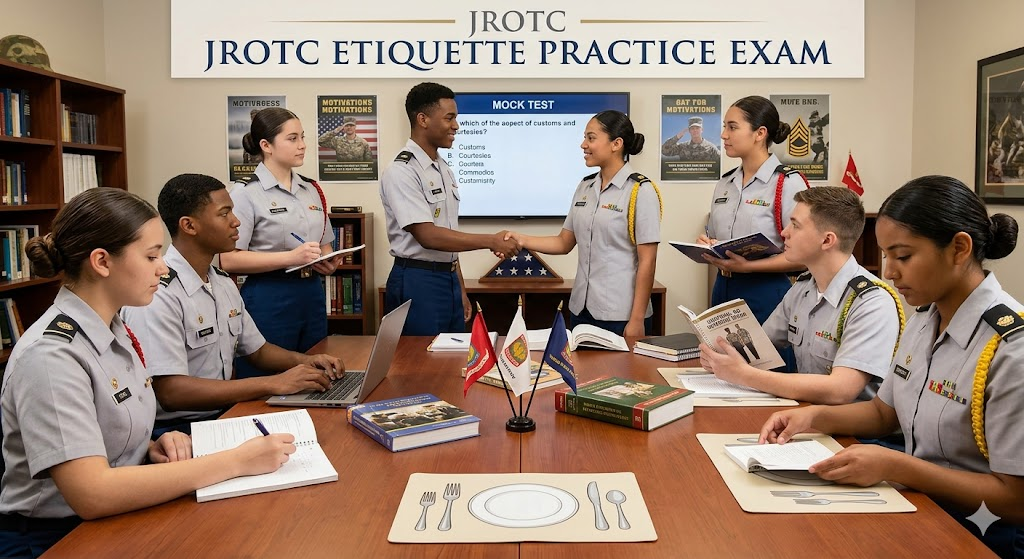
Additional Information
What the Course Entails and Exam Details
The JROTC program instills a wide range of foundational values and practical skills, with a strong emphasis on proper conduct and respect. The specific "Etiquette" area of the curriculum covered in this practice test includes, but is not limited to, the following core topics:
Military Courtesy and Greetings: Mastering the proper ways to address and greet superior officers (cadet and adult instructors), rendering salutes correctly and in appropriate contexts, and demonstrating proper reporting procedures.
Uniform Regulations and Presentation: Understanding and adhering to standards for grooming, uniform wear, rank placement, badge/pin positioning, and maintaining a professional appearance at all times when in uniform.
Flag Protocol and Respect for National Symbols: Displaying correct conduct during flag ceremonies, understanding the proper way to handle and honor the national flag, and behavior during the playing of the national anthem.
Social Etiquette and Manners: Principles of politeness in various settings, including introductions (junior to senior, handshakes, eye contact), writing professional correspondence, dining decorum (silverware, napkin placement, behavior at formal military dining-in/out events and balls), and receiving awards.
Chain of Command and Professional Relationships: Understanding and respecting the JROTC organizational structure, adhering to professional boundaries, and practicing effective, polite communication with all members of the unit and external guests.
The JROTC curriculum typically uses unit assessments, online quizzes, and practical evaluations rather than a single, universally standardized national certification exam for etiquette. This practice test prepares you for these internal milestones.
What to Expect in the Final Exam
As a practice resource for JROTC unit assessments, the format of the actual test you face in your program may vary significantly depending on your specific school, branch of service, and instructor. However, a typical JROTC etiquette evaluation, which this practice test reflects, often includes the following elements:
Multiple Choice Questions: You will encounter questions testing your factual knowledge of greeting protocols, uniform standards, specific dining rules, and general courtesies.
Scenario-Based Questions: Expect scenarios where you must determine the correct course of action, greeting, or behavior in a given professional or social situation (e.g., encountering a senior officer, attending a formal dinner, handling an invitation).
Practical Evaluations (Not in this written guide): In your JROTC unit, you should also expect to be practically assessed on areas such as proper saluting, uniform wear during regular uniform days or special events, reporting procedures, and potentially even table manners at a program function. This written practice test focuses on the knowledge-based aspect.
The exact number of questions, time limits, and passing score are determined by your specific JROTC instructor or program standards. There are typically no national standard time limits or strict rules beyond the program's general academic and conduct policies for these internal assessments.
How to Study and Exam Centers
Maximizing your performance on any JROTC etiquette assessment involves both knowledge acquisition and practical application.
Here are actionable study strategies and details on taking the exam:
How to Study Effectively:
Review JROTC Manuals and Resources: The primary source of information is your JROTC unit's cadet handbook and official program materials (specific to Army, Navy, Air Force, Marine Corps, or Coast Guard JROTC), which detail the required standards and procedures for etiquette, uniform wear, and military courtesy. Read these sections thoroughly.
Take Practice Tests and Quizzes: Utilize practice tests, including this guide, to familiarize yourself with the question styles, identify areas of weakness, and reinforce key concepts. Time yourself on individual questions in practice to simulate a real test environment.
Role-Play Scenarios: Actively practice the protocols with other cadets or sympathetic friends/family members. Practice greetings, reporting scenarios, proper introductions, and even formal dining situations.
Self-Inspection and Peer Review: When in uniform, perform thorough self-inspections based on the regulations, and have a trusted peer review your appearance and etiquette for accuracy.
Utilize Instructor Guidance: Don't hesitate to ask your JROTC instructors (SMI/MI) for clarification on any protocol, uniform standard, or general etiquette principle. They are your best resource for accurate information tailored to your program.
Where and How to Take the Exam:
Exam Centers: JROTC etiquette assessments are strictly internal assessments conducted within your school or JROTC unit. They are not taken at external, standardized testing centers like Pearson VUE, which are used for professional certifications.
Methods: The test is usually administered in your classroom, during a regular JROTC period, or via a school- or program-provided online platform or portal accessible through your educational account. Your JROTC instructors will coordinate and announce the specific scheduling, format, and method for your evaluation.
Job Opportunities from the Course
Successful completion of the JROTC program, including achieving high standards in etiquette and conduct, does not directly lead to specific job certifications in the private sector. However, your dedicated participation and success in JROTC are highly valued by both military recruiters and civilian employers. The discipline, leadership, teamwork, and strong sense of protocol you develop, which are reinforced by etiquette mastery, are transferable skills that unlock numerous career paths and educational opportunities:
Military Service (Enlisted): Strong performance in JROTC can make you a more competitive candidate for enlisting in any branch of the U.S. Armed Forces and can lead to advanced placement or pay upon entry.
Military Officer (Commissioned): Success in JROTC can be a significant factor in securing appointments to U.S. Service Academies (like West Point or the Naval Academy) or obtaining scholarships for ROTC programs at civilian colleges and universities, leading to a commission as an officer in the military.
Federal and State Government Positions: Many government roles, particularly those with a focus on public service, security, or strictly defined operational procedures (like federal law enforcement, homeland security, and state public service), value the discipline and etiquette skills learned in JROTC.
Civilian Leadership Roles: The leadership, self-discipline, and respectful conduct skills are highly sought after by employers across all sectors for entry-level and potential management positions. Success in a rigorous program like JROTC demonstrates strong character to future civilian employers.
Protocol Specialist (with further education/experience): While a niche area, roles focusing on official protocol, event coordination, and managing respectful, formal interactions within large organizations, governments, or international bodies, particularly those with military connections, benefit greatly from the early exposure to these principles in JROTC.
Security and Law Enforcement Positions: Roles requiring discipline, following procedures, respectful communication, and professional conduct (like security officer, police officer, or private investigator) often view JROTC participation favorably.
College and Scholarship Opportunities: JROTC leadership experience and a strong academic/conduct record can greatly enhance college applications and competitive scholarship applications, preparing you for higher education.
Prepare thoroughly and apply the principles of etiquette with pride and consistency, and you will not only succeed in your JROTC assessments but also lay a strong foundation for your future academic and professional career. Good luck with your studies, Cadets!
Frequently Asked Questions
Reviews
5.0
Based on 0 reviews
Leave a Review
No reviews yet. Be the first to review!