
Ken Tesh Water Distribution Operator Exam 1 Practice
$69.00
- Buy to unlock unlimited access to all Quiz questions and Answers in this Quiz.
- After purchase you can print a PDF of the whole quiz at any point. The PDF will contain the questions and the correct answers.
About this Exam
The Ken Tesh Water Distribution Operator Exam 1 Practice is a premier study resource designed specifically to help aspiring water utility professionals master the foundational knowledge required for entry-level operator certification. This is not the actual state licensing exam, but rather a widely respected, comprehensive simulation tool. It is created for individuals preparing for their Grade 1 or Class 1 Water Distribution Operator certification, a crucial step for launching a career in public works, municipal water departments, or private water supply companies. By simulating the rigors of the final test, this practice material aims to build confidence, reduce test anxiety, and ensure a deep understanding of the core concepts vital to the safe and efficient distribution of potable water.
Ready to test your knowledge?
Buy Now to Access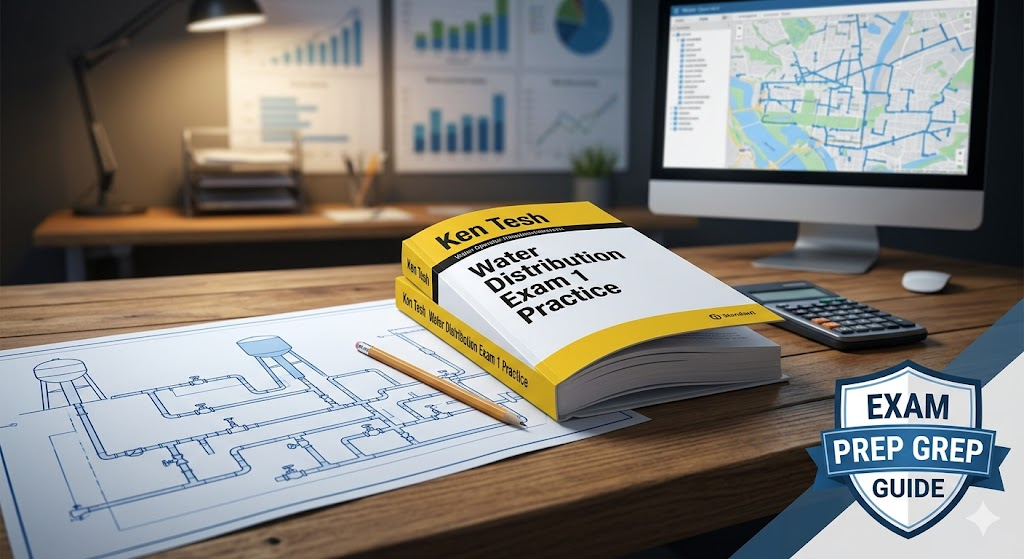
Additional Information
What the Course Entails and Exam Details
This practice exam resource is meticulously structured to mirror the syllabus and difficulty level of standardized Level 1 certification tests across many jurisdictions. While format may vary (e.g., a physical book vs. online access), the content generally focuses on testing your proficiency through hundreds of practice questions. The core syllabus covered typically includes essential water math, such as calculating volume, flow rates, pressure, and chemical dosing. Operators are also tested on their knowledge of distribution system components, including the operation, installation, and maintenance of pipes, valves, pumps, hydrants, and meters. Crucially, the material ensures a solid understanding of water quality principles, regular sampling procedures, safety regulations (like confined space entry and traffic control), cross-connection control, and fundamental operator responsibilities under state and federal drinking water acts.
What to Expect in the Final Exam
While you are using the Ken Tesh practice material to prepare, it is vital to know what to expect when you challenge the actual Grade 1 state certification exam. These final licensing tests are almost always formal, supervised events, often delivered in a computer-based format at authorized testing centers. Candidates should expect between 70 to 100 multiple-choice questions. A time limit is strictly enforced, usually ranging from two to four hours, demanding both accuracy and efficient time management. The questions will test both conceptual knowledge and applied mathematical skills. While passing requirements vary slightly by state or province, a score of at least 70% is the standard threshold to be awarded a Water Distribution Operator certificate. These exams are generally closed-book, though a standard formula sheet might be provided.
How to Study and Exam Centers
The most effective way to utilize the Ken Tesh practice exam is to treat it like the real event. Early in your study phase, take one full practice test under timed, closed-book conditions to establish a baseline. The most critical step follows: analyze every answer, especially the ones you answered incorrectly, to fully understand the logic and relevant regulations. This practice resource acts as a diagnostic tool, allowing you to focus your subsequent study time on weak areas—whether that is water math, pumps, or safety protocols. Supplement this practice by memorizing key water math formulas and reviewing your state’s basic operator training handbook.
Regarding the final state certification, you cannot register for it through the Ken Tesh study resource. Instead, you must apply directly to your state’s environmental protection agency, department of health, or specific operator certification board. These bodies provide the information on how and where to take the exam. Often, standardized exams are administered by third-party testing vendors like Pearson VUE or PSI, which have numerous physical testing centers throughout the state. Some regions may also offer authorized testing through local utility associations or specific vocational schools.
Job Opportunities from the Course
Successfully passing your Grade 1 Water Distribution Operator state certification, aided by thorough preparation with the Ken Tesh practice material, opens the door to a stable and essential career path. While this resource itself doesn't grant a license, the certification it helps you achieve is often a mandatory requirement for hiring or advancement within the water industry. This level of certification unlocks various entry-level positions where you will be responsible for the day-to-day operation and maintenance of vital water infrastructure.
Key job opportunities unlocked by Level 1 certification include:
Water Distribution Operator I
Water Utility Worker
Water Maintenance Technician
Meter Reader and Technician
Hydrant Crew Member
Line Repair Technician
Water Quality Sampler
Utility Service Worker
These roles form the backbone of public health, ensuring that safe, clean drinking water reaches every home and business in the community. As you gain experience and continue your education, Level 1 certification serves as the prerequisite foundation for advancing to higher Class levels (Class 2, 3, and 4), which lead to supervisory and managerial positions within the utility.
Frequently Asked Questions
Reviews
5.0
Based on 0 reviews
Leave a Review
No reviews yet. Be the first to review!