
Kentucky 96-Hour Salesperson Pre-License State Practice Exam
$69.00
- Buy to unlock unlimited access to all Quiz questions and Answers in this Quiz.
- After purchase you can print a PDF of the whole quiz at any point. The PDF will contain the questions and the correct answers.
About this Exam
The Kentucky 96-Hour Salesperson Pre-License certification is the foundational stepping stone for anyone looking to build a rewarding and lucrative career in the real estate industry.
Designed for aspiring real estate agents, this comprehensive program and its subsequent state exam ensure that candidates possess the legal, financial, and practical knowledge required to represent buyers and sellers effectively.
Whether you are transitioning into a new career, looking for a flexible entrepreneurial path, or simply passionate about property and housing markets, passing this exam proves you are a qualified and capable professional ready to serve the public in Kentucky.
Ready to test your knowledge?
Buy Now to Access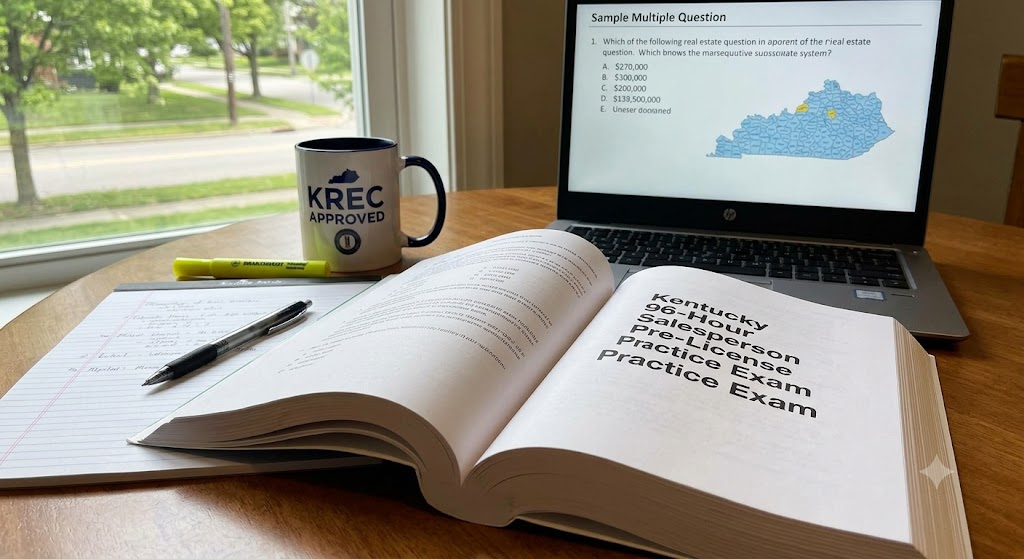
Additional Information
What the Course Entails and Exam Details
To even sit for the Kentucky real estate exam, candidates must first complete 96 hours of state-approved pre-licensing education.
This robust syllabus is carefully designed to cover every facet of the real estate transaction process.
Core topics include property ownership, land use controls and regulations, property valuation and market analysis, financing, and the principles of agency.
Furthermore, you will dive deeply into contract law, understanding the intricacies of purchase agreements, leases, and listing contracts.
A significant portion of the course is also dedicated specifically to Kentucky real estate laws, detailing the rules enforced by the Kentucky Real Estate Commission (KREC), ethical guidelines, and state-specific licensing requirements.
What to Expect in the Final Exam
Once your 96-hour education is complete, you will face the official Kentucky Real Estate Salesperson Exam.
The test is entirely multiple-choice and is divided into two distinct portions: the National section and the State-specific section.
The National portion generally contains 80 questions covering overarching real estate principles, while the State portion contains 50 questions focused strictly on Kentucky laws and KREC regulations.
You are given a total of 210 minutes to complete both sections (150 minutes for the National portion and 60 minutes for the State portion).
To pass and earn your license, you must achieve a minimum passing score of 75% on both parts of the exam independently.
Strict rules apply at testing centers, including the prohibition of personal electronic devices, bags, and reference materials inside the testing room, though basic non-programmable calculators are generally permitted.
How to Study and Exam Centers
Success on the Kentucky state exam requires a strategic and disciplined approach to studying.
Start by taking multiple timed practice exams to familiarize yourself with the pressure and pacing of the real test.
Flashcards are highly effective for memorizing real estate vocabulary, essential legal terms, and state-specific timelines (such as how many days you have to deposit earnest money).
Make sure to focus heavily on the Kentucky-specific section, as many students find state laws to be the trickiest part to master.
When you are ready to test, the official state exam is administered by PSI Services.
You must schedule your exam directly through the PSI online portal or by phone.
Exams are primarily taken at authorized PSI physical testing centers located throughout Kentucky, such as in Louisville, Lexington, Bowling Green, and other regional hubs, though you should check the PSI portal for the most current options regarding securely proctored online exams.
Job Opportunities from the Course
Passing this exam opens the door to a dynamic and highly flexible industry with excellent earning potential.
Licensed Real Estate Agent: As a traditional real estate salesperson, you will represent buyers and sellers in residential or commercial property transactions, guiding them through negotiations and closings.
Property Manager: You can oversee the daily operations, tenant relations, and maintenance of residential or commercial rental properties on behalf of property owners.
Leasing Agent: Specializing in rentals, you will help landlords find qualified tenants, show properties, and finalize lease agreements.
Real Estate Assistant: For those wanting to learn from top producers, working as a licensed assistant allows you to handle administrative tasks, show homes, and prepare contracts while earning a steady income.
Real Estate Investor: While you don't strictly need a license to invest, having your salesperson license gives you direct access to the Multiple Listing Service (MLS), saving you commission fees and giving you a competitive edge in finding lucrative properties.
Frequently Asked Questions
Reviews
5.0
Based on 0 reviews
Leave a Review
No reviews yet. Be the first to review!