
Kettering Polysomnography (PSG) Practice Test
$69.00
- Buy to unlock unlimited access to all Quiz questions and Answers in this Quiz.
- After purchase you can print a PDF of the whole quiz at any point. The PDF will contain the questions and the correct answers.
About this Exam
The Kettering Polysomnography (PSG) exam preparation program is a highly specialized study system designed for healthcare professionals aiming to become Registered Polysomnographic Technologists (RPSGT).
This credential is the gold standard for sleep technologists, respiratory therapists, and allied health professionals who want to specialize in sleep medicine and the diagnosis of sleep disorders.
By utilizing the Kettering practice test, candidates can bridge the gap between their foundational medical knowledge and the highly specific requirements of the national board exam.
It provides a precise, targeted approach to mastering complex sleep study concepts, ensuring you feel confident, capable, and fully prepared on test day.
Ready to test your knowledge?
Buy Now to Access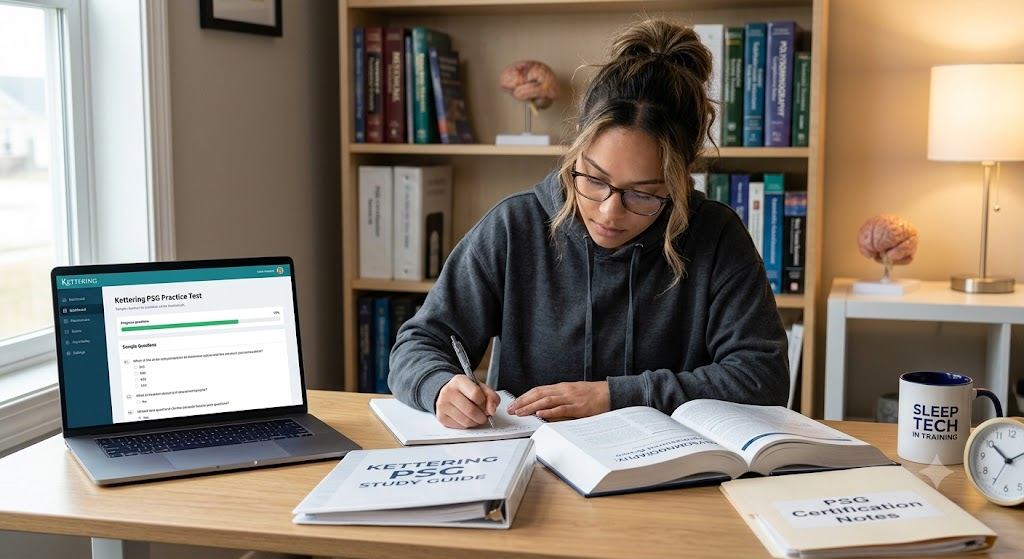
Additional Information
What the Course Entails and Exam Details
The Kettering Polysomnography course is incredibly comprehensive, breaking down the vast field of sleep medicine into digestible, easy-to-understand learning modules.
It covers critical syllabus topics such as patient preparation, sleep staging, event scoring, and accurate data acquisition.
You will also dive deep into therapeutic interventions, including CPAP and BiPAP titration, as well as emergency protocols and overall patient safety.
The practice materials emphasize technical instrumentation, teaching you how to properly place and troubleshoot EEG, EOG, EMG, and respiratory monitoring equipment.
Through targeted audio lectures, study guides, and practice exams, the course effectively mimics the cognitive load and subject distribution of the actual credentialing test.
What to Expect in the Final Exam
The official RPSGT exam is a rigorous, computer-based test consisting of 175 multiple-choice questions, of which 150 are scored and 25 are unscored pretest items.
Candidates are given a strict maximum time limit of exactly three hours to complete the entire examination.
The passing score is determined through a scaled scoring system, meaning you must achieve a specific threshold of correct answers established by the credentialing board.
You can expect a heavy emphasis on scenario-based questions where you must accurately identify sleep stages, score respiratory events, and choose the correct clinical intervention based on visual polysomnographic data.
Specific rules apply on exam day, including strict identification verification and a complete ban on personal items, electronics, and outside study notes inside the testing room.
How to Study and Exam Centers
To study effectively, you should integrate the Kettering audio lectures with the accompanying workbook to engage both your auditory and visual learning styles simultaneously.
Taking the Kettering practice exams repeatedly is absolutely crucial, as it helps you identify your weak areas and get accustomed to the tricky wording of board-level questions.
Employ spaced repetition and dedicate specific study blocks purely to memorizing scoring rules, understanding montage setups, and recognizing cardiac arrhythmias.
When you are finally ready to take the official exam, you will need to register and be approved through the Board of Registered Polysomnographic Technologists (BRPT).
The final examination is administered in person at secure, authorized Pearson VUE testing centers, which are conveniently located in cities worldwide.
Job Opportunities from the Course
Earning your RPSGT credential unlocks a variety of rewarding, in-demand, and specialized career paths within the rapidly growing field of sleep medicine.
Registered Polysomnographic Technologist (RPSGT) is the primary role, allowing you to run overnight sleep studies and score data in hospitals or private sleep clinics.
Sleep Center Manager or Director positions become readily available as you gain experience, allowing you to oversee the administrative and clinical operations of a dedicated facility.
Clinical Sleep Educator roles are perfect for those who want to work directly with patients during the day to improve CPAP adherence and manage overall sleep hygiene.
Home Sleep Testing (HST) Coordinator is another excellent path, focusing on the deployment, instruction, and data analysis of remote sleep study equipment.
Pediatric Sleep Technologist is a highly sought-after and specialized route, dedicated to diagnosing and treating complex sleep disorders in infants and children.
Frequently Asked Questions
Reviews
5.0
Based on 0 reviews
Leave a Review
No reviews yet. Be the first to review!