
Key Concepts in Counseling Ethics and Practice Exam Practice
$69.00
- Buy to unlock unlimited access to all Quiz questions and Answers in this Quiz.
- After purchase you can print a PDF of the whole quiz at any point. The PDF will contain the questions and the correct answers.
About this Exam
The Key Concepts in Counseling Ethics and Practice certification serves as a foundational milestone for aspiring mental health professionals.
It is designed specifically for counselors, therapists, social workers, and clinical psychology students who need to demonstrate a profound understanding of professional conduct.
This exam ensures that practitioners are fully equipped to navigate complex moral and legal dilemmas before they begin working directly with vulnerable clients.
By taking this practice exam, you are actively safeguarding your future practice and ensuring the highest standard of care for those you will eventually serve.
Ready to test your knowledge?
Buy Now to Access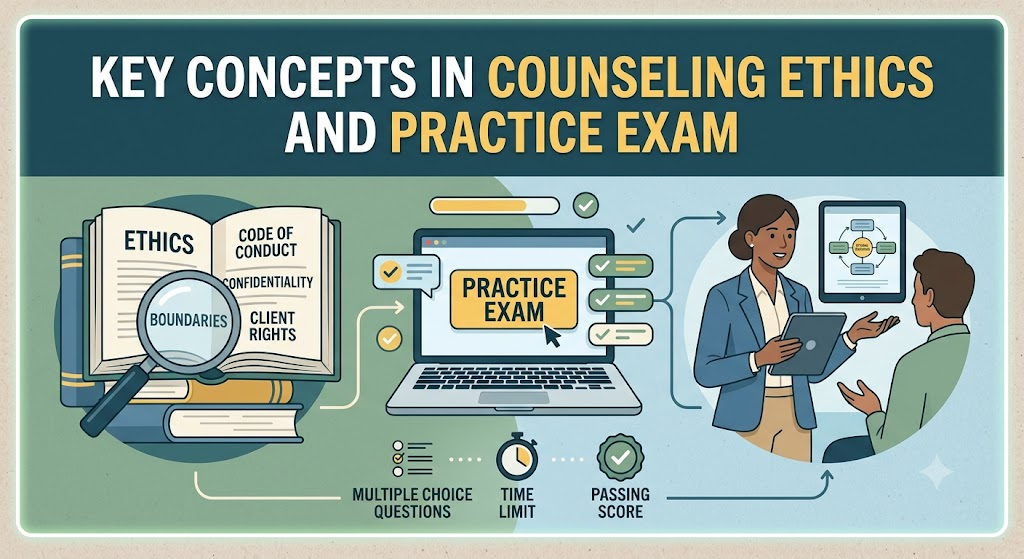
Additional Information
What the Course Entails and Exam Details
This comprehensive course covers the essential pillars of modern therapeutic practice.
You will delve deeply into professional codes of ethics, such as those established by the American Counseling Association (ACA) or the British Association for Counselling and Psychotherapy (BACP).
Core syllabus topics include maintaining strict client confidentiality, establishing healthy professional boundaries, and managing challenging dual relationships.
Furthermore, the curriculum extensively covers the legal aspects of counseling, informed consent protocols, duty to warn, and multicultural competence in therapy.
Mastering these skills allows you to handle ethical gray areas with confidence and legal compliance.
What to Expect in the Final Exam
The final examination is rigorously structured to test both your theoretical knowledge and your practical application of ethical guidelines.
You can expect a format consisting primarily of multiple-choice questions and complex, scenario-based vignettes.
These case studies will require you to analyze a realistic clinical dilemma and choose the most ethical course of action based on established professional codes.
Most exams in this field enforce a time limit of two to three hours, requiring you to maintain focus and manage your time effectively.
While specific rules vary by credentialing board, passing scores typically range between 70% and 75%, and you are strictly prohibited from using outside materials during the proctored session.
How to Study and Exam Centers
Success on this exam requires moving beyond rote memorization and developing a critical ethical mindset.
Your best study strategy is to regularly take timed practice exams to familiarize yourself with the question formats and time constraints.
Additionally, work through varied case studies with study groups to debate different ethical viewpoints and solidify your reasoning skills.
When you are ready to test, you will typically schedule your exam through national credentialing bodies or their partnered proctoring services, such as Pearson VUE.
These exams can often be taken at specific, highly secure physical testing centers across the country, or via closely monitored online proctoring portals from the comfort of your home.
Job Opportunities from the Course
Earning a certification rooted in counseling ethics dramatically enhances your professional credibility and employability.
You will be well-positioned to pursue a role as a Licensed Professional Counselor (LPC), providing direct therapy to individuals and groups.
It also opens doors to becoming a Clinical Social Worker, where you might navigate complex family dynamics and systemic community issues.
Many graduates find fulfilling careers as School Counselors, guiding students through academic and emotional challenges in an educational setting.
Additionally, this qualification is crucial for aspiring Substance Abuse Counselors or those wishing to open their own Private Practice Therapy clinic.
Frequently Asked Questions
Reviews
5.0
Based on 0 reviews
Leave a Review
No reviews yet. Be the first to review!