
Land Transportation Office (LTO) Practice Test
$69.00
- Buy to unlock unlimited access to all Quiz questions and Answers in this Quiz.
- After purchase you can print a PDF of the whole quiz at any point. The PDF will contain the questions and the correct answers.
About this Exam
The Land Transportation Office (LTO) Drivers License
Written Exam is a critical step for anyone aspiring to legally drive a motor
vehicle in the Philippines. This comprehensive examination is designed to
assess an applicant's knowledge of essential road safety rules, traffic
regulations, and safe driving practices. Whether you are applying for a Student
Permit, a Non-Professional Driver's License, or looking to upgrade to a
Professional License, passing this test is a mandatory requirement. Its primary
goal is to ensure that all drivers on Philippine roads possess the necessary
understanding to operate vehicles responsibly and contribute to overall road
safety.
Ready to test your knowledge?
Buy Now to Access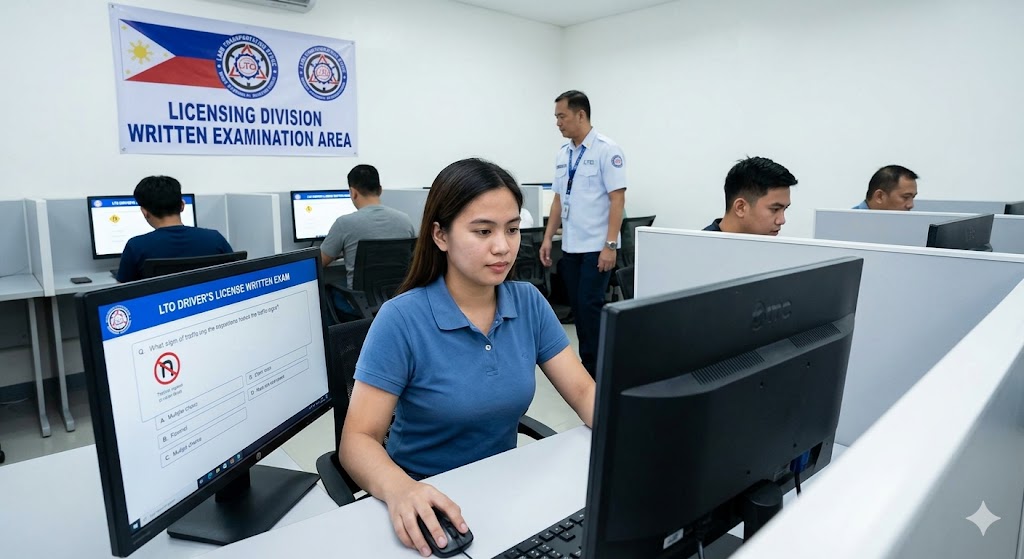
Additional Information
What the Course Entails and Exam Details
This examination covers a broad range of topics fundamental to responsible driving. While the specific questions may vary, the core syllabus typically includes:
• Philippine Traffic Rules and Regulations: Comprehensive knowledge of Republic Act No. 4136 (Land Transportation and Traffic Code) and other relevant driving laws.
• Road Signs and Markings: Identification and interpretation of various regulatory, warning, and informative road signs, as well as pavement markings.
• Safe Driving Practices: Principles of defensive driving, proper lane usage, right-of-way rules, overtaking procedures, and parking regulations.
• Vehicle Operations and Maintenance: Basic understanding of vehicle mechanics, essential safety checks, and responsible vehicle ownership.
• Emergencies and Road Hazards: How to respond appropriately to emergencies, accidents, and hazardous road conditions.
• Driver Licensing Procedures: Familiarity with the different types of licenses, classification of vehicles, and the rules governing driver licensing.
What to Expect in the Final Exam
The final LTO Written Exam is typically a multiple-choice format, often administered via computer-based testing terminals at official LTO licensing centers.
• Exam Format: Multiple-choice questions.
• Number of Questions: The number of questions varies depending on the type of license applied for (e.g., 40 questions for Non-Professional, 60 questions for Professional).
• Time Limit: Applicants are generally given a specific time limit to complete the exam (e.g., 60 minutes).
• Passing Score: The passing score required also varies (e.g., 30 out of 40 for Non-Professional, 45 out of 60 for Professional).
• Specific Rules: The exam is typically available in English and Filipino. Electronic devices and reference materials are strictly prohibited during the test.
• How to Study and Exam Centers
Preparation is key to succeeding in the LTO Written Exam. Here are effective study strategies:
• Utilize Official Resources: Start with the official LTO Reviewer available on the LTO website or at LTO offices. This is the most reliable source for potential exam topics.
• Take Online Practice Tests: There are numerous websites and mobile apps, including official LTO partner platforms, offering practice exams that simulate the actual test format. Repetitive practice helps reinforce knowledge.
• Study Road Signs: Dedicate specific time to memorizing and understanding the meaning of all Philippine road signs and markings.
• Review Traffic Laws: Familiarize yourself with key sections of the Land Transportation and Traffic Code, especially rules related to right-of-way, speeding, and alcohol/drug use while driving.
• Enroll in Driving Schools: Authorized driving schools provide structured courses that cover both theoretical knowledge and practical driving skills, often including LTO exam preparation.
• Where to Take the Exam: The written exam must be taken in person at an official Land Transportation Office (LTO) Licensing Center or District Office nationwide. You will need to book an appointment or visit as a walk-in applicant (depending on current LTO policies) after completing the required practical driving course (for new licenses).
Job Opportunities from the Course
While the driver's license itself isn't a "course," obtaining it, especially a Professional License, unlocks numerous career paths in the transportation industry:
• Delivery Driver (Motorcycle, Van, Truck)
• Taxi and Ride-Hailing Driver (Grab, etc.)
• Public Utility Vehicle (PUV) Driver (Jeepney, Bus)
• Private Chauffeur/Company Driver
• Logistics and Supply Chain Driver
• Driving Instructor (with additional certifications)
• Heavy Equipment Operator (requires special license codes)
• Sales Representative (requiring vehicle travel)
• Emergency Services Driver (Ambulance, Fire Truck)
• Law Enforcement Officer (Traffic Patrol)
Frequently Asked Questions
Reviews
5.0
Based on 0 reviews
Leave a Review
No reviews yet. Be the first to review!