
Legal Issues of Code Enforcement Practice Test
$69.00
- Buy to unlock unlimited access to all Quiz questions and Answers in this Quiz.
- After purchase you can print a PDF of the whole quiz at any point. The PDF will contain the questions and the correct answers.
About this Exam
The Legal Issues of Code Enforcement practice exam is a
comprehensive assessment tool designed for individuals preparing for a
certification in the field of code enforcement. This exam is ideal for current
code enforcement officers, housing inspectors, zoning officials, and other
public service professionals who must understand the legal framework behind
their everyday duties. It validates that a candidate possesses the knowledge to
enforce local ordinances and state laws while adhering to constitutional rights
and avoiding costly municipal liability.
Ready to test your knowledge?
Buy Now to Access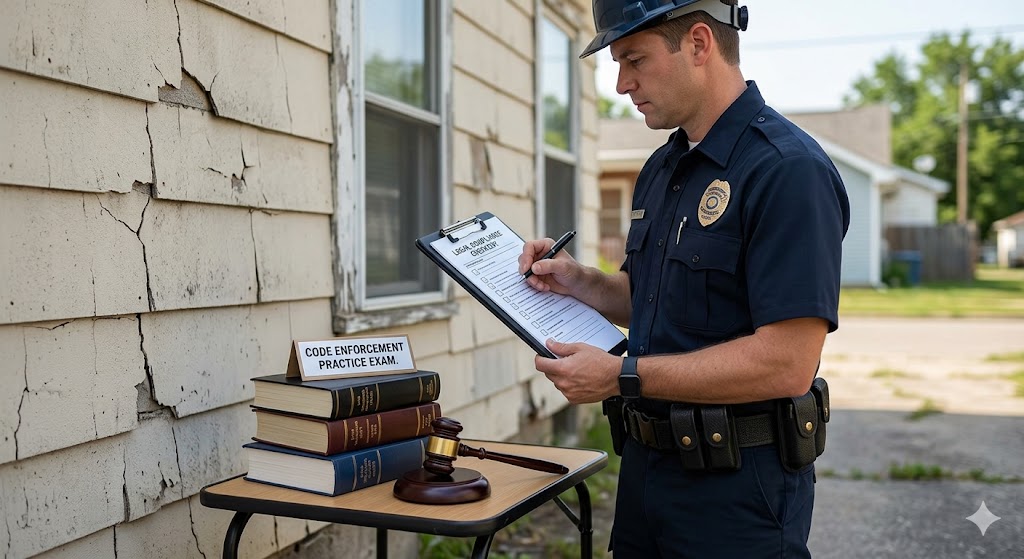
Additional Information
What the Course Entails and Exam Details
The core curriculum leading to this exam, or the study
material for the practice test, covers essential legal principles required for
effective and lawful code enforcement. It focuses on constitutional
amendments—particularly the Fourth Amendment (search and seizure) and the
Fourteenth Amendment (due process)—that dictate how an officer may interact
with private property and citizens. Candidates will learn about the legal
process for issuing citations, managing administrative hearings, obtaining
inspection warrants, and navigating the judicial system. It also covers ethics,
liability issues for officers and municipalities, and the distinction between
civil and criminal enforcement procedures.
What to Expect in the Final Exam
The final exam typically consists of multiple-choice
questions designed to test knowledge of specific legal cases, procedural rules,
and constitutional rights. Scenarios are often presented, requiring the
candidate to apply legal concepts to realistic field situations. A specific
passing score is required, often around 70% or higher, to demonstrate
competence in the subject matter. The time limit for the exam is generally
fixed, such as two or three hours, requiring a quick and accurate recall of
legal details.
How to Study and
Exam Centers
The most effective way to study is to blend reading with
practical testing. Review the official study guides or textbook materials,
paying special attention to definitions of legal terms and constitutional
summaries. Create flashcards for key legal cases and concepts. Taking a
practice test, like this one, is crucial for identifying your weak areas and
getting used to the style of the questions. It is also beneficial to study with
peers or attend review seminars provided by your certification body. The final
exam is often administered through computer-based testing centers (e.g.,
Pearson VUE) or through secured online proctoring services. Be sure to check
with your specific local or national certification organization for authorized
locations.
Job Opportunities
from the Course
Obtaining a certification in the legal issues of code
enforcement significantly enhances job prospects in local government. It marks
you as a highly qualified professional who can protect a community's safety
while operating within the law. Possible job roles include:
- Code
Enforcement Officer
- Code
Enforcement Inspector
- Housing
Inspector
- Zoning
Official
- Nuisance
Abatement Officer
- Chief
Code Enforcement Officer (Career advancement)
Frequently Asked Questions
Reviews
5.0
Based on 0 reviews
Leave a Review
No reviews yet. Be the first to review!