
Limited Licensed Electrician (LLE) Practice Test
$69.00
- Buy to unlock unlimited access to all Quiz questions and Answers in this Quiz.
- After purchase you can print a PDF of the whole quiz at any point. The PDF will contain the questions and the correct answers.
About this Exam
The Limited Licensed Electrician (LLE) designation is a specialized electrical license tailored for individuals looking to perform electrical work within a specific, restricted scope. This certification is typically ideal for residential service technicians, maintenance workers, or specialty installers who don't require the full breadth of a Journeyman or Master Electrician license but need recognized qualification to legally undertake specific electrical projects. The LLE exam assesses competency in fundamental electrical principles, safety standards, and relevant code compliance, ensuring that practicing limited electricians have the necessary knowledge to operate safely and effectively within their defined scope. If you're aspiring to jumpstart your career in electrical work with a focused specialization, understanding and preparing for this exam is a crucial first step.
Ready to test your knowledge?
Buy Now to Access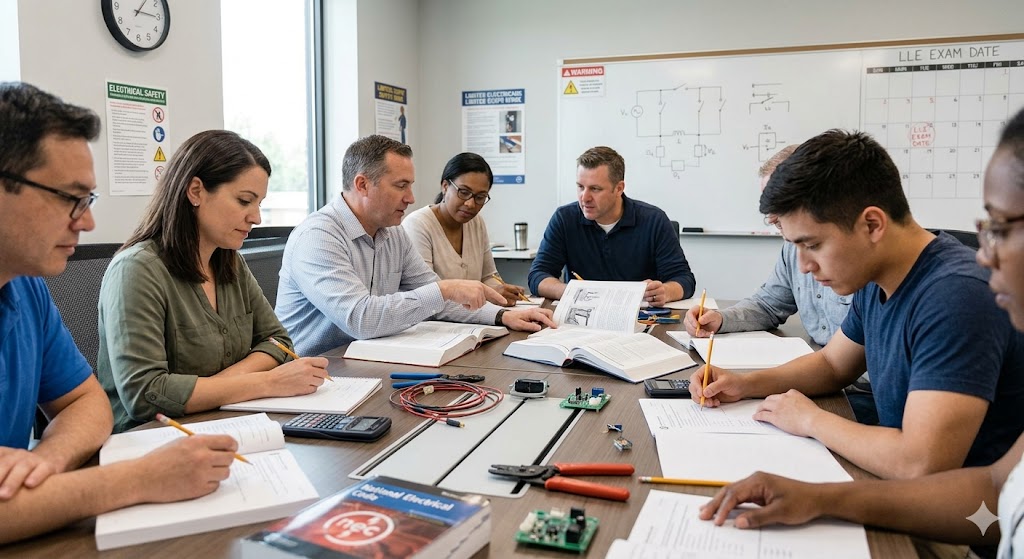
Additional Information
What the Course Entails and Exam Details
To successfully pass the LLE exam, you must demonstrate a
comprehensive understanding of core electrical concepts and practical
application relevant to your limited scope of work. While specific curricula
and topics vary significantly by jurisdiction, certain key areas form the
backbone of the knowledge required. These typically include:
- A
strong grasp of the National Electrical Code (NEC), with a focus on the
chapters and sections applicable to limited wiring methods, residential
calculations, basic commercial installations, grounding and bonding, and
overcurrent protection.
- Fundamental
electrical theory, covering concepts like Ohm's Law, power calculations,
circuit design basics, and identifying various electrical components.
- Practical
application and installation practices, including understanding blueprint
reading, specific wiring methods and materials, proper termination
techniques, and equipment installation guidelines within the defined
scope.
- Rigorous
adherence to electrical safety standards and protocols, emphasizing
personal protective equipment (PPE), safe work practices, lockout/tagout
procedures, and recognizing potential hazards.
Understanding how to navigate the relevant codebook
quickly and efficiently is often as critical as possessing the underlying
theoretical knowledge.
What to Expect in the Final Exam
The LLE final exam is typically a structured assessment
designed to validate your electrical proficiency. While the exact format and
details are subject to variation depending on the state or local licensing
board, here's what you can generally expect:
- Format:
The exam is almost always multiple-choice. Expect a series of questions
that test your understanding of theoretical concepts, specific code
requirements, calculation skills, and practical problem-solving. It is
usually open-book, allowing you to use an approved edition of the National
Electrical Code (NEC). Be sure to check which specific, unmodified
edition is permitted, and do not bring any unauthorized materials, notes,
or modified books.
- Passing
Score: You will need to achieve a specific passing score, often ranging
from 70% to 75% or higher, to demonstrate adequate proficiency. Focus on
accuracy to maximize your score and ensure success.
- Time
Limit: The exam is timed, typically lasting several hours (e.g., 3-4
hours). Effective time management is essential, ensuring you have enough
time to answer all questions, carefully read the code references when
needed, and review your answers before submitting.
- Strict
Rules: Strict rules and proctoring procedures are strictly enforced.
You'll need to provide valid identification, and prohibited items (like
mobile phones, programmable calculators, or certain study materials) will
not be allowed in the testing area. Pay close attention to all pre-exam
instructions and arrive well-prepared.
How to Study and Exam Centers
Thorough preparation is the key to conquering the LLE
exam. Here are some actionable strategies to help you succeed:
- Engage
with Limited Licensed Electrician Practice Exams: Utilizing high-quality
practice exams is absolutely critical. These practice tests simulate the
real exam experience, familiarizing you with the typical question formats,
difficulty level, and time pressure. Regular practice identifies your
areas of weakness, builds your confidence, and refines your test-taking
speed and accuracy. Review both correct and incorrect answers carefully to
understand the underlying principles.
- Study
the National Electrical Code (NEC) DILIGENTLY: This is arguably the most
important step. Don't just read the codebook – actively study the relevant
chapters, understand how to interpret its provisions, and practice
finding specific information quickly. Learn the structure, key
definitions, and navigational aids of the specific NEC edition you'll be
using. Practice referencing the code under timed conditions to improve
speed.
- Review
Essential Calculations: Ensure you can confidently perform relevant
electrical calculations, such as load calculations, circuit sizing,
voltage drop estimations, and sizing conductors, grounded conductors, and
overcurrent devices, based on typical scenarios covered by the limited
license scope. Practice these calculations until you can complete them
accurately and efficiently.
- Utilize
Other Study Materials: Consider incorporating other study resources like
textbooks, online courses specifically designed for LLE preparation,
flashcards for key terms and code sections, and video tutorials. Seek out
reputable materials that align with your local curriculum and exam
structure.
- Seek
Mentorship or Join Study Groups: Connect with experienced electricians,
colleagues, or others preparing for the exam. Discussing concepts, sharing
insights, and participating in study groups can provide valuable support,
different perspectives, and accountability.
- Simulate
Exam Conditions: As you get closer to the exam date, dedicate specific
study sessions to simulating the actual exam experience. Use practice
tests under realistic time constraints and strict codebook-only access
rules to practice time management, concentration, and identifying any
remaining areas needing review.
Exam Centers:
- State/Local
Approved Facilities: Many jurisdiction licensing boards administer the LLE
exam at designated physical locations. Check your specific state or local
licensing authority's website for a list of approved testing centers.
- Testing
Service Providers: In many cases, state boards partner with professional
testing services such as PSI, Pearson VUE, or similar companies to deliver
and proctor the exam. Visit these providers' websites to locate exam
centers near you, check schedules, and understand registration procedures.
These are often highly controlled testing environments.
- Designated
Colleges or Trade Schools: Certain technical colleges, community colleges,
or electrical trade schools may be authorized testing centers. Check with
educational institutions in your area that offer electrical training
programs.
- Potential
Online Proctoring: While less common for this type of licensing exam
compared to other certifications, some jurisdictions may explore
online proctoring options. However, always verify the latest rules
and procedures from your local licensing body.
Job Opportunities
from the Course
Successfully obtaining your Limited Licensed Electrician
(LLE) certification opens the door to several specialized career paths and job
opportunities within the electrical industry. Here are specific roles you can
pursue:
- Residential
Electrician (Limited Scope): Work directly on electrical systems within
single-family homes and small residential structures, handling tasks such
as installing lighting, receptacles, and conducting limited wiring
projects.
- Commercial
Service Technician (Limited Scope): Perform electrical maintenance,
troubleshooting, and basic installations for small commercial properties
and offices, ensuring safe operation within defined constraints.
- Facility
Electrician (Maintenance and Small Installs): Secure employment with
facilities like hospitals, schools, or government buildings, focusing on
the upkeep of existing electrical systems and completing restricted
electrical installations.
- Security
and Low-Voltage System Installer: Specialize in installing and maintaining
specific low-voltage systems like security alarms, communication networks,
and lighting controls that fall within the LLE's parameters (verify
specific local applicability).
- Limited
Project Electrical Contractor: Depending on local regulations, potentially
operate as an independent contractor, bidding on and completing smaller
electrical projects that align with the scope of the LLE license.
Frequently Asked Questions
Reviews
5.0
Based on 0 reviews
Leave a Review
No reviews yet. Be the first to review!