
Lippincott Respiratory Problems Practice Exam
$69.00
- Buy to unlock unlimited access to all Quiz questions and Answers in this Quiz.
- After purchase you can print a PDF of the whole quiz at any point. The PDF will contain the questions and the correct answers.
About this Exam
The Lippincott Respiratory Practice Exam is a comprehensive
study tool designed to bridge the gap between classroom learning and clinical
mastery.
It is specifically tailored for nursing students,
respiratory therapy candidates, and healthcare professionals who need to
reinforce their knowledge before challenging official certification or
licensure exams.
This practice test provides a crucial benchmark, identifying
critical knowledge gaps and building the test-taking confidence necessary to
excel in a high-stakes testing environment.
Ready to test your knowledge?
Buy Now to Access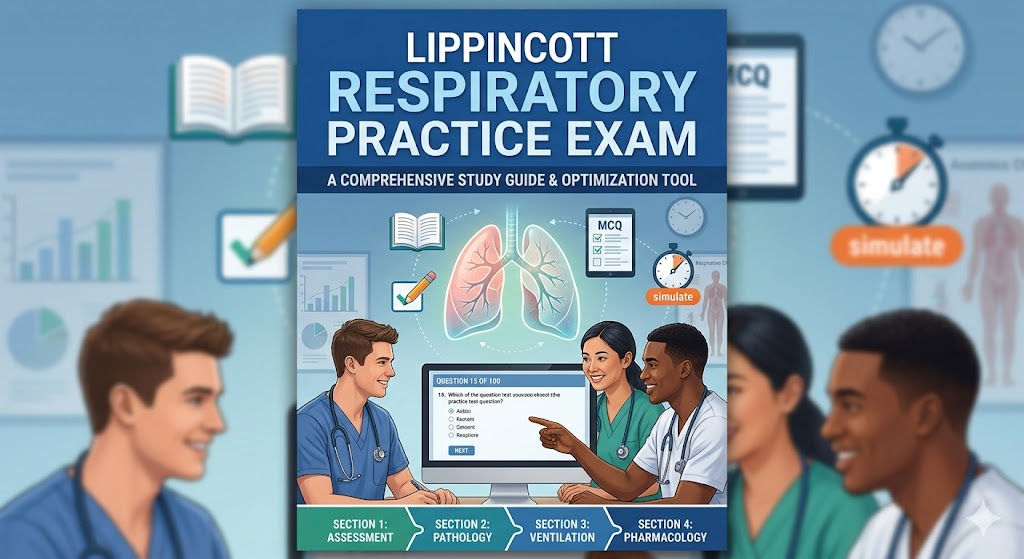
Additional Information
What the Course Entails and Exam Details
The comprehensive scope of this resource covers all essential domains required for modern respiratory care practice.
Key focus areas include detailed human anatomy and physiology, the intricate mechanisms of pulmonary pharmacology, and advanced assessment techniques such as arterial blood gas (ABG) analysis, chest X-ray interpretation, and bedside physical examination.
Candidates will be thoroughly tested on their understanding of complex pathological conditions like COPD, asthma, pneumonia, and acute respiratory failure.
Furthermore, the exam details encompass crucial elements of therapeutic interventions, including oxygen therapy, aerosol delivery, mechanical ventilation strategies, and airway management protocols.
What to Expect in the Final Exam
The final, official examination format—whether administered by the National Board for Respiratory Care (NBRC) or nursing boards—is typically composed of complex, multiple-choice questions (MCQs).
A primary expectation in the actual high-stakes test is a strong focus on scenario-based learning and clinical decision-making, rather than simple memorization.
The Lippincott practice exam mirrors this difficulty.
It is structured to replicate the actual testing experience, often matching the exact number of questions and time limits you will encounter.
While the practice mode offers immediate feedback and detailed rationales, the actual exam will demand complete, independent knowledge application and exceptionally careful time management.
How to Study and Exam Centers
The most effective way to utilize this practice tool is through systematic, spaced repetition.
We highly recommend beginning with a diagnostic pre-test to pinpoint your specific weak areas.
Then, dedicate focused study time to those concepts using textbook references, your course lecture notes, and, most importantly, Lippincott’s detailed answer rationales for every question.
Consistent practice is vital; create a rigorous schedule that simulates real test conditions by completing full-length, timed sections.
Remember that while your preparation is digital, the final official licensing exams are conducted at professional, secure testing centers.
Candidates must register through their respective board portals to schedule their actual test at authorized centers, such as Pearson VUE, where strict identity verification and proctoring guidelines are enforced.
Job Opportunities from the Course
Successfully passing your final licensing or certification exam unlocks a wide array of rewarding career paths in the high-demand healthcare sector.
This comprehensive knowledge preparation is the foundation for numerous specialized roles, including:
• Registered Respiratory Therapist (RRT)
• Certified Respiratory Therapist (CRT)
• Neonatal/Pediatric Respiratory Specialist (NPS)
• Adult Critical Care Specialist (ACCS)
• Sleep Disorder Specialist (SDS / Polysomnographic Technologist)
• Pulmonary Function Technologist (CPFT/RPFT)
• Transport Respiratory Therapist (Ground or Air)
• Home Care Respiratory Therapist
• Respiratory Care Manager or Department Director
• Clinical Educator or Professor of Respiratory Therapy
Frequently Asked Questions
Reviews
5.0
Based on 0 reviews
Leave a Review
No reviews yet. Be the first to review!