
Locomotive Engineer Trainee Practice Test
$69.00
- Buy to unlock unlimited access to all Quiz questions and Answers in this Quiz.
- After purchase you can print a PDF of the whole quiz at any point. The PDF will contain the questions and the correct answers.
About this Exam
The position of a Locomotive Engineer is one of the most
vital roles in the railway industry, requiring precision, safety, and extensive
knowledge. The initial assessment, often involving a Locomotive Engineer
Trainee Practice Test, is designed for aspiring railway
professionals—frequently coming from roles like conductors or brake
operators—and serves as a critical first step. This guide is crafted to help
candidates understand the scope, prepare effectively, and approach the
evaluation with confidence, ensuring they are well-equipped to advance their
career in train operations.
Ready to test your knowledge?
Buy Now to Access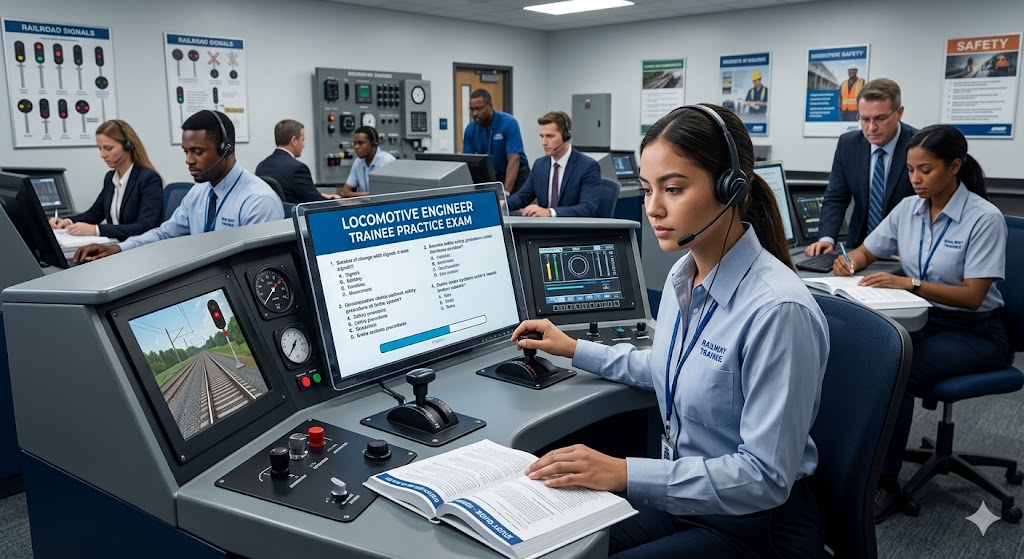
Additional Information
What the Course Entails and Exam Details
Preparing for the Locomotive Engineer Trainee role
involves much more than just a single test; it's a dedicated pathway of
learning. The overall course entails rigorous training in:
- Locomotive
Operations & Systems: Understanding diesel and electric engines, air
brake systems, and fundamental mechanical principles.
- Safety
Regulations & Compliance: Deep dives into federal safety standards
(like 49 CFR Part 240 in the US), company-specific safety rules, and
personal safety practices.
- Operating
Practices: Mastering procedures for train handling, switching cars, and
responding to various operational scenarios.
- Signal
& Sign Interpretation: Clear recognition and flawless execution of
railroad signals, signs, and trackside indicators.
- Physical
Characteristics: Gaining familiarity with the specific territories and
routes an engineer will operate on.
- Train
Handling: Techniques for controlling train speed, acceleration, and
deceleration under different load, track, and weather conditions.
- Mechanical
Troubleshooting: Basic diagnostics and response strategies for minor
in-transit locomotive issues.
The Locomotive Engineer Trainee Practice Test itself
typically assesses a foundational level of knowledge in these areas,
particularly safety, signals, and basic train mechanics, serving as a key
indicator of readiness for official, more demanding assessments and training
programs.
What to Expect in
the Final Exam
While the exact structure can vary significantly between
different railroad companies and training academies, here is what candidates
should generally expect from such assessments and the eventual official
certification exams:
- Written
Assessments: Trainee assessments are predominantly written and often in a
multiple-choice format, featuring between 100 to 150 questions. These test
your speed, accuracy, and depth of theoretical understanding.
- Time
Limits: Candidates can typically expect to have approximately 2 to 3 hours
to complete the written portion, demanding efficient time management.
- Passing
Scores: Requirements can be very demanding, with passing scores often set
at 80% or even 90% in key safety-critical areas, reflecting the
zero-tolerance for error in train operations.
- Rule
Clarity: Strict adherence to testing rules and procedures is essential,
mirroring the critical rule-following nature of the actual job.
- Operational
Skills (Later Stages): It’s important to remember that official
certification also involves hands-on operational skill performance tests
on simulators and actual locomotives, evaluated by certified supervisors,
once a trainee has progressed significantly.
How to Study and Exam Centers
Effective preparation is the difference between a passing
and failing score. Here’s how to succeed:
- Actionable
Study Strategies:
- Utilize
Practice Resources: Engage with multiple practice tests, like the one
this guide supports, to understand question formats, gauge your
readiness, and identify weak areas. Repetition helps build confidence and
familiarity.
- Deep
Dive into Rules & Signals: Focus intently on mastering all relevant
operating rules and signal systems. Create flashcards or use interactive
online tools to quiz yourself constantly. This should become second
nature.
- Review
Safety Protocols Thoroughly: Safety is paramount in rail. Dedicate
specific study time to understanding all safety regulations, emergency
procedures, and best practices.
- Understand
Mechanics: Gain a basic understanding of locomotive mechanics and braking
systems. This knowledge is not only vital for the exam but also for
practical operation and troubleshooting.
- Simulate
Exam Conditions: When taking practice tests, time yourself and create a
distraction-free environment to replicate actual test day pressure.
- Time
Management: On exam day, allocate your time wisely, ensuring you can
thoughtfully consider each question without dwelling too long on
difficult ones.
- Exam
Locations:
- Online
Portals: Many initial screening assessments or practice tests may be
administered through company-specific online platforms.
- Major
Railroad Training Facilities: Official, proctored examinations for
trainee status and eventually engineer certification are primarily taken
at dedicated training centers owned by major railroad companies.
- Community
Colleges & Authorised Schools: Some candidates receive initial
training through partnered community colleges or authorized private
railway training schools, which will also host exams.
- Professional
Testing Centers: Though less common for railroad-specific exams than for
standardized tests like Pearson VUE for other professions, certain
prerequisite or foundational tests could potentially use such venues, but
candidates should always confirm with the specific railroad or
institution. Always verify the precise testing location and method
directly with your potential employer or training program.
Job Opportunities
from the Course
Embarking on the journey to becoming a Locomotive
Engineer Trainee opens the door to several exciting and stable career paths
within the railway industry:
- Locomotive
Engineer Trainee
- Locomotive
Engineer (Freight or Passenger)
- Passenger
Train Engineer
- Freight
Engineer
- Road
Engineer
- Transportation
Specialist
- Operations
Manager (Potential long-term progression)
- Trainmaster
(Potential long-term progression)
Frequently Asked Questions
Reviews
5.0
Based on 0 reviews
Leave a Review
No reviews yet. Be the first to review!