
Maryland Asbestos Practice Exam
$69.00
- Buy to unlock unlimited access to all Quiz questions and Answers in this Quiz.
- After purchase you can print a PDF of the whole quiz at any point. The PDF will contain the questions and the correct answers.
About this Exam
The Maryland Asbestos Certification is a crucial
state-mandated credential designed for professionals working with or around
asbestos-containing materials.
This certification ensures that workers, supervisors, and
inspectors fully understand the severe health risks associated with asbestos
exposure and know how to mitigate them safely.
It is specifically designed for construction workers,
environmental remediation contractors, building inspectors, and facility
managers operating within the state of Maryland.
By passing the Maryland Asbestos Practice Exam, candidates
demonstrate their readiness to handle hazardous materials responsibly, protect
public health, and comply with strict state and federal environmental
regulations.
Ready to test your knowledge?
Buy Now to Access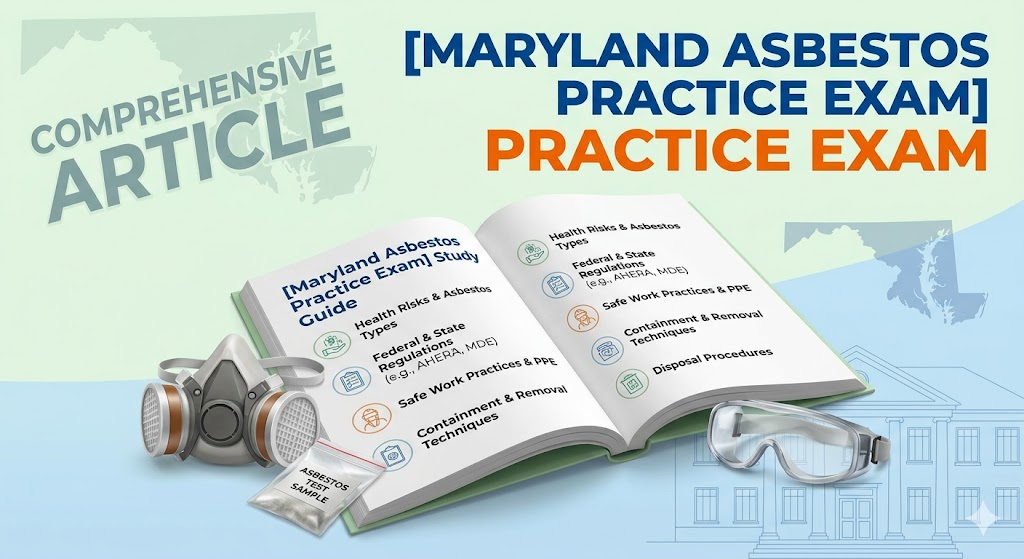
Additional Information
What the Course Entails and Exam Details
The course syllabus is comprehensively structured to cover
every critical aspect of safe asbestos abatement and management.
Candidates will dive deeply into the physical
characteristics of asbestos and the severe respiratory health effects caused by
exposure, such as mesothelioma and asbestosis.
A significant portion of the material covers strict
regulatory frameworks, including guidelines from the EPA, OSHA, and the
Maryland Department of the Environment (MDE).
Furthermore, the curriculum details practical skills like
proper use of Personal Protective Equipment (PPE), site preparation, safe
removal techniques, decontamination procedures, and the legal protocols for
hazardous waste disposal.
The exam directly tests these core competencies, ensuring
that every certified individual is fully prepared to execute safe work
practices on real-world job sites.
What to Expect in
the Final Exam
When sitting for the official Maryland Asbestos
Certification final exam, candidates should expect a standardized,
multiple-choice format designed to test both theoretical knowledge and
practical application.
Depending on the specific certification level—such as Worker
versus Contractor/Supervisor—the exam typically consists of 50 to 100
questions.
Test-takers generally have between one and two hours to
complete the assessment, ensuring ample time to carefully read and evaluate
each scenario.
To achieve certification, candidates must reach a passing
score of at least 70%.
The test is strictly closed-book, meaning no outside notes
or digital devices are permitted during the testing period.
Additionally, strict proctoring rules are enforced to
maintain the integrity of the state certification process.
How to Study and
Exam Centers
Success on the Maryland Asbestos exam requires a strategic
and disciplined study approach.
Start by taking high-quality practice exams to familiarize
yourself with the multiple-choice format and identify areas where your
knowledge may be lacking.
During your mandatory training classes, take meticulous
notes, paying special attention to PPE requirements, OSHA limits, and
Maryland-specific disposal regulations.
Creating flashcards for regulatory acronyms and exposure
limits is a highly effective way to memorize essential technical data.
As for taking the actual test, the exam is exclusively
administered by training providers that have been officially approved by the
Maryland Department of the Environment.
Typically, candidates will take the written exam in person
at these authorized environmental training schools immediately upon completing
the required instructional coursework.
Job Opportunities
from the Course
Earning your Maryland Asbestos Certification opens the door
to a highly stable and well-paying career in environmental safety and
construction.
Professionals with this credential are in high demand across
both the public and private sectors.
Some of the rewarding career paths unlocked by this
certification include becoming a Certified Asbestos Abatement Worker, where you
will physically execute safe removal plans.
You may also step into leadership roles as an Asbestos
Contractor or Supervisor, managing daily site operations and ensuring team
safety.
Other lucrative opportunities include working as an
Environmental Building Inspector to assess properties for hazardous materials
before renovations.
Additionally, this certification serves as a strong stepping
stone for careers as Industrial Hygienists or corporate Health and Safety
Coordinators, ensuring broad organizational compliance with environmental laws.
Frequently Asked Questions
Reviews
5.0
Based on 0 reviews
Leave a Review
No reviews yet. Be the first to review!