
Massachusetts Oil Burner License Practice Test
$69.00
- Buy to unlock unlimited access to all Quiz questions and Answers in this Quiz.
- After purchase you can print a PDF of the whole quiz at any point. The PDF will contain the questions and the correct answers.
About this Exam
The Massachusetts Oil Burner Technician certification is a mandatory credential for professionals who install, repair, and maintain oil-fired heating systems within the state.
This exam ensures that technicians possess the necessary knowledge of mechanical systems, electrical wiring, and strict fire safety codes required to operate safely in residential and commercial environments.
It is designed for aspiring HVAC technicians, apprentices completing their required field hours, and experienced tradespeople looking to upgrade their licensing credentials.
Earning this license proves your technical competence and dedication to safety, making you a highly trusted professional in the Massachusetts heating industry.
Ready to test your knowledge?
Buy Now to Access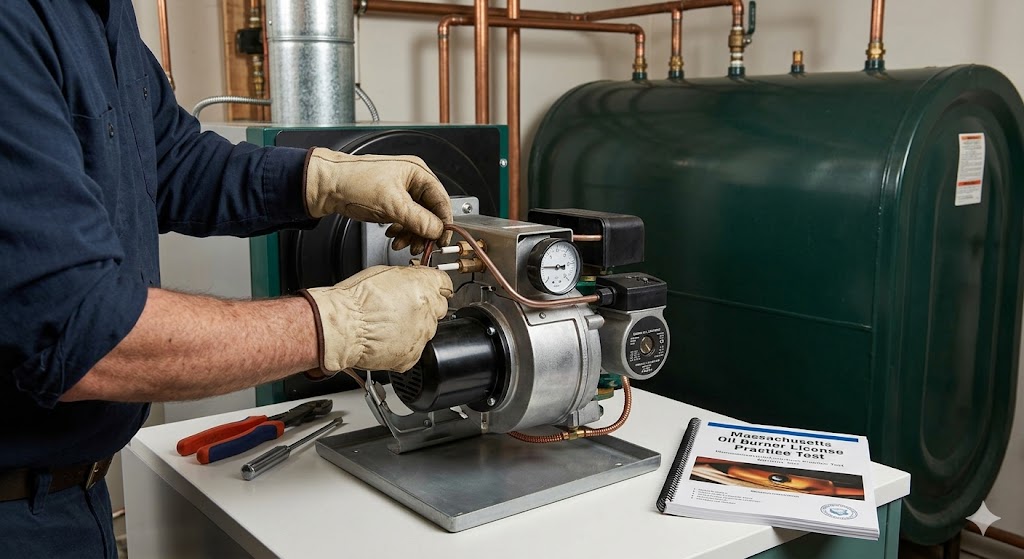
Additional Information
What the Course Entails and Exam Details
Preparing for this exam involves a deep dive into the
mechanical and electrical principles that govern oil burner operations.
Candidates will learn the intricate components of oil
heating systems, including fuel pumps, ignition transformers, primary controls,
and burner nozzles.
The syllabus heavily emphasizes combustion theory, draft
regulations, and the proper venting of exhaust gases to prevent carbon monoxide
hazards.
Furthermore, you will study essential electrical concepts,
such as reading wiring diagrams and safely troubleshooting high-voltage and
low-voltage circuits.
A critical component of the course is mastering the specific
legal requirements, particularly the Massachusetts Fire Safety Code (527 CMR
1.00) and the NFPA 31 Standard for the Installation of Oil-Burning Equipment.
What to Expect in the Final Exam
The official Massachusetts Oil Burner Technician exam is a
comprehensive, closed-book test administered in a multiple-choice format.
You can expect to face approximately 50 to 100 questions
that rigorously test your theoretical knowledge, code compliance, and practical
troubleshooting skills.
Candidates are generally given a strict time limit,
typically ranging from two to three hours, which requires steady pacing and
confidence in your answers.
To pass, you must achieve a minimum score of 70%, though
aiming higher on practice tests is always recommended to ensure a comfortable
margin of error.
Strict exam rules apply, meaning mobile phones and personal
reference materials are strictly prohibited, though a basic, non-programmable
calculator may be provided or allowed.
How to Study and
Exam Centers
Success on this exam requires a balanced approach of
practical field experience and focused academic study.
Start by thoroughly reading the NFPA 31 guidelines and the
Massachusetts specific fire codes, as these form the backbone of the regulatory
questions.
Utilizing a comprehensive Massachusetts oil burner license
practice exam is one of the most effective strategies, as it helps you identify
knowledge gaps and become comfortable with the multiple-choice format.
Create flashcards for common troubleshooting scenarios,
electrical diagrams, and specific clearance measurements required by the state.
When you are ready to test, the exam is typically
administered through the Massachusetts Department of Fire Services or an
authorized third-party testing vendor like Prometric or Pearson VUE.
You must pre-register online through the state's licensing
portal, submit proof of your required apprenticeship hours, and then schedule
your test at one of the designated physical testing centers located throughout
Massachusetts.
Job Opportunities
from the Course
Earning this credential unlocks a variety of lucrative and
stable career paths within the heating and cooling industry. Below is a list of
roles you can pursue once licensed:
- Licensed
Oil Burner Technician: The most direct career path, involving the
daily installation, maintenance, and emergency repair of residential and
commercial oil heating systems.
- HVAC
Service Technician: A broader role where oil burner expertise
complements skills in air conditioning, ventilation, and general heating
maintenance.
- Heating
System Installer: A specialized construction and remodeling role
focused purely on fitting and safely configuring brand-new heating units
in buildings.
- Facilities
Maintenance Mechanic: A stable, often union-backed role working in
large institutions like hospitals, schools, or corporate campuses to keep
large-scale oil boilers running efficiently.
- Fuel
Oil Delivery and Service Specialist: Working for dedicated fuel
delivery companies to not only supply heating oil but also perform annual
system tune-ups and safety inspections.
- Self-Employed
Heating Contractor: With this license and sufficient business
experience, you can start your own specialized heating business, taking on
private clients and setting your own rates.
Frequently Asked Questions
Reviews
5.0
Based on 0 reviews
Leave a Review
No reviews yet. Be the first to review!