
Materials of Construction – Properties, Testing, and Standards Practice Test
$69.00
- Buy to unlock unlimited access to all Quiz questions and Answers in this Quiz.
- After purchase you can print a PDF of the whole quiz at any point. The PDF will contain the questions and the correct answers.
About this Exam
The Materials of Construction certification is a crucial credential designed for aspiring civil engineers, construction managers, and quality control specialists.
It formally validates your technical understanding of the materials that form the backbone of our built environment.
This exam is tailored for professionals who need to ensure that buildings, bridges, and infrastructure are safe, durable, and compliant with modern engineering regulations.
By passing this test, you demonstrate to employers that you possess the precise knowledge required to select, test, and approve materials for critical construction projects.
Ready to test your knowledge?
Buy Now to Access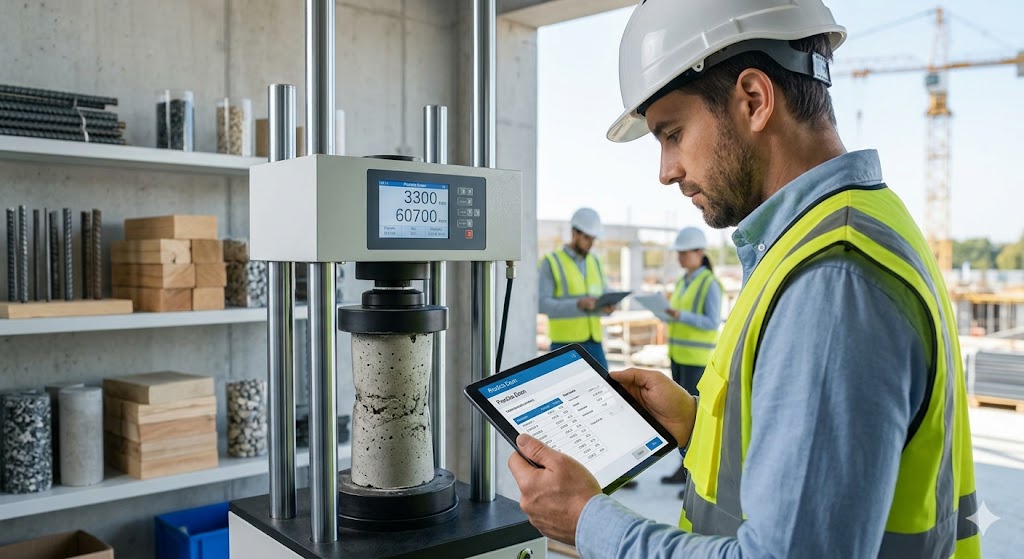
Additional Information
What the Course Entails and Exam Details
This comprehensive course syllabus dives deep into the
physical, mechanical, and chemical properties of foundational building
materials.
You will cover the essential characteristics of concrete,
structural steel, timber, masonry, and asphalt.
The curriculum strongly emphasizes modern testing
methodologies, exploring both destructive and non-destructive testing
techniques used in the field today.
Furthermore, you will be required to understand
industry-standard compliance, specifically focusing on codes set by
organizations like ASTM International, the American Concrete Institute (ACI),
and the International Organization for Standardization (ISO).
Mastering these core topics ensures you are fully equipped
to evaluate material performance under various environmental stresses.
What to Expect in the Final Exam
The final exam is typically structured as a computer-based
test featuring a mix of multiple-choice and scenario-based questions.
Candidates usually face between 80 and 100 questions that
must be completed within a strict two to three-hour time limit.
To achieve certification, you will generally need to secure
a passing score of at least 70% to 75%, depending on the specific credentialing
board.
While the majority of the exam is closed-book, some testing
authorities may provide a standardized reference sheet for complex formulas or
specific code tables.
Expect questions that ask you to interpret lab data,
identify correct testing procedures, and match specific materials to their
appropriate structural applications.
How to Study and
Exam Centers
Success on this exam requires a strategic blend of
theoretical review and practical application.
Begin by taking full-length, timed practice tests to
familiarize yourself with the question formats and to build your testing
stamina.
We highly recommend forming study groups and extensively
reviewing ASTM manuals and ACI field guides.
When you are ready to officially test, exams are typically
administered through major proctoring networks like Pearson VUE or Prometric.
Depending on the certifying body, you can schedule your test
at a certified local testing center or opt for a securely proctored online exam
from the comfort of your own home.
Job Opportunities
from the Course
Achieving this certification opens the door to a wide
variety of lucrative and stable career paths in the construction and
engineering sectors.
Below are some of the primary roles you can pursue:
- Materials
Testing Technician: Responsible for conducting field and laboratory tests
on concrete, soil, and asphalt to ensure project compliance.
- Quality
Control Inspector: Tasks involve monitoring construction sites to verify
that all materials used meet structural and safety standards.
- Civil
Engineering Technician: Assists licensed engineers in drafting plans,
estimating material costs, and evaluating site conditions.
- Construction
Project Manager: Oversees entire building projects, using material
knowledge to procure the right supplies and manage construction timelines.
- Site
Engineer: Offers day-to-day on-site management, solving structural
material issues, and ensuring the architectural blueprints are safely
executed.
Frequently Asked Questions
Reviews
5.0
Based on 0 reviews
Leave a Review
No reviews yet. Be the first to review!