
MCJROTC Inspection Practice Test
$69.00
- Buy to unlock unlimited access to all Quiz questions and Answers in this Quiz.
- After purchase you can print a PDF of the whole quiz at any point. The PDF will contain the questions and the correct answers.
About this Exam
The MCJROTC Inspection is a rigorous, comprehensive evaluation of an MCJROTC unit and its individual cadets. It assesses adherence to Marine Corps standards in appearance, knowledge, drill, leadership, and discipline. The inspection serves multiple purposes: ensuring operational compliance, evaluating leadership effectiveness, and fostering individual cadet growth and responsibility. A practice test, whether formal or informal within your unit, is an invaluable tool, designed specifically for cadets to familiarize themselves with the inspection process, identify areas for improvement, and build confidence before the official evaluation by Marine Corps personnel.
Ready to test your knowledge?
Buy Now to Access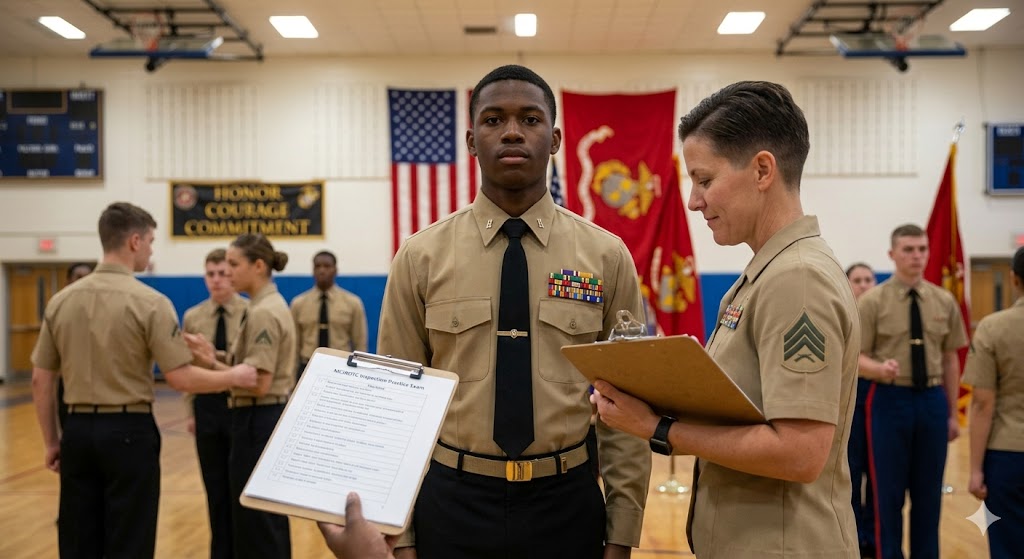
Additional Information
What the Course Entails and Exam Details
Your preparation for the actual inspection involves mastering a wide range of skills and knowledge. A typical MCJROTC course and subsequent evaluations (and practice tests) cover:
Uniform Standards & Wear: Immaculate care and placement of all uniform components, including proper fit, cleanliness, pressed creases, polished footwear, and the correct placement of ribbons, badges, and rank insignia according to regulations.
Military Knowledge: Comprehensive memorization and understanding of the Chain of Command (local, MCJROTC, Marine Corps, and National levels), Marine Corps history, traditions, and values, the JROTC Creed, and general military courtesy.
Drill and Ceremonies: Precise execution of individual and unit drill movements and commands, demonstrating discipline, coordination, and command presence. This includes both armed and unarmed drill sequences.
Leadership Principles: Application of leadership traits, principles, and concepts learned throughout the MCJROTC curriculum.
Personal Conduct & Bearing: Maintaining a professional, respectful demeanor at all times, demonstrating self-discipline and accountability.
A practice test may mirror sections of the full inspection. You should expect components that test both your physical presentation and your mental knowledge.
What to Expect in the Final Exam
While the exact structure can vary, the official MCJROTC inspection is a significant event. A practice test will aim to simulate elements of this experience.
Format: The inspection is largely practical and oral, often involving:
Formation Inspection: Cadets in a specified uniform standing at attention. Inspectors walk the lines, physically checking uniforms and asking random questions to individuals.
Drill Evaluation: Your unit might perform a drill sequence, judged on precision and command execution.
Oral Questioning: You will be asked detailed questions directly, requiring confident, accurate, and concise answers without looking at notes. Questions might range from specific military history facts to identifying the current Secretary of Defense. A practice version might use a quiz or structured interview.
Written or Computerized Knowledge Portion: Some inspections or practice sessions include a formal written test or online quiz covering the required knowledge base.
Standards and Passing Scores: The standards are exceptionally high, reflecting Marine Corps excellence. While specific "passing scores" on checklists are used, success is defined by a high level of proficiency and adherence to the standard. In a practice context, instructors use detailed score sheets (checklists) to provide specific, actionable feedback for each cadet and the unit. A good practice test should have high standards to truly prepare you for the real event.
Time Limits: While there isn't a strict "time limit" on the overall inspection day like in a timed academic exam, specific portions of the day, particularly drill, might have time considerations. For oral and uniform checks, the goal is efficiency and professional bearing. Your practice test structure should respect the time and flow of a typical evaluation.
Specific Rules: Maintain a strict position of attention during the uniform check, speak clearly and address the inspector with proper military courtesy (Sir/Ma'am), and maintain a professional and disciplined presence throughout.
How to Study and Exam Centers
Effective preparation is key to inspection success. Your unit is the ultimate "exam center" for the official inspection, but the practice can happen anywhere.
Actionable Study Strategies:
Immaculate Uniform Preparation: Don't wait until the last minute. Practice proper care and setup.
Learn and apply precise measurements for uniform insignia.
Invest in quality shoe polish and practice your shining technique.
Have your uniform cleaned and pressed regularly.
Practice getting into your full uniform quickly and correctly.
Memorization and Knowledge:
Create flashcards for the Chain of Command, history facts, and the Creed.
Use mnemonic devices to remember complex lists.
Practice reciting information aloud in front of a mirror or with a buddy, maintaining a strong, clear voice.
Practice Drill Regularly:
Execute drill movements individually in front of a mirror.
Participate fully in unit drill practices.
Volunteer to lead drill sequences in your unit.
Break down complex movements and practice them step-by-step.
Utilize Practice Resources:
Take any practice tests or quizzes provided by your unit or instructors.
Ask older cadets or instructors for feedback and sample questions.
Use online resources and study tools that align with MCJROTC curriculum and inspection criteria. (Search for reliable cadet-led study guides or official educational materials).
Simulate the Experience:
Conduct mock inspections within your squad or platoon.
Have fellow cadets or family members ask you knowledge questions while you stand at attention in uniform.
Where and How to Take the Test:
Official Inspection: The primary location for the actual, formal inspection is your high school's designated MCJROTC area (classroom, drill field, gymnasium), where it is proctored by visiting Marine Corps officers and NCOs. The entire process is integrated into the unit's regular activities.
Practice Tests: These are typically conducted internal to your MCJROTC unit. Instructors or cadet leaders might manage online portals for knowledge quizzes, or distribute paper versions. Practical practice and mock evaluations happen regularly within your school, led by your instructors and cadet leadership. There are no external, standardized "practice test centers" in the traditional sense; your school and unit are the center of all preparation and evaluation.
Job Opportunities from the Course
While a practice test itself doesn't directly unlock specific jobs, the entire MCJROTC experience and the skills you demonstrate through dedication, discipline, and performance in inspections are highly valued and open doors to numerous rewarding career and educational paths. The discipline and dedication you show in preparing for inspections and exams translate directly into valuable life skills. Here are some key opportunities that an exemplary MCJROTC record and the leadership development it provides can help you achieve:
Military Careers: Direct connection to enlistment with advanced rank, potential for Service Academy appointments (like the US Naval Academy), and competitive eligibility for ROTC scholarships in college, leading to a commission as an officer in the US Marine Corps or other services.
Government Service: Suitability for leadership roles in various federal, state, and local government agencies (e.g., law enforcement, public safety).
Civilian Leadership: The leadership, teamwork, discipline, and commitment skills are highly sought after by employers in all sectors (business, non-profit, technology, etc.).
Higher Education: MCJROTC participation is looked upon favorably by college admissions committees and scholarship programs, demonstrating leadership, service, and academic commitment.
Frequently Asked Questions
Reviews
5.0
Based on 0 reviews
Leave a Review
No reviews yet. Be the first to review!