
Millwright Alignment Practice Test
$69.00
- Buy to unlock unlimited access to all Quiz questions and Answers in this Quiz.
- After purchase you can print a PDF of the whole quiz at any point. The PDF will contain the questions and the correct answers.
About this Exam
The Millwright Alignment Practice Test is a vital tool for aspiring and established millwrights aiming to validate their expertise in precision machinery alignment. A millwright is a mechanical tradesperson who installs, maintains, and repairs industrial machinery. Correct alignment is crucial for the optimal performance, longevity, and safety of rotating equipment. This exam is designed for individuals seeking to enhance their job prospects, secure certifications, or simply ensure they possess the necessary skills for precision work in modern industrial settings. Using a practice test allows candidates to gauge their readiness, identify knowledge gaps, and build confidence before sitting for official assessments.
Ready to test your knowledge?
Buy Now to Access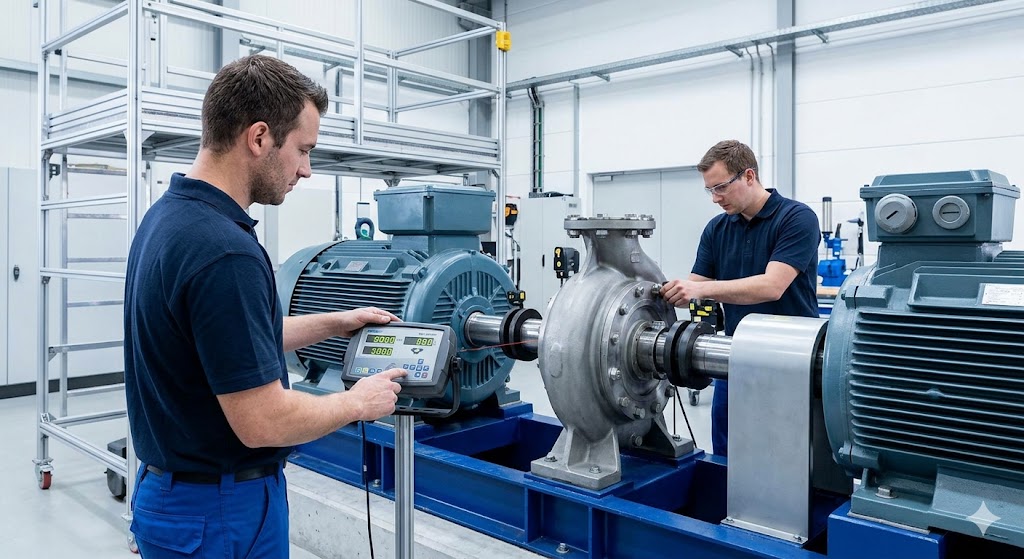
Additional Information
This exam covers the comprehensive knowledge and practical
applications involved in aligning shafts, gears, and belts of industrial
equipment. Core topics typically include:
- Principles
of Precision Alignment: Understanding why and how alignment impacts
machine performance and component life.
- Alignment
Methods: Mastery of various techniques such as rim-and-face, reverse
indicator, laser alignment, and optical alignment.
- Pre-Alignment
Procedures: Essential steps like soft foot correction, foundation
inspection, and thermal growth compensation.
- Tolerances
and Targets: Knowledge of acceptable industry standards and calculating
desired cold-start targets.
- Safety
Protocols: Rigorous adherence to Lockout/Tagout (LOTO) and personal
protective equipment (PPE) requirements when working with heavy machinery.
- Tool
Proficiency: Correct use and interpretation of dial indicators, laser
systems, and alignment software.
While this is a practice test to prepare you, official
certification or assessment exams for millwright alignment often feature a dual
format to rigorously test both theoretical knowledge and practical skill.
- Theoretical
Component: This section is frequently a multiple-choice exam,
delivered either online or on a computer at a testing center. It typically
contains between 50 to 100 questions. Expect a time limit, often ranging
from 90 minutes to three hours. A passing score of 70% to 80% is common.
This part evaluates your understanding of alignment principles,
calculation methods, and safety procedures.
- Practical
Component (Hands-on): This portion requires you to perform actual
alignment tasks on a machinery simulator or actual industrial equipment
under the observation of an examiner. You will be expected to correct soft
foot, perform initial measurements, calculate required moves, and execute
the alignment using specified methods (e.g., laser alignment). You must
demonstrate safe practices throughout. This is often a pass/fail
assessment based on achieving acceptable final alignment within industry
tolerances and time constraints.
Preparation is key to succeeding on the millwright alignment
test.
- Leverage
Practice Tests: Consistent use of a Millwright Alignment Practice Test
is your single most effective strategy. It familiarizes you with question
styles, content, and the pressure of a timed environment. Review
explanations for every question, both correct and incorrect.
- Hands-on
Practice: Theory only goes so far. Actively practice aligning
equipment at your current job, in an apprenticeship program, or using
training simulators. Get comfortable with dial indicators and modern laser
alignment systems.
- Studying
Core Materials: Review standard industry textbooks, equipment manuals,
and alignment guidelines from manufacturers like Pruftechnik, Ludeca, or
SPM. Focus on geometry, basic math, and material expansion.
- Group
Study: Discuss complex scenarios and calculation methods with peers or
mentors. Teaching a concept often solidifies it for yourself.
- Formal
Training Courses: Consider enrolling in specific millwright training
programs or alignment certification courses offered by industry bodies. Exam
Centers and Access: Official millwright certification exams (often
linked to organizations like NCCER, Red Seal in Canada, or specific
industry training bodies) are typically administered through authorized
test centers or training facilities. These locations include:
- Authorized
Community Colleges and Trade Schools.
- Union
Hall Training Centers.
- Proprietary
industrial training centers (often associated with large manufacturing
companies or specific training providers).
- In
some cases, the theoretical portion may be available through online
proctoring portals, but the practical component almost always requires a
physical, supervised location.
Mastering precision alignment opens doors to a wide range of
rewarding career paths in industries like manufacturing, power generation, oil
and gas, mining, and food processing. Successfully completing the millwright
alignment certification and demonstrating expertise can unlock job
opportunities with titles such as:
<!--[if mso & !supportInlineShapes & supportFields]> SHAPE \* MERGEFORMAT <![endif]--><!--[if gte vml 1]>
- Certified
Millwright
- Industrial
Mechanic (Millwright)
- Maintenance
Technician
- Vibration
Analyst (with additional training)
- Machinery
Reliability Technician
- Alignment
Specialist
- Maintenance
Supervisor or Foreperson
- Preventive/Predictive
Maintenance Technician
Frequently Asked Questions
Reviews
5.0
Based on 0 reviews
Leave a Review
No reviews yet. Be the first to review!