
MTA Transit Electrical Helper (Exam No. 4612) Practice Exam
$69.00
- Buy to unlock unlimited access to all Quiz questions and Answers in this Quiz.
- After purchase you can print a PDF of the whole quiz at any point. The PDF will contain the questions and the correct answers.
About this Exam
- The
MTA Transit Electrical Helper (Exam No. 4612) is your first step toward a
rewarding career in New York City's expansive transit system.
- This
highly competitive exam is designed for individuals who possess a
fundamental understanding of electricity and a strong desire to work with
their hands to maintain crucial transit infrastructure.
- The
New York City Metropolitan Transportation Authority (MTA) relies on
electrical helpers to ensure the safe and efficient operation of subway
lines, elevated tracks, and associated electrical systems.
- This
position offers stable employment, comprehensive benefits, and
opportunities for professional growth within one of the largest public
transportation networks in the world.
- Whether
you have experience in the electrical trade or are looking for an
entry-level position with excellent training, passing this exam is your
critical entry point.
Ready to test your knowledge?
Buy Now to Access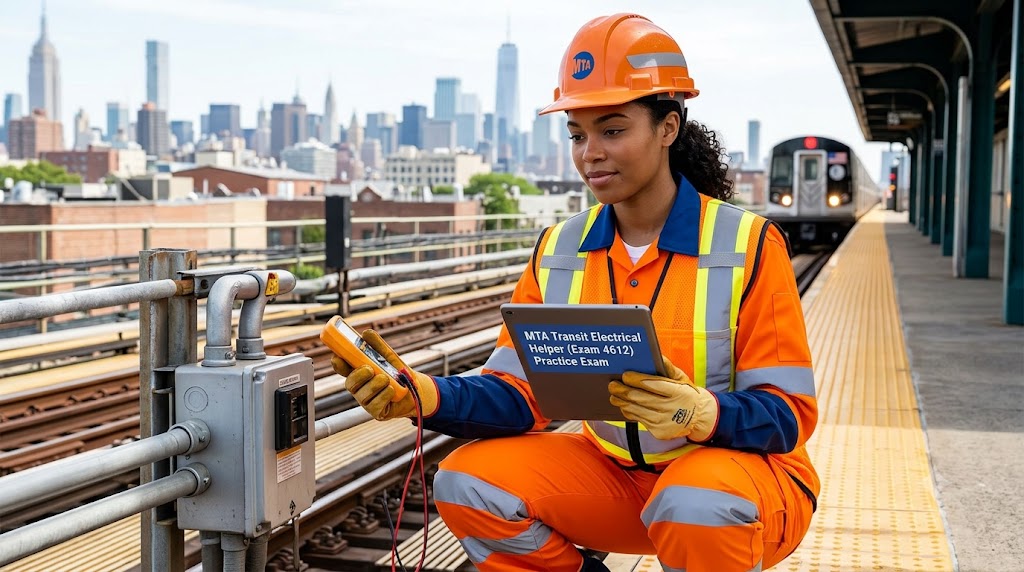
Additional Information
<!--[if !supportLists]-->·
<!--[endif]-->What the Course Entails and Exam Details
- This
comprehensive study guide and practice exam are designed to cover the core
knowledge areas and skills that you will encounter on the official MTA
exam.
- The
exam covers a wide range of topics essential for any electrical helper,
including:
- Basic
Electricity: Fundamentals of voltage, current, resistance, Ohm's Law,
and simple circuit configurations.
- Tool
and Equipment Identification: Understanding the proper selection, use,
and maintenance of various hand and power tools common to the electrical
trade.
- Safety
Practices: Crucial knowledge of workplace safety procedures, OSHA
regulations, and specific transit-related safety protocols, especially
concerning third-rail awareness.
- Blueprint
and Schematic Reading: The ability to interpret electrical drawings,
wiring diagrams, and equipment schematics.
- Installation
and Repair: Practical understanding of common electrical installation
methods, wiring techniques, and basic component troubleshooting.
- Transit
System Knowledge: Familiarity with the general layout of the subway
system, types of electrical power (AC/DC), and the various systems that
depend on electricity (signaling, lighting, propulsion).
- Our
practice material simulates the types of questions and formatting found on
the actual exam, ensuring you are well-prepared for any scenario.
What to Expect in the Final Exam
- The
final MTA Transit Electrical Helper exam is a competitive written
examination, typically delivered in a multiple-choice format.
- The
exam is designed to be challenging, as it is a key filtering tool for
hiring.
- It
is vital to aim for a high score, not just a passing one, to increase your
chances of being called for subsequent steps in the hiring process.
- You
will be given a set amount of time, typically several hours, to
complete all sections of the exam. Time management is crucial, and our
practice tests can help you refine this skill.
- Passing
the written exam is generally around 70%, but your position on the
eligible hiring list will depend on your actual score.
- Following
the written exam, successful candidates may be required to pass a
practical test to demonstrate their hands-on skills with tools and basic
electrical tasks.
How to Study and
Exam Centers
- Effective
preparation for this exam is essential for success. We recommend a
structured study plan that includes:
- Study
Guides: Seek out and study official materials from the MTA or the New
York City Department of Citywide Administrative Services (DCAS), which
often administers these exams.
- Practice
Exams: Consistently taking practice exams, like the one this guide is
based on, is one of the single most effective study methods. It builds
familiarity with the question types and improves your speed and accuracy.
- Review
Your Answers: After taking practice tests, meticulously review all
questions you got wrong and understand the underlying concepts using
reference books or study guides.
- Basic
Electrical Theory: Solidify your understanding of electrical
fundamentals by studying introductory textbooks or online resources.
- Hands-on
Experience: If possible, gain some practical experience using common
tools or performing basic electrical work under supervision.
- MTA
competitive exams are not typically administered online or through
third-party portals like Pearson VUE.
- The
exam will take place in specific physical testing centers located
throughout New York City.
- You
will receive an official notification from DCAS or the MTA with the exact
time, date, and location of your exam. Be sure to arrive early and have
all necessary identification and test materials.
Job Opportunities
from the Course
- Successfully
passing the MTA Transit Electrical Helper exam and subsequent hiring
process opens the door to a promising career. Below is a list of job
titles and career paths this achievement unlocks:
- Transit
Electrical Helper: The entry-level position that leads to a career in
the electrical trade within the transit authority.
- Maintenance
Electrician: With experience and further training, you can progress to
a role with greater responsibility for maintaining complex transit
systems.
- Signal
Maintainer: A specialized and vital role focused on installing,
repairing, and maintaining the critical signaling and train control
systems.
- Power
Maintainer: Responsible for the electrical power infrastructure,
including substations and third-rail systems, ensuring reliable power to
trains.
- Supervisory
Roles: Dedicated individuals with experience can advance to
supervisory positions, overseeing teams of electrical workers.
- A
career with the MTA offers a clear path for advancement, job security, and
the chance to contribute to the operation of New York City's public
transportation. Your successful journey begins with this exam.
Frequently Asked Questions
This quiz contains a total of 0 practice questions carefully selected to test your knowledge on this subject.
Yes, you will have exactly 0 minutes to complete the exam. A countdown timer will be visible once you start.
Yes, you can retake this practice test as many times as you need. The questions and options may be randomized on subsequent attempts to ensure comprehensive learning.
Reviews
5.0
Based on 0 reviews
Leave a Review
No reviews yet. Be the first to review!