
NAC AMCA Practice Exam Prep Guide
$69.00
- Buy to unlock unlimited access to all Quiz questions and Answers in this Quiz.
- After purchase you can print a PDF of the whole quiz at any point. The PDF will contain the questions and the correct answers.
About this Exam
The Nursing Assistant Certification (NAC) offered by the American Medical Certification Association (AMCA) is a prominent and respected credential for individuals aspiring to enter the vital healthcare field of nursing assistance. This certification validates the essential knowledge and skills required to provide compassionate, safe, and effective care to patients in various healthcare settings. It is designed for students completing state-approved training programs, individuals already working in healthcare who need formal certification, and anyone looking to begin a rewarding career dedicated to helping others. Obtaining this certification not only demonstrates professionalism but also signifies a commitment to quality patient care.
Ready to test your knowledge?
Buy Now to Access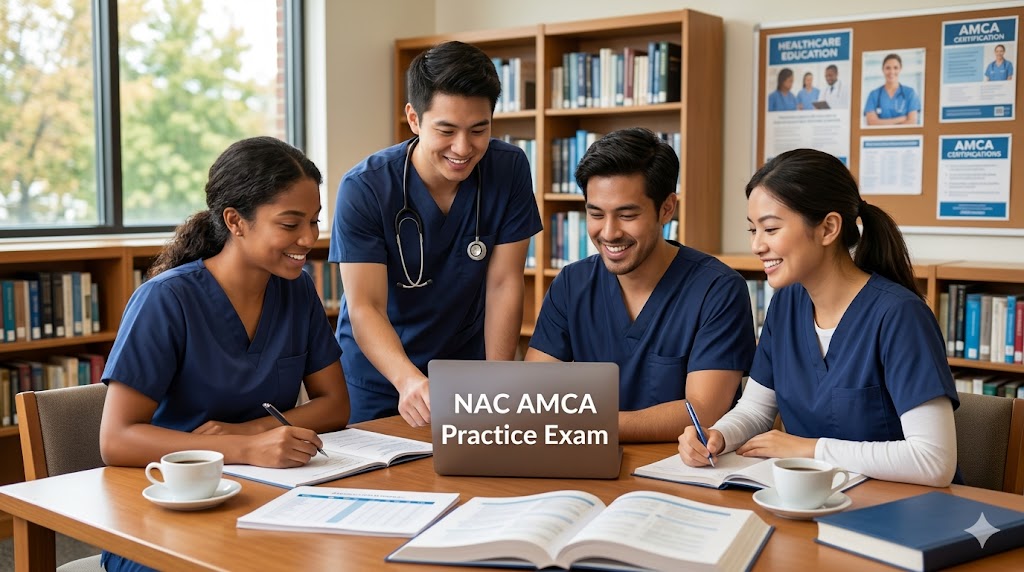
Additional Information
What the Course Entails and Exam Details
The foundation for this certification is built upon standard Nursing Assistant (NA) training curricula, which encompass a broad range of patient care concepts. While individual state-approved courses may have minor differences, the core knowledge area generally covers:
Basic Nursing Skills: Includes taking and recording vital signs, measuring height and weight, observational skills, and documentation.
Personal Care Services: Covers hygiene, grooming, bathing, dressing, and assisting with activities of daily living (ADLs).
Patient Rights and Communication: Emphasizes understanding patient rights, respecting privacy, effective communication, and cultural competence.
Safety and Emergency Procedures: Covers infection control, handling emergencies, environmental safety, and first aid principles.
Restorative Care: Focuses on maintaining or regaining patient mobility, safe transferring techniques, and independence in care.
Mental Health and Social Service Needs: Addresses the unique emotional and psychological requirements of patients.
Candidates are typically eligible for the AMCA exam upon successful completion of a recognized NA/CNA training program. Always check with AMCA for the most up-to-date program requirements and candidate handbooks.
What to Expect in the Final Exam
The AMCA Nursing Assistant Certification process commonly involves both a written/knowledge component and a clinical skills demonstration. Understanding the dual-format structure is key:
Knowledge Component: This is the portion simulated by resources like the NAC AMCA Practice Exam. It consists of multiple-choice questions covering the domains outlined in the previous section. You can expect around 60 to 100 questions, with a typical time limit of approximately 90 minutes to two hours. While the exact passing score can vary and should be verified via the current AMCA candidate guide, a passing grade in the range of 70% to 75% is often required.
Clinical Skills Component: In addition to the written test, you will need to demonstrate proficiency in performing several standard nursing assistant skills in person before a qualified evaluator. You will be randomly assigned a set number of tasks (e.g., handwashing, measurement of vital signs, client positioning, etc.), and will be scored on your ability to complete them safely, correctly, and according to established protocols and safety guidelines.
Both parts are essential, so your study plan must incorporate both knowledge review and practical skills rehearsal.
How to Study and Exam Centers
Effective preparation is paramount. Here is a winning strategy:
Thorough Review: Revisit your class materials, textbooks, handouts, and any relevant state curriculums. Ensure you fully comprehend each fundamental concept before testing your knowledge.
Take Practice Exams: Dedicate significant time to taking and analyzing NAC AMCA Practice Exams. These tests are designed to mimic the actual knowledge component, helping you familiarize yourself with question types, time management, and identifies your strong and weak areas. Treat each practice exam as a mock run to build stamina and confidence.
Practical Skills Practice: Practice the steps for every potential clinical skill repeatedly until they are routine. Gather with classmates, family, or friends to perform the skills, ensuring you follow standard protocols and pay close attention to critical steps and patient interactions. Utilize props when needed.
Focus on Fundamentals: Ensure a solid understanding of core principles like infection control, patient dignity, safety standards, and clear communication.
Exam-Style Practice: Time your practice sessions to build pacing skills, especially for the knowledge portion. Review not just what you got wrong, but why the correct answer is right and other options are incorrect.
Rest and Focus: Maintain a balanced schedule leading up to the exam day, ensuring adequate sleep, nutrition, and stress management techniques are in place.
Exam Centers: AMCA typically offers flexibility in exam administration:
Authorized Training Centers: Many candidate schools and authorized training facilities are recognized by AMCA to host the certification exam on-site for their graduates. Check with your training program coordinator for details.
Authorized Testing Locations: AMCA may also partner with independent, proctored testing locations. You can search for and select an accessible center near you during the registration process on the official AMCA website.
Online/Remote Proctoring: AMCA sometimes offers the option for the knowledge part to be taken via remote proctoring, allowing you to take the written exam from a secure environment like your own home, with strict security measures using webcams and lock-down browsers. Confirm the availability for the NAC exam on the AMCA official resources.
Always register and check specific test details through the legitimate AMCA official website. Plan well in advance, arrive early for physical centers or log in well ahead of time for online proctoring, and have all required identification ready.
Job Opportunities from the Course
Earning your Nursing Assistant Certification through AMCA unlocks numerous career pathways and is the stepping stone to several essential, rewarding healthcare roles. The comprehensive knowledge and skills validated by this certification are highly valued across the industry, qualifying you for diverse positions and work environments:
Certified Nursing Assistant (CNA) / Nursing Assistant (NA): The most direct job title, these professionals work under the supervision of nurses, providing direct patient care, assisting with activities of daily living (ADLs), monitoring patient status, and ensuring patient comfort in hospitals, clinics, long-term care facilities, and home health settings.
State Tested Nursing Assistant (STNA): While "certified" is more common, in some specific states (like Ohio), the term "state tested" is used interchangeably with certified, reflecting the same foundational role and scope of practice.
Geriatric Nursing Assistant (GNA): Specializing in the care of elderly patients, these professionals often work in nursing homes, assisted living, and memory care facilities, requiring a deep understanding of geriatric conditions and compassionate communication skills, often built upon their initial certification and potentially with additional state-specific endorsement or training in some areas.
Patient Care Assistant (PCA): PCAs often have a slightly broader range of duties that might include non-clinical patient support and basic care, frequently working in hospital environments but also potentially in residential and home care settings. Certification is often preferred or required for these positions.
Home Health Aide: Some aspects of the training are directly relevant to home health care, where nursing assistants provide support and basic care services to individuals in
Frequently Asked Questions
Reviews
5.0
Based on 0 reviews
Leave a Review
No reviews yet. Be the first to review!