
NACE CP1 Tester Practice Exam
$69.00
- Buy to unlock unlimited access to all Quiz questions and Answers in this Quiz.
- After purchase you can print a PDF of the whole quiz at any point. The PDF will contain the questions and the correct answers.
About this Exam
The NACE CP1 Cathodic Protection Tester certification, now administered under AMPP (Association for Materials Protection and Performance), is an essential entry-level credential for professionals in the corrosion control industry. This certification is specifically designed for individuals responsible for conducting field measurements and collecting data to assess the effectiveness of cathodic protection systems on buried or submerged metallic structures. It validates a foundational understanding of corrosion theory, cathodic protection principles, and basic measurement techniques. This path is ideal for field technicians, inspectors, and engineers starting their career in corrosion mitigation.
Ready to test your knowledge?
Buy Now to Access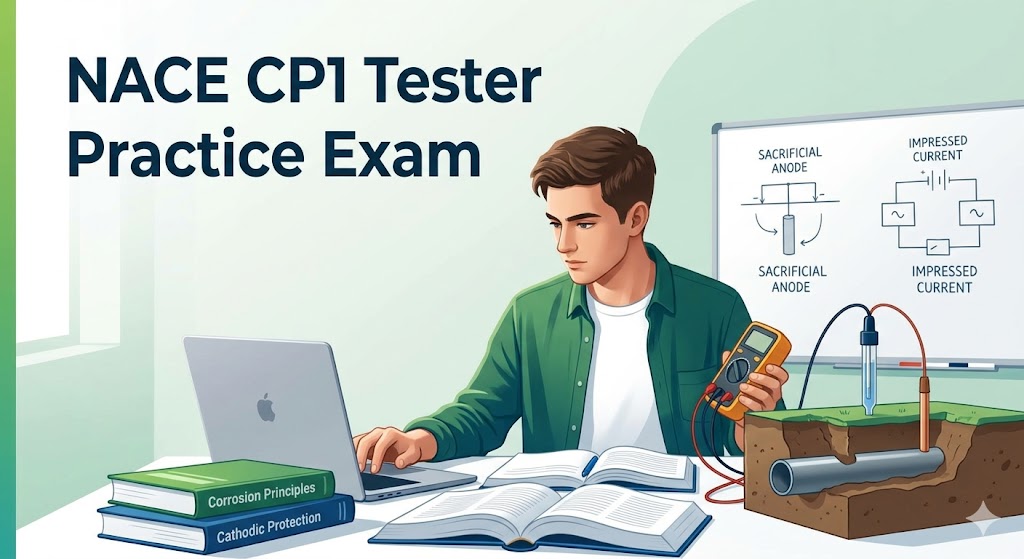
Additional Information
What the Course
Entails and Exam Details
The knowledge base for the CP1 exam is derived from a
comprehensive curriculum that covers the fundamentals of corrosion and its
prevention. Course topics typically include an introduction to chemistry and
electricity as they relate to corrosion, the different types of corrosion
cells, and the basic principles of both galvanic and impressed current cathodic
protection systems.
Candidates will learn about cathodic protection criteria,
the equipment used for measurements—such as multimeters and reference
electrodes—and standardized field testing procedures. Additionally, the
syllabus includes crucial information on record-keeping, safety practices, and
basic data interpretation. The practice exam aims to cover all these key
theoretical areas to ensure you are well-prepared for the actual certification
test.
What to Expect in
the Final Exam
The official NACE CP1 Tester certification process involves
a two-part examination. The first part is a theoretical exam that consists of
multiple-choice questions. This part is usually computer-based and must be
completed within a specified time limit, often around two hours. You can expect
questions that test your understanding of principles, definitions,
calculations, and safety standards.
The second part is a practical examination, which requires
candidates to demonstrate hands-on proficiency in performing common field
tests. This includes setting up testing circuits, using measuring instruments
correctly, and recording data accurately under the supervision of an examiner.
A passing score of typically 70% or higher is required on both the theoretical
and practical components to achieve certification.
How to Study and
Exam Centers
Effective preparation for the NACE CP1 exam involves a
combination of theoretical study and practical experience. Reviewing the
official NACE/AMPP course materials and study guides is paramount. Utilizing
practice exams is highly recommended to familiarize yourself with the question
formats and identify areas where you need further review.
For the practical portion, seek opportunities to work
alongside certified technicians in the field to get hands-on experience with
the equipment and procedures. There are also numerous online resources,
including instructional videos and forums, that can reinforce your learning.
The computer-based theoretical exam can typically be taken
at authorized testing centers worldwide, such as Pearson VUE centers. The
practical exam is usually administered at specific AMPP training facilities or
authorized testing locations upon completion of the CP1 course. Be sure to
check the official AMPP website for the most current information on exam
scheduling and locations.
Job Opportunities
from the Course
Earning the NACE CP1 Cathodic Protection Tester
certification significantly enhances your career prospects in the corrosion
control and integrity management sectors. This credential is widely recognized
by employers and opens up various entry-level and technician roles. Below is a
list of job titles and career paths unlocked by this certification:
- Cathodic
Protection Technician I
- Corrosion
Technician
- Field
Services Technician
- Pipeline
Integrity Technician
- Junior
Corrosion Engineer
- Regulatory
Compliance Inspector (with focus on corrosion)
- Maintenance
Technician (in industries with critical infrastructure like oil & gas,
water, and power)
Frequently Asked Questions
Reviews
5.0
Based on 0 reviews
Leave a Review
No reviews yet. Be the first to review!