
National Investigators Exam (NIE) Practice Exam
$69.00
- Buy to unlock unlimited access to all Quiz questions and Answers in this Quiz.
- After purchase you can print a PDF of the whole quiz at any point. The PDF will contain the questions and the correct answers.
About this Exam
The National Investigators Exam (NIE) is a vital step for police officers seeking to transition into the role of a trainee detective. This specialized qualification is designed to test your comprehensive understanding of criminal law and police procedures. It is essential for constables who aspire to join the Initial Crime Investigators Development Programme (ICIDP) and pursue a career in investigative work within police forces in England and Wales. Passing the NIE demonstrates your legal aptitude and readiness for complex investigative responsibilities.
Ready to test your knowledge?
Buy Now to Access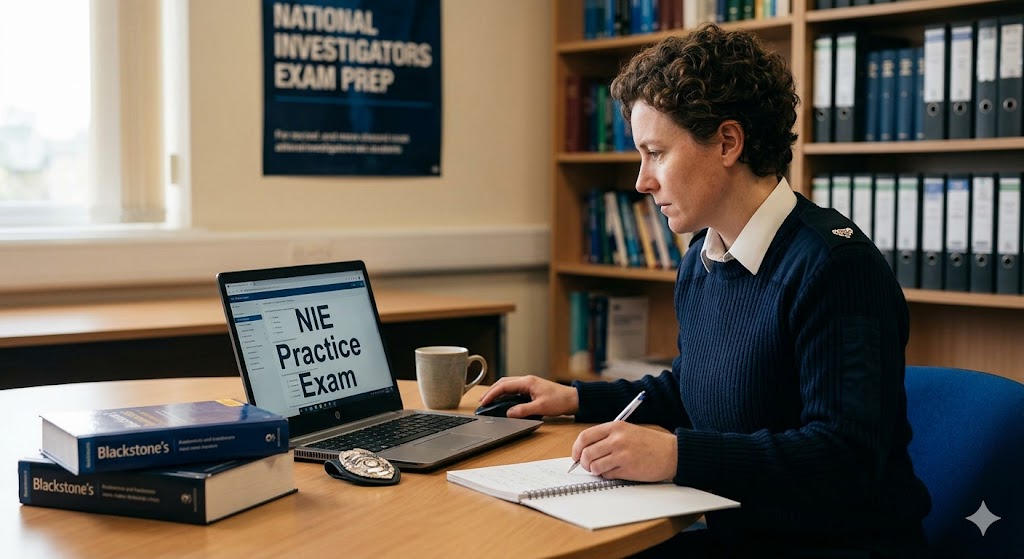
Additional Information
What the Course Entails and Exam Details
This examination focuses intensely on the specific legal knowledge required for effective investigative work. The syllabus is based on the Blackstone's Police Investigators’ Manual, which is the official study source. Key areas covered include general principles of criminal law, such as intent and attempt. You will study in detail offences against the person, ranging from assault to homicide. Offences against property, including theft, burglary, and robbery, are major components of the curriculum. Furthermore, the exam requires a deep understanding of police powers and procedures related to evidence, witness care, and the detention and questioning of suspects.
What to Expect in the Final Exam
The National Investigators Exam (NIE) is a robust and demanding assessment. It typically consists of 80 multiple-choice questions designed to test both factual knowledge and the application of law. Candidates are generally given three hours to complete the examination. The format is designed to present complex legal scenarios, and you must determine the correct legal application or procedure from the options provided. The standard required to pass is high, often requiring a score of 55% or above, reflecting the rigorous demands placed upon future detectives.
4. How to Study and Exam Centers
Effective preparation for the NIE is critical for success. It is highly recommended that you develop a structured study plan early. Active reading of the Blackstone's Manuals is essential. Create comprehensive summary notes and use flashcards for key legal definitions and procedural steps. One of the most effective methods of preparation is utilizing a National Investigators Exam (NIE) Practice Exam. Regular practice with sample questions helps you familiarize yourself with the question style and manage your time effectively. As for exam logistics, the NIE is often administered online within your local force area. Testing usually takes place under controlled conditions at your specific police force training centers or designated police locations. Your local force training department will coordinate the exact date, time, and specific location for your examination.
Job Opportunities from the Course
Successfully passing the National Investigators Exam (NIE) is the crucial gateway to a specialized detective career path. It opens doors to various challenging and rewarding investigative roles within the police service. While this exam is primarily about progressing to detective status, it provides the legal groundwork for several career specializations. Career paths unlocked by this qualification include:
Trainee Detective Constable (after completing the ICIDP)
Detective Constable (DC)
Specialist Fraud and Economic Crime Investigator
Serious and Organized Crime Investigator
Major Crime Unit Detective (handling homicides and major incidents)
Frequently Asked Questions
Reviews
5.0
Based on 0 reviews
Leave a Review
No reviews yet. Be the first to review!