
National Phlebotomy Certification Practice Exam
$69.00
- Buy to unlock unlimited access to all Quiz questions and Answers in this Quiz.
- After purchase you can print a PDF of the whole quiz at any point. The PDF will contain the questions and the correct answers.
About this Exam
The National Phlebotomy Certification Exam is a crucial step for aspiring healthcare professionals wanting to specialize in drawing blood.
This exam is designed for individuals who have completed a phlebotomy training program and are looking to validate their knowledge of safety protocols, patient care, and proper venipuncture techniques to potential employers across the healthcare industry.
Earning this certification signifies that you have met rigorous national standards for safety and competence.
Achieving this credential paves the way for a rewarding and vital career as a certified phlebotomy technician.
Ready to test your knowledge?
Buy Now to Access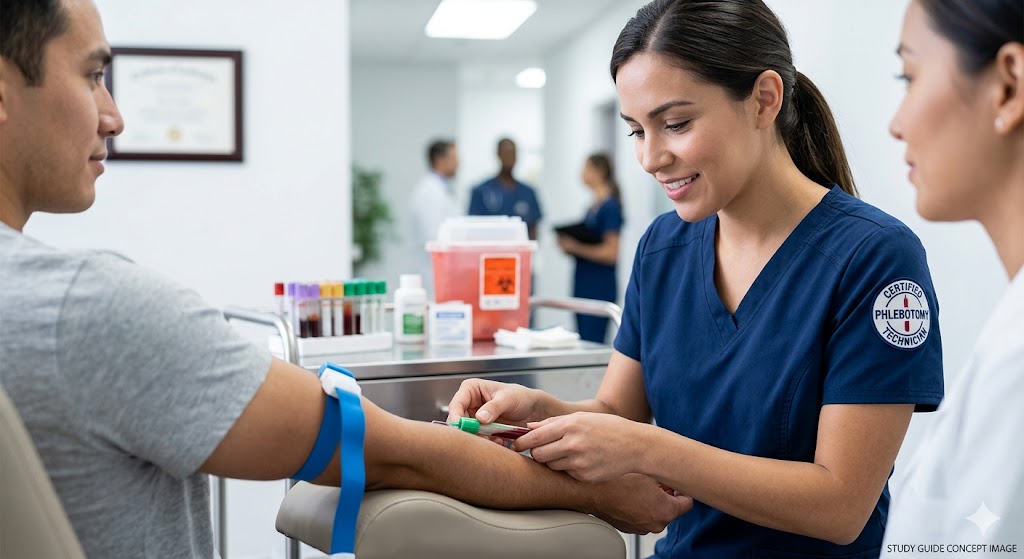
Additional Information
What the Course Entails and Exam Details
While specific training courses and certifying bodies vary, the core content universally focuses on foundational healthcare skills and technical proficiency.
You will thoroughly study human anatomy and physiology, with a primary emphasis on the circulatory system and identifying appropriate veins.
A significant portion of the material covers strict safety standards, including infection control practices, proper use of Personal Protective Equipment (PPE), and disposal of biohazardous waste.
Students must also master regulatory requirements, such as HIPAA for patient privacy and OSHA guidelines for workplace safety.
The curriculum covers the complete blood collection sequence, including patient identification, skin preparation, venipuncture techniques, dermal punctures, and post-draw care.
Additionally, content includes understanding various blood collection tubes, additive functions, and the correct order of draw to ensure sample integrity.
Finally, you will explore essential interpersonal skills, including therapeutic communication and professional ethics, to ensure patient comfort and cooperation.
What to Expect in the Final Exam
When sitting for the final exam, candidates should prepare for a comprehensive evaluation of their theoretical knowledge.
The exam usually consists of 100 to 200 objective multiple-choice questions, depending on the specific certifying agency you choose, such as the NHA, AMT, or ASCP.
These are timed examinations, generally allowing candidates between two and three hours to complete the test.
A passing score is required to earn your certification, though the exact numerical cutoff required for passing differs slightly by organization.
While the national exam is a written (often computer-based) test of knowledge, please note that most accredited programs require you to have successfully completed a minimum number of practical venipunctures before you are eligible to take the written exam.
How to Study and Exam Centers
Preparation is the absolute key to success, and creating a structured study plan is essential.
Start by thoroughly reviewing the detailed content outlines provided by your chosen certifying agency to understand exactly what will be covered.
Utilize comprehensive study guides and textbooks, ensuring you grasp the underlying rationale for every safety protocol and procedure, rather than just memorizing facts.
We highly recommend utilizing realistic online practice exams, as these will familiarize you with the wording of questions and help you manage your time effectively during the actual test.
Many students benefit significantly from using flashcards to memorize circulatory anatomy, the correct order of draw, and complex regulatory terms.
Regarding testing locations, most national exams are now administered through computer-based testing at established proctoring centers, such as Pearson VUE.
Alternatively, many exams are held directly at approved training institutions and colleges.
Some agencies may also offer secure, live-remote proctoring options that allow you to take the exam from home under strict environmental guidelines.
Job Opportunities from the Course
Achieving national certification as a phlebotomy technician significantly boosts your employability and expands your career opportunities across the vast healthcare landscape.
This credential proves your dedication and skill to potential employers in numerous clinical environments.
Common job titles and career paths available for certified phlebotomists include the following:
Certified Phlebotomy Technician (CPT)
Hospital Phlebotomist
Laboratory Assistant
Clinical Laboratory Phlebotomist
Outpatient Clinic Phlebotomist
Mobile Phlebotomist
Plasma Donation Center Phlebotomist
Blood Bank Technician
Traveling Phlebotomist
Research Phlebotomist (supporting clinical trials)
Frequently Asked Questions
Reviews
5.0
Based on 0 reviews
Leave a Review
No reviews yet. Be the first to review!