
NC BLET 2026 – Compliance and Control Tactics Practice Test
$69.00
- Buy to unlock unlimited access to all Quiz questions and Answers in this Quiz.
- After purchase you can print a PDF of the whole quiz at any point. The PDF will contain the questions and the correct answers.
About this Exam
The North Carolina Basic Law Enforcement Training (NC BLET) is the foundational state-mandated program required for all aspiring law enforcement officers in North Carolina.
Included within this extensive curriculum is the critical "Compliance and Control Tactics" block.
This specific training is designed to equip recruits with the physiological understanding, physical skills, and legal knowledge necessary to subdue resisting subjects safely and apply the appropriate level of force.
This practice test is a vital tool for recruits currently enrolled in an authorized NC BLET program who are preparing to challenge the final written topic examination and the overarching state comprehensive exam.
Ready to test your knowledge?
Buy Now to Access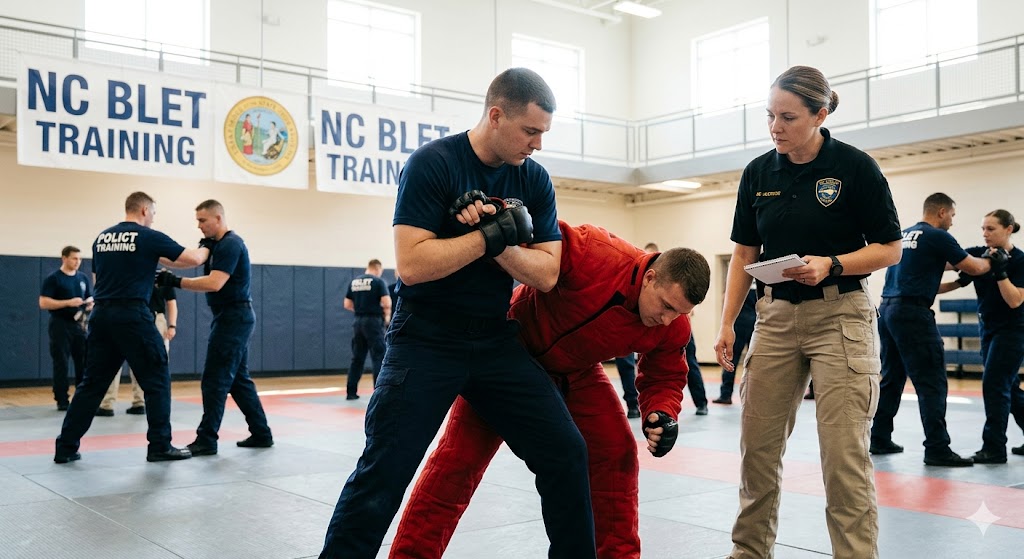
Additional Information
What the Course Entails and Exam Details
The Compliance and Control Tactics course covers both
theoretical principles and dynamic physical applications.
Candidates are expected to master several key areas,
beginning with the legal framework of "Use of Force" as defined by
North Carolina General Statutes and relevant constitutional standards.
The syllabus focuses heavily on the "Use of Force
Continuum," ensuring recruits understand the escalation and de-escalation
of response options based on subject behavior.
Topics include verbal de-escalation techniques, pressure
point control, dynamic takedowns, grappling, control holds, and the proper use
of intermediate weapons such as batons and OC (oleoresin capsicum) spray.
Handcuffing procedures and searching techniques under
stressful conditions are also heavily emphasized.
What to Expect in
the Final Exam
To successfully pass the Compliance and Control Tactics
block, recruits must demonstrate proficiency in two distinct evaluations.
First, there is a physical skills test, where recruits must
correctly execute specific techniques—such as takedowns, cuffing, and baton
strikes—under the observation of certified instructors.
This is typically assessed on a "Pass/Fail" basis,
requiring perfect or near-perfect mechanical execution.
Second, recruits must pass a written examination that tests
their knowledge of use-of-force legalities, biological responses to stress, and
tactical principles.
This written component generally consists of multiple-choice
and true/false questions; a passing score is typically 70% or higher, depending
on the specific delivery academy's requirements.
Recruits are often given a strict time limit for the written
exam, reinforcing the need for quick, accurate recall.
How to Study and Exam Centers
Effective preparation for the Compliance and Control Tactics
exam requires balancing physical practice with cognitive review.
For the written exam, focus intently on the legal
definitions and the different levels of the force continuum; flashcards are
excellent for memorizing legal statutes and tactical terms.
Reviewing case studies of use-of-force scenarios will help
you apply abstract concepts to real-world situations.
This practice exam should be used repeatedly to identify
weak points in your knowledge base.
For the physical component, consistency is key; practice
techniques slowly at first to build muscle memory before increasing speed and
resistance with a training partner.
The NC BLET state exams are administered by authorized
delivery sites, which are typically community colleges and dedicated law
enforcement academies throughout North Carolina, rather than national testing
centers like Pearson VUE.
Job Opportunities from the Course
Completing the NC BLET program and passing the state
comprehensive examination are prerequisites for certification and employment as
a sworn law enforcement officer in North Carolina. This course unlocks several
specific career paths, including:
- Police
Officer (Municipal Departments)
- Deputy
Sheriff (County Sheriff’s Offices)
- NC
State Highway Patrol Trooper
- Campus
Police Officer (Universities and Colleges)
- Company
Police Officer
- NC
Wildlife Enforcement Officer
- NC
Alcohol Law Enforcement (ALE) Agent
Frequently Asked Questions
Reviews
5.0
Based on 0 reviews
Leave a Review
No reviews yet. Be the first to review!