
NC MPJE Practice Exam
$69.00
- Buy to unlock unlimited access to all Quiz questions and Answers in this Quiz.
- After purchase you can print a PDF of the whole quiz at any point. The PDF will contain the questions and the correct answers.
About this Exam
The North Carolina Multistate Pharmacy Jurisprudence Examination (MPJE) is a critical step in becoming a licensed pharmacist in the state. This rigorous examination assesses a candidate's knowledge of both federal and North Carolina-specific pharmacy laws and regulations. The exam is designed to ensure that all practicing pharmacists in North Carolina understand their legal responsibilities, standard of care requirements, and the regulatory framework that governs the profession to protect public health and safety. It is a mandatory requirement for all individuals seeking pharmacist licensure by examination or reciprocity in North Carolina. This guide is tailored for students and out-of-state pharmacists preparing to master the nuances of NC pharmacy law.
Ready to test your knowledge?
Buy Now to Access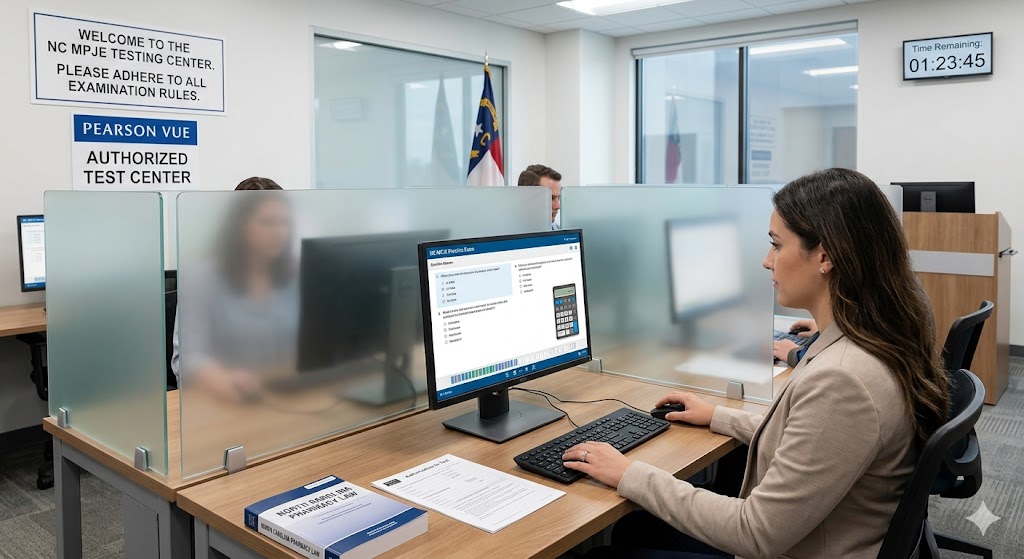
Additional Information
What the Course Entails and Exam Details
Preparing for the North Carolina MPJE requires a comprehensive review of complex legal statutes and administrative codes. There is no official "course," but the study process involves a deep dive into two primary domains of pharmacy law: federal law and state-specific regulations. The competency statements provided by the National Association of Boards of Pharmacy (NABP) outline the major topics covered, which are categorized into the following core areas:
Pharmacy Practice: This includes the laws governing the organizational structure and legal requirements for various pharmacy settings (community, hospital, etc.), licensing requirements for personnel, and the standards for pharmacy operations.
Licensure, Registration, and Certification: Covers the rules for obtaining and maintaining licensure as a pharmacist, technician registration, and pharmacy permits.
Controlled Substances: A major component, detail state and federal laws regarding the ordering, prescribing, dispensing, and record-keeping of controlled substances.
Prescription and Dispensing: Explores legal requirements for prescription validity, generic substitution rules, labeling, patient counseling, and prescription transfers.
Operational Standards and General Laws: Includes regulations on adulteration and misbranding, patient confidentiality (HIPAA), and various other administrative and regulatory requirements affecting everyday pharmacy practice.
What to Expect in the Final Exam
The North Carolina MPJE is a computerized, adaptive test administered by the NABP. Candidates should be prepared for a mentally demanding testing experience.
Exam Format: The test consists of multiple-choice questions, and the adaptive nature means that the difficulty level of the next question is based on your performance on previous questions. This approach aims to accurately measure your level of competence within the testing domain.
Passing Score Requirements: To pass the North Carolina MPJE, a candidate must achieve a minimum scaled score of 75. It is important to note that a scaled score is not a percentage but rather a result of a statistical transformation of raw scores.
Time Limits: Candidates are allocated 3 hours to complete the examination. It is vital to manage your time effectively, as you cannot return to previously answered questions.
Specific Rules and Procedures: The exam is held in a secure environment. No study materials, personal calculators, or electronic devices are permitted inside the testing room. An on-screen calculator is provided within the testing software. You must follow all instructions provided by the testing center administrators.
How to Study and Exam Centers
Effective preparation for the MPJE involves a combination of legal resource review and active practice.
Actionable Study Strategies:
Study the Primary Resources: Your primary study materials must be the actual text of the relevant laws and regulations. You should study the North Carolina Pharmacy Practice Act, the North Carolina Board of Pharmacy administrative codes, and federal pharmacy laws (e.g., the Controlled Substances Act).
Use Practice Exams: Taking practice examinations is one of the most effective study methods. The NABP offers the Pre-MPJE, the only official practice exam that uses retired questions from the actual MPJE, providing a realistic assessment of your preparedness and familiarizing you with the adaptive test format.
Focus on State-Federal Differences: Many questions on the NC MPJE are designed to test your knowledge of where state law differs from federal law. North Carolina often has stricter regulations in certain areas, and knowing these discrepancies is crucial.
Review Competency Statements: The NABP updates the MPJE competency statements periodically. Use these as a checklist to ensure you have covered all the required content areas.
How to Take the Exam:
Register with NABP and NCBOP: To take the exam, you must first create an e-Profile with the NABP and apply for licensure with the North Carolina Board of Pharmacy (NCBOP).
Obtain ATT: Once the NCBOP confirms your eligibility, you will receive an Authorization to Test (ATT) letter from the NABP via email. The ATT is valid for a specific timeframe.
Schedule with Pearson VUE: After receiving your ATT, you can schedule your exam appointment through Pearson VUE, the NABP's testing vendor. You must select a physical Pearson VUE professional testing center. These authorized locations are situated throughout North Carolina and across the United States. Ensure you book your slot well in advance, especially during peak graduation times.
Job Opportunities from the Course
Successfully passing the North Carolina MPJE is the final regulatory hurdle to becoming a Licensed Pharmacist in North Carolina. This licensure is not just a certification; it is the legal authorization required to practice the profession. Achieving this milestone unlocks a wide array of career paths within the pharmaceutical and healthcare sectors.
Licensed Pharmacist in North Carolina
Community Pharmacist (Retail)
Hospital Pharmacist
Clinical Pharmacist
Pharmacy Manager
Nuclear Pharmacist
Specialty Pharmacist (e.g., Oncology, Infectious Disease)
Long-Term Care Pharmacist
Pharmaceutical Industry Roles (Medical Affairs, Regulatory Affairs)
Pharmacy Academic (Faculty at a School of Pharmacy)
Board of Pharmacy Inspector or Administrator
Frequently Asked Questions
Reviews
5.0
Based on 0 reviews
Leave a Review
No reviews yet. Be the first to review!