
NC Residential Code Practice Exam
$69.00
- Buy to unlock unlimited access to all Quiz questions and Answers in this Quiz.
- After purchase you can print a PDF of the whole quiz at any point. The PDF will contain the questions and the correct answers.
About this Exam
This practice test is a crucial resource designed specifically for building professionals seeking licensure in North Carolina’s residential construction and inspection industries. It helps candidates thoroughly evaluate their preparedness for demanding official state exams, such as the NC General Contractor - Residential Exam or an NC Home Inspector Exam. By completing this practice assessment, individuals demonstrate and reinforce their mastery of the complex North Carolina Residential Code. This process ensures consistent understanding and application of safety and compliance standards across the state’s residential housing sector. This test is intended for current or aspiring Residential General Contractors, Residential Building Inspectors, Home Inspectors, and Code Compliance Officers who need to validate their expertise against the latest NC code requirements.
Ready to test your knowledge?
Buy Now to Access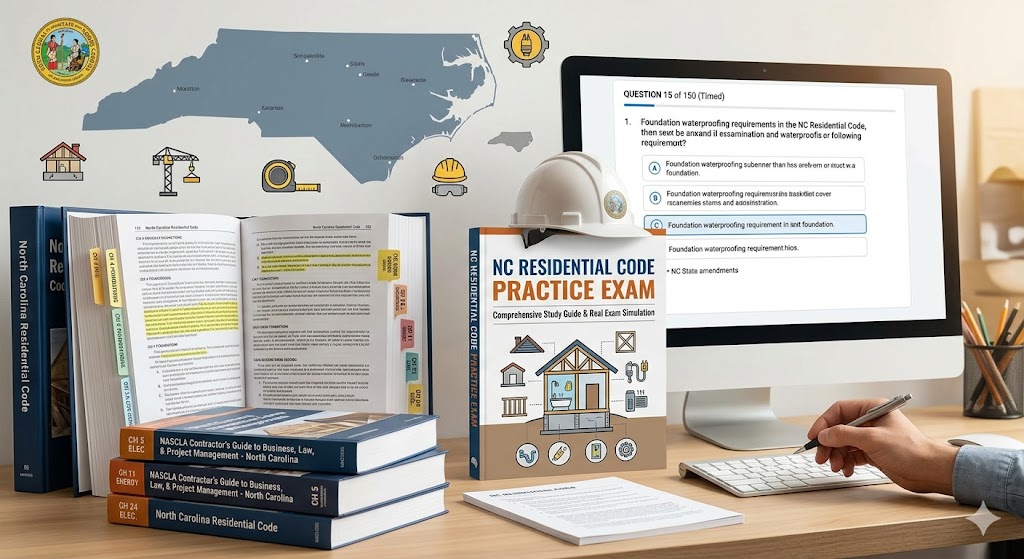
Additional Information
What the Course Entails and Exam Details
The core curriculum and practice test material focus intensively on the 2018 North Carolina Residential Code, along with all relevant, most current NC amendments and energy efficiency updates. (Note that the code is dynamic, and candidates must verify the specific edition required for their upcoming state exam). The assessment covers the fundamental principles of the International Residential Code (IRC) adapted for North Carolina’s unique conditions.
Core topics covered in detail include, but are not limited to: Footings and Foundations; Concrete and Masonry construction; floor construction and framing; wall systems; roof-ceiling systems; and exterior finishes. Furthermore, candidates must demonstrate comprehensive knowledge in applying electrical, plumbing, mechanical (HVAC), and energy efficiency standards for one- and two-family dwellings. Understanding life-safety provisions, including egress requirements and smoke detection, is also central to this exam.
What to Expect in the Final Exam
This practice test is structured to mirror the format, rigor, and complexity of the official North Carolina licensing exams. It utilizes a multiple-choice question format, often organizing sections logically to follow the chapters of the North Carolina Residential Code.
Crucially, the official state licensure exams based on the code are typically administered as open-book tests. Candidates are allowed, and strongly encouraged, to use the official, relevant North Carolina Residential Code books during the exam. (Consult testing providers for rules on specific editions and allowed annotations). This practice exam helps you learn to navigate these resources efficiently under time constraints. The official exams generally require a passing score of 70%, with time limits typically ranging from 2 to 4 hours, designed to assess both comprehensive knowledge and the ability to accurately locate specific code language.
How to Study and Exam Centers
Effective preparation is essential for success in both this practice exam and the subsequent state licensing test.
Actionable study strategies include:
Obtain the Official Code: First and foremost, secure current copies of the 2018 North Carolina Residential Code books (or the version currently adopted) and all amendments.
Active Reading and Indexing: Actively read the key chapters. Use color-coded tabs and index the code book extensively to ensure quick referencing. Practice navigating the book efficiently.
Utilize Comprehensive Practice Exams: Complete multiple practice assessments, like this one, multiple times. Treat each attempt as a timed mock-exam to identify weak points and improve retrieval speed.
Focus on NC Amendments: Pay extra attention to parts of the code with specific North Carolina modifications, as these frequently appear on state exams.
Enroll in Prep Courses: Consider enrolling in dedicated NC Residential Code exam preparation courses tailored for contractors or inspectors in the state.
When ready to take the official licensure exam, most state-level building professional tests in North Carolina are administered through professional testing organizations like Pearson VUE or PSI. These services maintain numerous authorized physical testing centers conveniently located throughout the state, and many now offer secure online proctoring options for eligible candidates. Be sure to check with your specific licensing board for precise registration details and approved locations.
Job Opportunities from the Course
Successfully passing a code-focused licensure exam unlocks several significant career paths within North Carolina’s bustling construction and inspection sectors. Demonstrating this mastery validates your professional expertise and compliance knowledge to employers and clients.
Specific job opportunities enabled by this level of qualification include:
Residential General Contractor (General Contractor - Residential Licensure)
Residential Building Inspector
Licensed NC Home Inspector
Code Compliance Officer
Residential Project Manager
Plans Examiner for local government
Residential Framing Contractor
Construction Quality Control Specialist
Consultant for Residential Compliance
Frequently Asked Questions
Reviews
5.0
Based on 0 reviews
Leave a Review
No reviews yet. Be the first to review!