
NCHADFB 93-D Practice Exam
$69.00
- Buy to unlock unlimited access to all Quiz questions and Answers in this Quiz.
- After purchase you can print a PDF of the whole quiz at any point. The PDF will contain the questions and the correct answers.
About this Exam
The North Carolina State Hearing Aid Dealers and Fitters Board (NCHADFB) General Statute 93-D Exam is a fundamental, mandatory assessment for individuals aspiring to become registered and licensed to fit and sell hearing aids within the state of North Carolina.
The NCHADFB was established with the critical mission of protecting the hearing-impaired public by ensuring all practitioners meet rigorous standards of competency, ethics, and professional knowledge.
This examination, which specifically focuses on the legal requirements laid out in NC General Statute Chapter 93-D, is designed for prospective hearing aid specialists, apprentices, and anyone seeking licensure to practice in North Carolina.
Ready to test your knowledge?
Buy Now to Access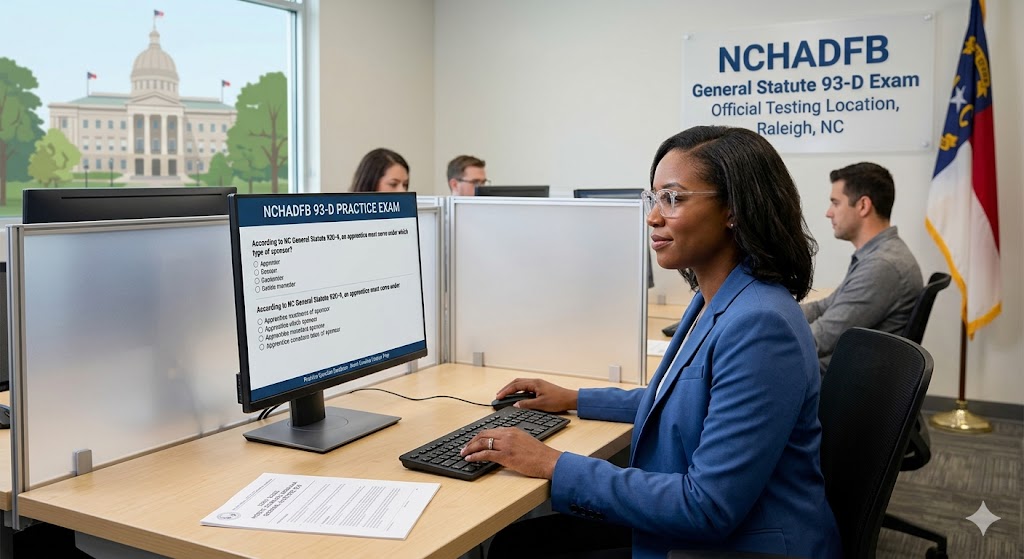
Additional Information
What the Course Entails and Exam Details
As an examination focused entirely on a legal statute, the core content area you must master is North Carolina General Statute Chapter 93-D, the overarching law that regulates the entire hearing aid dispensing profession in the state.
Your preparation must cover a diverse range of topics within the statute, including, but not limited to:
Licensure and Registration Requirements: Understanding the rules for obtaining, maintaining, and renewing licenses for both specialists and apprentices.
The Scope of Practice: Clearly defining which actions are legally permissible for a hearing aid specialist and an apprentice.
Professional Conduct and Ethics: Gaining a thorough knowledge of required ethical standards and forbidden practices to avoid disciplinary action.
Hearing Test Procedures: Grasping the legally mandated methods and standards for evaluating an individual's hearing.
Fitting and Dispensing Guidelines: Mastering the procedures for selecting, fitting, and selling appropriate hearing aids to consumers.
Consumer Rights and Protections: Understanding the specific laws designed to safeguard clients, such as the "right to cancel" a purchase.
Advertising and Marketing Standards: Knowing what constitutes legal, non-deceptive advertising and promotion.
The NCHADFB’s Role and Authority: Learning about the Board’s power to investigate, hold hearings, and impose disciplinary measures.
A thorough understanding of these key legal pillars is essential, not just to pass the exam, but to build a compliant and successful career in hearing healthcare.
What to Expect in the Final Exam
While specific details can change, the NCHADFB General Statute 93-D licensing exam typically takes the form of a computer-based, multiple-choice assessment.
The exam is designed to test your ability to apply the specific legal rules and ethical principles to practical situations you will encounter in your daily work.
While the exact number of questions and time limit is set by the Board for each testing cycle, a typical candidate should prepare for an exam containing approximately 50 to 100 questions.
The allotted time for completion is usually between one and a half to two hours, allowing ample time for thoughtful consideration of each question.
The current passing score required by the NCHADFB is a scaled score, typically equivalent to correctly answering around 70% of the questions. However, the Board reserves the right to modify these scores, so you must confirm the exact requirements for your specific test date.
On exam day, you will be required to present a valid, government-issued photo ID. To ensure a standardized and secure testing environment, no personal items, including textbooks, notes, or electronic devices, will be permitted in the testing area.
How to Study and Exam Centers
Effective preparation for the General Statute 93-D exam requires a systematic study approach.
Your first and most important resources are the official text of North Carolina General Statute 93-D and the NCHADFB’s own rules and regulations. This is the source material for the entire exam. Read and analyze it thoroughly multiple times.
Using a practice exam, like the one in our title, "NCHADFB 93-D Practice Exam," is one of the single most valuable study tools available. Taking simulated, timed practice tests is essential for building your understanding and identifying knowledge gaps. Practice exams will:
Familiarize you with the format, style, and tone of the actual questions.
Develop your time management skills by allowing you to experience the test-taking pace.
Highlight the key sections of the statute that you need to re-review.
Reinforce your understanding of complex legal and ethical concepts.
We recommend going beyond just finding the correct answer; analyze why each incorrect option is false, based on the specific language of the statute.
Create flashcards for key terms, definitions, and important timelines (e.g., the exact length of the consumer "right to cancel" period).
When you are ready to take the actual exam, you must contact the North Carolina State Hearing Aid Dealers and Fitters Board directly to register and pay the required fee.
Testing is typically not on-demand; rather, the Board designates specific examination dates throughout the year. The exam is often held at state-administered testing sites or approved physical locations, which could include government buildings, specific colleges, or authorized testing centers. When you register, the NCHADFB will provide you with the exact address, instructions, and time for your chosen exam date.
Job Opportunities from the Course
Successfully passing the NCHADFB General Statute 93-D Exam and obtaining your license unlocks an array of rewarding and highly respected career opportunities in hearing healthcare in North Carolina.
The following is a list of the primary job titles and career paths this license will enable you to pursue:
Licensed Hearing Instrument Specialist: This is the core role for a licensee, involving the independent testing of hearing, selecting appropriate devices, and fitting them to clients.
Registered Hearing Aid Dispenser: Many professionals use this title when they are employed to sell and fit hearing instruments in clinical or retail settings.
Audiologist Assistant/Aide: While audiology requires a different degree, a licensee who has also completed additional audiology training can work in a supporting role.
Practice Owner/Entrepreneur: With a license, you have the authority to establish and operate your own hearing aid clinic or dispensing business.
Hearing Aid Manufacturer’s Representative: Your deep legal and practical knowledge is highly valuable for representing and training others on specific hearing aid brands.
Hearing Care Manager: Many corporate retail and healthcare providers look for licensed specialists to manage entire departments or multiple clinic locations.
Consumer Advocate and Educator: Use your expertise to educate the public and protect consumer rights as part of non-profit or regulatory organizations.
Frequently Asked Questions
Reviews
5.0
Based on 0 reviews
Leave a Review
No reviews yet. Be the first to review!