
NCHSE Health Science Practice Test
$69.00
- Buy to unlock unlimited access to all Quiz questions and Answers in this Quiz.
- After purchase you can print a PDF of the whole quiz at any point. The PDF will contain the questions and the correct answers.
About this Exam
The NCHSE (National Consortium for Health Science Education) assessment is a powerful foundational credential designed for students in middle school, high school, and early postsecondary health science programs. This comprehensive exam validates that students have mastered the essential knowledge and skills necessary for success across all health professions. By earning this certificate, you demonstrate readiness for further technical training, collegiate study, or entry-level roles in the diverse and rewarding field of healthcare.
Ready to test your knowledge?
Buy Now to Access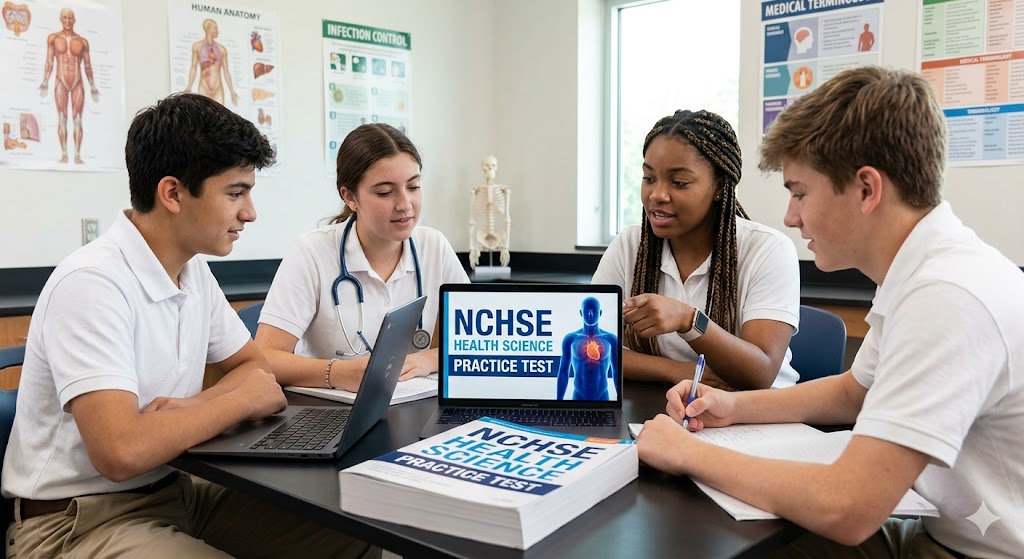
Additional Information
What the Course Entails and Exam Details
The learning pathway leading to the NCHSE assessment is structured around the 11 National Health Science Standards, which represent industry-validated expectations for foundational health knowledge.
The core domains you must master include:
Academic Foundation: Anatomy and physiology, human growth and development, diseases and disorders, and essential medical mathematics.
Communication: Effective verbal, nonverbal, and written communication techniques within a healthcare setting.
Systems: Understanding the organizational structure of healthcare facilities and the delivery of patient care services.
Employability Skills: Developing teamwork, problem-solving, and professional traits sought by healthcare employers.
Legal Responsibility: Knowledge of laws and regulations governing the healthcare industry, including patient privacy.
Ethics: The principles of ethical behavior and decision-making in medical practice.
Safety Practices: Infection control, environmental safety, and emergency protocols, including Basic Life Support (BLS).
Technical Skills: (Varies by curriculum) Basic skills common across health careers.
Health Maintenance Practices: Promoting wellness and understanding disease prevention.
Information Technology: Understanding the role of technology in patient records and healthcare management.
What to Expect in the Final Exam
The NCHSE assessment is a computer-based examination that goes beyond simple recall to test your critical thinking and application skills.
Format: The exam predominantly features multiple-choice questions, but it also utilizes advanced interactive question types to better simulate real-world scenarios. These include:
Labeling diagrams (e.g., anatomical structures).
Matching terms or concepts.
Sequencing and ordering processes (e.g., proper handwashing steps).
Standardized Assessment Details:
Item Count: The full certificate exam typically consists of 108 test items, contributing to a total of 116 points.
Time Limit: Students generally have between 90 and 120 minutes to complete the test.
Passing Score: To earn the National Health Science Certificate, a score of 70% or higher is required.
How to Study and Exam Centers
Preparation is the key to success. Utilize these strategies to feel confident on test day:
Actionable Study Strategies:
Master the Standards: Review the detailed breakdown of the 11 National Health Science Standards. They are your ultimate study guide.
Take Practice Tests: Actively engage with the NCHSE Health Science Practice Test. It is the single best way to become familiar with the question formats, timing, and content difficulty.
Use Flashcards: Create or use digital flashcards for medical terminology, anatomy, and key legal/ethical definitions.
Curriculum Resources: Thoroughly review all textbooks, workbooks, and notes provided in your health science course.
Exam Centers:
The NCHSE exam is administered through an approved online testing platform (currently YouScience). The physical location is usually your authorized local high school or career and technical center.
To take the exam:
Your instructor or school administrator will create a student account.
The school will register you for a specific testing window.
On the day of the exam, you will log in to the portal at your school's designated testing lab.
Job Opportunities from the Course
Earning the NCHSE National Health Science Certificate is a vital stepping stone. While it is a foundational knowledge credential rather than a terminal license, it acts as a accelerator for your healthcare career. It validates your competency to future employers and provides a strong base for stackable certifications.
Career paths and entry-level starter roles this credential unlocks (often when paired with brief additional technical training or as a required first step) include:
Home Health Aide
Certified Nursing Assistant (CNA)
Patient Care Technician (PCT)
EKG Technician
Phlebotomist
Medical Assistant (MA)
Pharmacy Technician
Dental Assistant
Surgical Technologist
Entry-Level Health Unit Coordinator
Healthcare Administrative Assistant
Frequently Asked Questions
Reviews
5.0
Based on 0 reviews
Leave a Review
No reviews yet. Be the first to review!