
NCIC Training Practice Exam
$69.00
- Buy to unlock unlimited access to all Quiz questions and Answers in this Quiz.
- After purchase you can print a PDF of the whole quiz at any point. The PDF will contain the questions and the correct answers.
About this Exam
The National Crime Information Center (NCIC) training and the subsequent certification test is an essential requirement for individuals within the law enforcement and criminal justice fields. NCIC is a computerized information system and database that serves a critical role in the rapid sharing of crime-related data across local, state, and federal agencies. This program is specifically designed for police officers, sheriff's deputies, dispatchers, records clerks, crime analysts, and various other personnel whose job duties involve accessing and querying these highly sensitive databases. Successfully passing this certification, which often includes a final exam following thorough training, demonstrates that you understand the system’s core functionalities, adhere strictly to security protocols, and can effectively use the database in your line of duty while maintaining confidentiality and data integrity. This practice test is a vital study resource, mirroring the types of questions and concepts you will encounter during your official, mandatory training and competency check, helping you prepare effectively and build the confidence necessary to succeed.
Ready to test your knowledge?
Buy Now to Access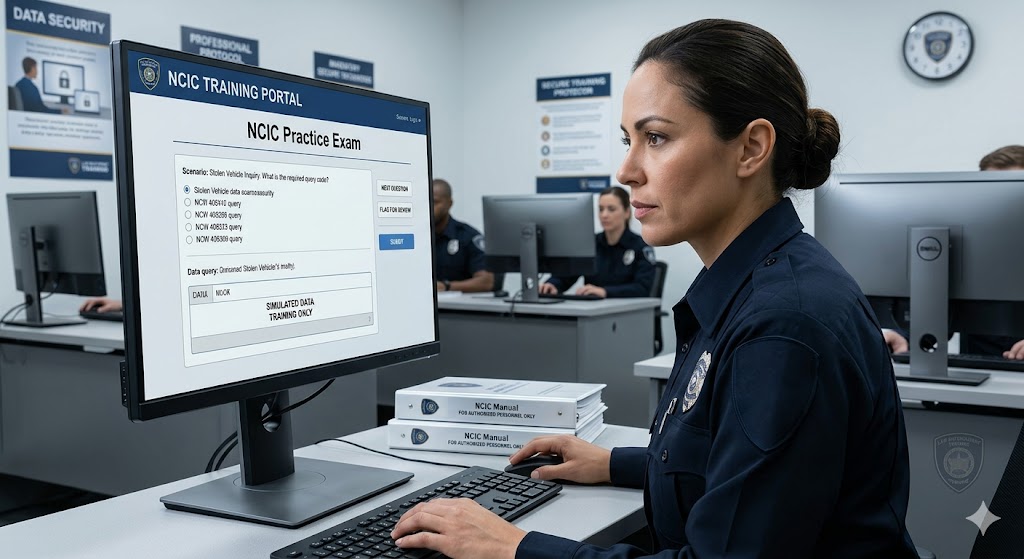
Additional Information
What the Course Entails and Exam Details
NCIC training courses generally cover a wide range of topics crucial for proficient system use and adherence to regulatory standards. The specifics may vary slightly by agency and jurisdiction, but fundamental content remains consistent. Students can expect to learn about:
NCIC Overview and Purpose: The history, structure, and critical role of the system in public safety.
Database Files: Detailed training on the various files, including Wanted Persons, Stolen Vehicles, Stolen Property, Guns, License Plates, and relevant person files like Missing Persons or Protection Orders.
Querying and Inquiry Procedures: Understanding the specific search parameters, codes, and logic used to effectively query the system.
Interpreting Hits: Learning how to read and understand information returned in inquiry results and the necessary steps after a 'hit' is found.
Security and Confidentiality: This is one of the most highly emphasized components. Training covers strict security protocols, access control, non-disclosure requirements, and the consequences of misuse.
Validation and Data Quality: The processes for ensuring that data entered and maintained within the system is accurate and current.
Message Switching and Interagency Communication: Understanding how different jurisdictions interact through the system.
While this article discusses a practice test, the actual final certification exam typically:
Varies by Jurisdiction: Testing is administered by individual law enforcement agencies or state-level POST (Peace Officer Standards and Training) commissions, meaning formats can differ.
Combines Theory and Practice: Expect a mix of knowledge-based questions (multiple choice, true/false) and potentially practical skill assessments where you may have to simulate queries on a training system.
Has Specific Passing Standards: Each agency sets its own minimum passing score and time limits, which are often strictly enforced due to the sensitive nature of the system.
What to Expect in the Final Exam
While specific final exams are unique to each training provider or agency, you can generally anticipate the following structure and environment:
Format: The most common form is a multiple-choice exam, often taken electronically on a computer or training terminal. Practical components, if included, would involve performing specific database queries under observation.
Content: Questions are heavily based on the topics covered during your training – database use, query logic, hit verification, security protocols, and relevant agency procedures.
Time Limit: Agencies will have specific time allocations, varying from 60 minutes to several hours, depending on the comprehensiveness of the exam. Expect it to be a timed, often proctored, event.
Passing Score: Meeting a required, typically high, percentage (e.g., 80% or higher) is often mandatory for certification. Failure to pass may result in the need for retraining or restricted database access.
Restrictions: Exams are generally closed-book, and use of external materials or unauthorized systems is strictly prohibited, maintaining the integrity of the process.
How to Study and Exam Centers
Effective preparation is key to success on your official certification exam. Here are some actionable strategies:
Thoroughly Review Provided Materials: Dive deep into the official NCIC training manuals, user guides, and training modules provided by your agency or training program. This should be your primary resource.
Take the Practice Test Multiple Times: Utilize this NCIC Training Practice Test and any other provided practice materials. Repeat them to identify weak areas and understand the question format and concepts.
Focus on Query Logic and Security: Pay special attention to the correct coding for queries, understanding hit results, and the paramount importance of data security and confidentiality protocols. This is critical for both the exam and actual system use.
Practice with Real (but Mock) Queries: If you have access to a training system or terminal, practice entering queries, verifying hits, and navigating the system in a controlled environment using simulated data only. Never use actual subject or vehicle information in a training or practice setting.
Form Study Groups: Collaborating with colleagues who are also undergoing the same training can be very beneficial for review and knowledge sharing.
Clarify Any Confusion: If you encounter concepts or rules that are unclear, do not hesitate to ask your instructors or agency trainers.
Exam Centers: It is crucial to understand that NCIC certification is not a public exam and cannot be taken at standard commercial test centers (like Pearson VUE or Prometric). The official final competency check is almost always administered:
Within Your Law Enforcement Agency: In a dedicated training room or terminal environment controlled and monitored by agency instructors.
Through a State POST Commission or Law Enforcement Training Academy: For larger groups or standardized state certifications, tests may be conducted at centralized training facilities.
On Authorized Online Portals: Access to any testing portal is strictly controlled and only granted through official agency or training commission channels.
Job Opportunities from the Course
Successfully completing NCIC training and the certification process is a critical prerequisite, and often a condition of employment, for numerous vital roles within law enforcement and criminal justice agencies across the United States. While not a standalone credential for external hire, it demonstrates necessary proficiency and is required to unlock or maintain access to the essential tools used in these positions. Potential career paths and job titles that require this specific certification include:
Law Enforcement Officer (Police, Sheriff Deputies, State Troopers, Federal Agents): This includes all operational roles where personnel on patrol or investigators need access to query individuals, vehicles, weapons, and stolen property.
Dispatchers/Telecommunicators: Essential for providing real-time data to officers in the field, dispatchers must have immediate and certified access to NCIC.
Records Clerks/Technicians: Personnel responsible for the entry, entry validation, modification, and maintenance of sensitive data within NCIC.
Crime Analysts/Intelligence Analysts: Analysts utilize NCIC data for investigative support and broader trend analysis within agencies.
Correctional Officers: Often required to check NCIC as part of the booking or release process.
Specialized Investigative Roles: Narcotics agents, task force officers, and other specific investigative units frequently utilize NCIC.
Court Clerks (with relevant access): Some court personnel may require limited access depending on their duties.
Border Patrol/Customs Officers: Similar federal roles with a need to access or input relevant crime data.
Probation/Parole Officers: Required for monitoring and enforcement purposes.
Frequently Asked Questions
Reviews
5.0
Based on 0 reviews
Leave a Review
No reviews yet. Be the first to review!