
Networking and Internet Practice Exam
$69.00
- Buy to unlock unlimited access to all Quiz questions and Answers in this Quiz.
- After purchase you can print a PDF of the whole quiz at any point. The PDF will contain the questions and the correct answers.
About this Exam
The Networking and Connecting to the Internet Practice Test is an essential assessment designed for individuals seeking to validate their foundational understanding of computer networks and how devices communicate over the Internet. This comprehensive exam serves as a critical stepping stone for aspiring network technicians, system administrators, and IT support professionals. It is tailored for students, entry-level IT practitioners, and career changers looking to demonstrate proficiency in core networking concepts, protocols, and troubleshooting techniques required in today's interconnected digital landscape.
Ready to test your knowledge?
Buy Now to Access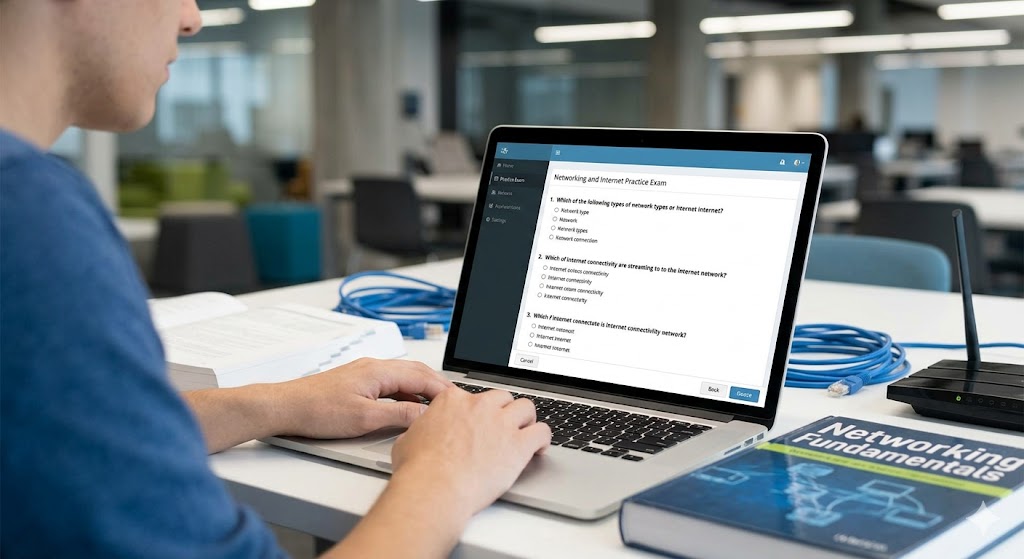
Additional Information
What the Course Entails and Exam Details
This examination covers a broad range of fundamental networking topics. Candidates must demonstrate knowledge of network architectures, including Local Area Networks (LANs) and Wide Area Networks (WANs). The syllabus includes deep dives into the OSI model, key protocols like TCP/IP, DNS, and DHCP, and standard network hardware such as routers, switches, and modems. Additionally, the exam evaluates understanding of IP addressing, both IPv4 and IPv6, network security basics, and common Internet connection technologies like fiber, cable, and DSL.
What to Expect in the Final Exam
The final certification exam typically consists of multiple-choice questions designed to assess both theoretical knowledge and practical application scenarios. Candidates generally have 60 to 90 minutes to complete the test, which often comprises 50 to 70 questions. While exact passing scores can vary by administering body, they typically range from 70% to 80%. The exam is proctored, and strict rules prohibit the use of external reference materials during the testing session. Specific practical, hands-on simulations may also be included to test real-world troubleshooting skills.
How to Study and Exam Centers
Preparation for this exam requires a structured approach. Start by thoroughly reviewing standard networking textbooks and taking detailed notes. Utilize official practice tests to familiarize yourself with the question format and identify areas needing further study. Hands-on experience is invaluable; consider setting up a basic home network or using network simulation software to practice configuring devices and troubleshooting connectivity issues. When you are ready, schedule your exam through authorized online portals, major testing centers like Pearson VUE, or accredited local technical schools and community colleges offering IT certification programs.
Job Opportunities from the Course
Earning this certification opens doors to several crucial entry-level IT roles. It validates the foundational skills necessary for success in the following positions:
Network Support Technician
IT Help Desk Specialist
Junior System Administrator
Field Service Technician
Network Administrator
Data Center Technician
Technical Support Engineer
Frequently Asked Questions
Reviews
5.0
Based on 0 reviews
Leave a Review
No reviews yet. Be the first to review!