
Neuromechanical Movement Stroke Rehab Practice Exam
$69.00
- Buy to unlock unlimited access to all Quiz questions and Answers in this Quiz.
- After purchase you can print a PDF of the whole quiz at any point. The PDF will contain the questions and the correct answers.
About this Exam
The Neuromechanical Principles, Movement Analysis, and Stroke Rehabilitation Strategies practice test is an advanced preparatory assessment tool. It is designed specifically for healthcare professionals looking to specialize or validate their expertise in neurological recovery. This practice exam targets Physical Therapists, Occupational Therapists, Kinesiologists, and specialized rehabilitation clinicians. It serves as a rigorous checkpoint to ensure mastery of the complex interplay between the nervous system and biomechanics during recovery from a cerebrovascular accident (CVA). By engaging with this practice material, candidates can identify knowledge gaps, refine their clinical reasoning, and build the confidence required for successful completion of their final certification or state licensure exams.
Ready to test your knowledge?
Buy Now to Access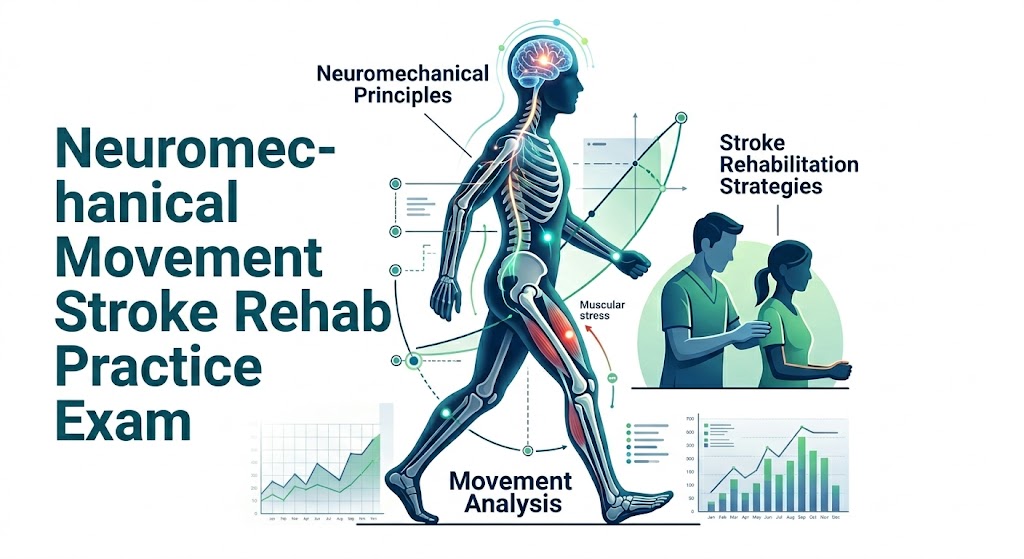
Additional Information
What the Course Entails and Exam Details
This practice test mirrors a comprehensive curriculum focused on restoring function following a stroke. The covered syllabus includes a deep dive into advanced Neuromechanical Principles, analyzing how the central nervous system controls muscle activation and force production during movement. A significant portion of the material centers on Movement Analysis, training clinicians to use observational and technology-based tools to evaluate pathological gait, reach patterns, and postural control. Finally, it tests proficiency in Stroke Rehabilitation Strategies, evaluating knowledge of evidence-based interventions like Constraint-Induced Movement Therapy (CIMT), neurofacilitation techniques, robotic-assisted therapies, and strategies to harness neuroplasticity for functional reorganization.
What to Expect in the Final Exam
While the final formal certification exam structure can vary by the issuing organization, this practice test simulates the most common professional format. Candidates preparing for the final exam should anticipate a rigorous session consisting primarily of multiple-choice questions, many of which are complex, case-based scenarios requiring clinical synthesis rather than simple recall. The final exam typically enforces a strict time limit, often averaging 60-90 seconds per question, demanding efficient processing. A passing score is generally set at 70% or higher, reflecting the need for a strong grasp of safe and effective advanced rehabilitation practices. Success necessitates not only knowledge of the material but also stamina and effective time management strategies.
How to Study and Exam Centers
The most effective approach to this practice test is to treat it as a diagnostical tool. Begin by taking the practice exam under simulated conditions: set a timer and minimize distractions. After completion, meticulously review not only the questions you got wrong but also those you answered correctly to ensure your rationale was sound. Utilize targeted study for identified weak areas by reviewing core textbooks on neurorehabilitation and kinesiology, watching movement analysis videos, and studying recent clinical practice guidelines for stroke.
For the actual certification or licensure exam that this practice test prepares you for, the location depends on the specific awarding body (e.g., the FSBPT for PTs or specific neurological specialty boards). These formal exams are typically administered at authorized, secure testing centers such as Pearson VUE centers or Prometric centers globally. Some organizations also offer live-remote proctoring, allowing you to take the exam from a secure, private location. Candidates must check the specific candidate handbook from their certifying organization for exact locations, booking procedures, and identification requirements.
Job Opportunities from the Course
Mastering the principles covered in this practice test unlocks advanced career paths and specialization opportunities within the rehabilitation field. Successfully navigating this complex subject matter demonstrates to employers a dedicated expertise that is highly valued in clinical settings. Job opportunities and career advancements unlocked by this level of expertise include:
Neurological Physical Therapist Specialist: Working in inpatient rehab or specialized outpatient clinics.
Physical Therapist: General PT with a valuable specialty focus on neurorehabilitation.
Neurological Occupational Therapist: Focusing on restoring activities of daily living and upper extremity function in stroke survivors.
Clinical Kinesiologist/Exercise Physiologist: Specializing in adapted exercise programs for neurological populations.
Neurorehabilitation Program Coordinator: Leading specialized stroke recovery teams.
Rehabilitation Researcher: Contributing to studies focused on movement analysis and new stroke recovery protocols.
Clinical Educator: Teaching advanced neuro-rehab concepts to therapists or students.
Frequently Asked Questions
Reviews
5.0
Based on 0 reviews
Leave a Review
No reviews yet. Be the first to review!