
Nevada C3 Wood-Destroying Pests Practice Exam
$69.00
- Buy to unlock unlimited access to all Quiz questions and Answers in this Quiz.
- After purchase you can print a PDF of the whole quiz at any point. The PDF will contain the questions and the correct answers.
About this Exam
Achieving your Nevada C3 Wood-Destroying Pests certification is a pivotal step for any professional aiming to specialize in structural pest control related to wood-destroying organisms (WDO) in the state of Nevada. This specific designation, overseen by the Nevada Department of Agriculture (NDA), is required for individuals who will be identifying, inspecting for, and applying treatments to control pests that can cause significant damage to structures. The C3 category covers a range of organisms that feed on or inhabit wood, from termites to carpenter ants and wood-boring beetles, as well as dry rot fungus. This practice exam is designed for aspiring pesticide applicators, current technicians looking to add this critical category to their license, or anyone in Nevada preparing to take the official C3 exam to demonstrate their competence and safety knowledge in this crucial area. It provides a valuable opportunity to test your understanding, identify areas for further study, and build confidence before the final, state-mandated test.
Ready to test your knowledge?
Buy Now to Access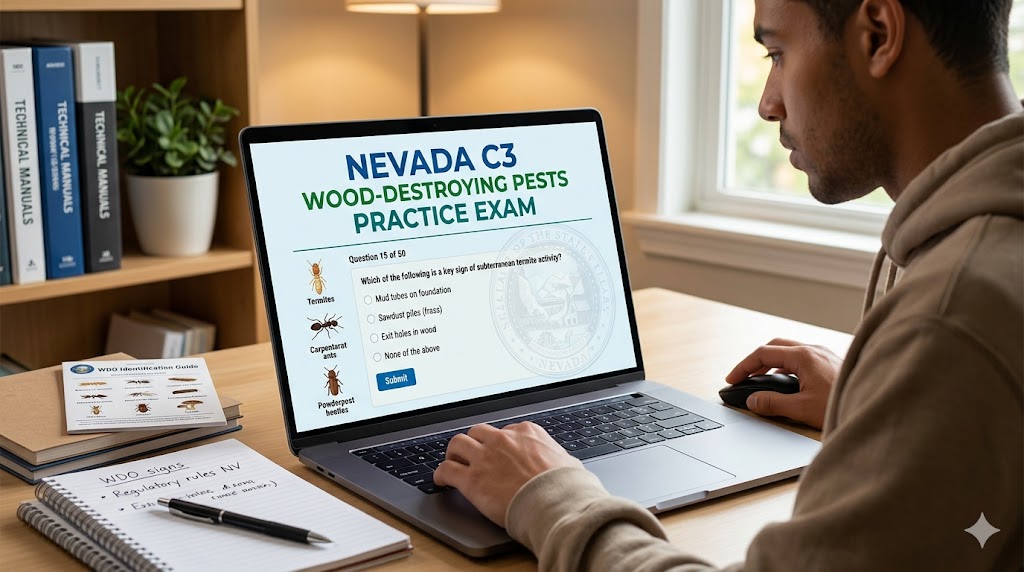
Additional Information
What the Course Entails and Exam Details
This certification process primarily assesses your knowledge and proficiency in effectively managing wood-destroying pests while adhering to safety and environmental regulations within Nevada. The official study materials and the exam itself will thoroughly cover several core topics:
Pest Identification: You must be able to accurately identify key wood-destroying organisms common in Nevada and surrounding areas. This includes termites (subterranean and drywood), various carpenter ants, powderpost beetles, old house borers, wood-boring bees, and types of wood-decay fungi like dry rot. Knowledge of their appearance, distinguishing characteristics, and developmental stages is essential.
Biology and Behavior: Understanding the life cycles, nesting habits, feeding preferences, and movement patterns of these pests is crucial for effective control. You'll learn about colony structure (where applicable), seasonal activity, and the conditions that favor infestations.
Signs of Infestation: The ability to recognize common signs of infestation is critical for both inspection and diagnostic purposes. Topics will include detecting frass (feces and wood particles), mud tubes, exit holes, damaged wood patterns, shelter tubes, and live or dead insects.
Inspection Methods and Reporting: Learn proper procedures for conducting thorough structural inspections for WDO, including identifying vulnerable areas, using inspection tools (flashlights, moisture meters, sounding devices), and preparing detailed inspection reports. Reporting accuracy is vital in real-world scenarios, especially for property transactions.
Control Strategies and Pesticide Application: This area covers integrated pest management (IPM) principles for WDO, including non-chemical controls (e.g., moisture control, physical barriers) and detailed knowledge of chemical treatments. You'll study different types of termiticides and insecticides (soil treatments, wood treatments, fumigants), their properties, application techniques (trenching, drilling, spraying, dusting), and required dilution rates. Fumigation principles and requirements specific to WDO control will likely be covered as well.
Nevada Pesticide Regulations: A significant portion of the exam will focus on Nevada-specific pesticide laws, rules, and licensing requirements for structural pest control with a C3 endorsement. This includes understanding applicator categories, application restrictions, record-keeping procedures, reporting requirements, and the consequences of violations. Federal laws and regulations may also be touched upon, particularly as they relate to specific product registrations or applications.
Pesticide Safety and Handling: Ensuring the safety of the applicator, the public, and the environment is paramount. This section covers proper personal protective equipment (PPE), safe transport and storage of pesticides, spill response procedures, first aid for pesticide exposure, environmental precautions to prevent contamination, and pesticide container disposal rules. Equipment calibration and maintenance for accurate application are also typically included.
Equipment Use and Calibration: You'll need to demonstrate understanding of common application equipment (spray rigs, injectors, dusters, etc.), their function, and the methods for calibrating them to ensure pesticides are applied at the correct and legal rates.
What to Expect in the Final Exam
While the exact structure can vary, the official Nevada C3 Wood-Destroying Pests final exam is generally a proctored, multiple-choice assessment designed to comprehensively test your knowledge across the entire syllabus. It is typically administered via computer at designated testing locations authorized by the Nevada Department of Agriculture.
Format: You will be presented with numerous questions, each with several possible answers, requiring you to select the best or most correct one. Some questions may involve diagrams, pest identification, or case scenarios.
Time Limit: The exam will be timed, providing a specific duration (often several hours) within which you must complete all questions. It's crucial to manage your time effectively and avoid getting stuck on a single question for too long.
Passing Score: Achieving a required minimum percentage correct is essential to obtain certification. The specific passing score (often around 70-75%) will be clearly communicated in advance and stated on the official Nevada Department of Agriculture or authorized testing provider's website. Be sure to confirm the exact passing requirements before taking the exam.
Rules: Standard testing protocols apply, meaning you will not be allowed to bring outside resources like notes, study guides, or electronic devices with you into the testing room. You must present valid identification, typically including government-issued photo ID. Cheating or violating testing rules can lead to disqualification and potentially severe licensing consequences. Ensure you are familiar with all rules provided when you register for the official exam.
Categories: The C3 exam is specifically for Wood-Destroying Organisms. You may also need to pass a core pesticide application exam (if not already held) or other category exams depending on your intended scope of work in Nevada. This practice exam specifically targets the C3 category content.
How to Study and Exam Centers
Obtain Official Study Materials: The single most important step is to get the official study manuals and materials recommended or provided by the Nevada Department of Agriculture (NDA). Check their website for current information and order or download necessary manuals. These are your primary source of state-specific information.
Take Practice Exams: Utilize reliable practice exams, like the one associated with this guide. Practice tests help you identify weak areas, understand the question style, and practice time management. Repeated practice can significantly build your confidence. Ensure you find sources tailored to Nevada and the C3 WDO category for maximum benefit.
Review the Syllabus Methodically: Break down the core topics (pest ID, biology, regulations, etc.) and create a structured study plan. Dedicate specific time slots to each area, focusing heavily on sections where you find practice questions challenging.
Create Flashcards: Flashcards are excellent for memorizing key terms, specific pest characteristics, scientific names, regulatory details, pesticide types, and safety procedures. Reviewing them regularly will reinforce your memory.
Study Diagrams and Visuals: Use diagrams of termite species, insect anatomy, infestation signs, and pesticide equipment to understand structures and appearance. WDO control often involves recognizing visual cues, so visual aids are vital.
Form a Study Group: Studying with peers preparing for the same or similar exams can be beneficial. Discussing topics, explaining concepts to each other, and sharing practice question resources can deepen understanding and keep motivation high.
Take Practice Tests Under Exam Conditions: Simulate the real testing environment when taking practice exams. Time yourself strictly, eliminate distractions, and try not to refer to notes to get a realistic assessment of your preparedness. Review incorrect answers thoroughly and understand why the correct option is right.
Regularly Review Regulations: Dedicate specific study time to memorizing and understanding Nevada-specific pesticide regulations for structural pest control. Use flashcards for regulatory specifics, such as record-keeping durations, notification requirements, and license categories.
Exam Centers and Registration:
The official Nevada Department of Agriculture pesticide applicator exams, including the C3 category, are typically administered at specific designated testing centers throughout the state.
Authorized Providers: Nevada often uses authorized private testing companies like Pearson VUE, which have standardized testing centers, or potentially specific sites designated by the NDA itself. Be sure to check the latest information on the NDA website for official details.
Registration Process: To take the official exam, you will usually need to first obtain approval or an authorization-to-test from the Nevada Department of Agriculture after submitting an application and meeting prerequisite requirements (e.g., possibly holding a relevant core license, though requirements can vary). Once authorized, you can register and schedule your specific exam date, time, and preferred location through the authorized testing provider's website or phone line. Be prepared to pay required exam fees.
Distinguish Prep from Official Exam: Remember that this practice exam can be taken online, but the actual final certification exam must be taken in person (or potentially via specific remote proctoring if available/authorized) at an official, state-approved test center with strict proctoring procedures. Ensure you distinguish between practice resources and the official licensing test.
Job Opportunities from the Course
Successfully achieving your Nevada C3 Wood-Destroying Pests certification unlocks specific career paths in the lucrative and essential structural pest control industry. Employers across the state seek licensed and specialized individuals for these crucial roles. Common job titles and opportunities include:
Pesticide Applicator (C3 Specialization): This is the most direct application of your license, allowing you to legally apply treatments for termites, carpenter ants, and other wood-destroying pests in homes and commercial properties.
Structural Pest Control Technician (WDO Specialist): Many pest control companies hire technicians with a focus on WDO, where you'll conduct inspections and carry out specific control strategies for wood-damaging organisms.
Termite Control Specialist: A role dedicated solely to the identification, prevention, and treatment of subterranean and drywood termites, utilizing specialized knowledge and equipment.
WDO Inspector: Some professionals focus primarily on performing detailed inspections of structures to detect signs of wood-destroying organism infestation, often preparing reports for property sales or maintenance purposes. Specific additional inspector training/licensure might sometimes be required beyond applicator certification depending on the exact scope and county regulations, but the C3 certification is a strong foundation.
Residential and Commercial Pest Control Specialist (WDO Focus): Larger pest control firms value having specialists on their teams to handle WDO issues effectively across various customer properties.
Pest Control Branch Manager: With significant experience, additional certifications, and potentially management training, you could progress to managing a local branch of a pest control company, overseeing staff and operations.
Business Owner (Pesticide Applicator/Contractor): For highly experienced individuals, full state licensure (often requiring more categories and business-specific qualifications) and meeting business requirements, owning and operating your own pest control business specializing in WDO control is a potential career apex. Note that starting a business requires significant investment, planning, and other necessary permits.
Frequently Asked Questions
Reviews
5.0
Based on 0 reviews
Leave a Review
No reviews yet. Be the first to review!