
New Brunswick Bar Practice Exam Guide
$69.00
- Buy to unlock unlimited access to all Quiz questions and Answers in this Quiz.
- After purchase you can print a PDF of the whole quiz at any point. The PDF will contain the questions and the correct answers.
About this Exam
The New Brunswick Bar Admission Program requirements are the final, critical step on the path to becoming a licensed lawyer in the province. This process is designed for law school graduates wishing to qualify as Barristers and Solicitors and become members of the Law Society of New Brunswick. For candidates seeking to maximize their chances of success, utilizing a comprehensive New Brunswick Bar Practice Exam is an essential element of their study strategy. These practice resources allow aspiring lawyers to refine their legal knowledge, practice ethical decision-making, and familiarize themselves with the style of questions they will encounter on the final assessments. Utilizing these tools is vital for proving competence and readiness to practice law in Canada’s only officially bilingual jurisdiction.
Ready to test your knowledge?
Buy Now to Access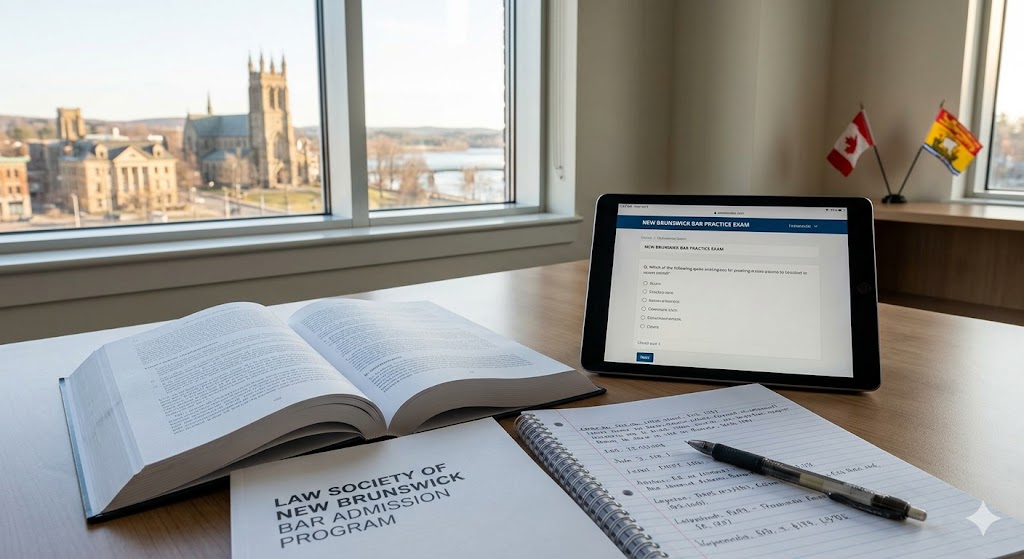
Additional Information
What the Course Entails and Exam Details
Preparing for the final assessments entails a rigorous review of several core legal areas specific to practice in New Brunswick. Candidates must master substantive law alongside procedural competencies to ensure they are practice-ready. The key curriculum topics covered generally include Business Law, Civil Litigation, Commercial Law, Criminal Procedure, Estates and Wills, Family Law, and Real Estate/Property Law. Crucially, a significant portion of the evaluation focuses on Professional Responsibility and Ethics, ensuring all candidates understand their duties to clients, the courts, and the public. Mastery of these subjects and the application of New Brunswick and federal statutes are required to succeed.
What to Expect in the Final Exam
While the exact structure of the Bar Admission Program assessments may evolve, candidates should be prepared for a multi-component evaluation that tests both knowledge and practical skills. The assessments are notoriously challenging and require strict time management. Unlike some other jurisdictions, the actual New Brunswick admission process historically places emphasis on reading material and completing course-related work before a final assessment period. Evaluation methods often include practical skills testing, open-book assignments, and a timed examination focused heavily on Ethics and Professional Responsibility. Candidates are usually permitted to have certain annotated materials with them during these assessments.
How to Study and Exam Centers
Effective study starts with a consistent schedule and thorough review of the materials provided by the Law Society of New Brunswick. Do not merely read the material; actively create detailed indices and study notes to help you locate information quickly during the actual exam, as these assessments are often open-book but strictly timed. The single most valuable study strategy is to repeatedly take the New Brunswick Bar Practice Exam under timed conditions. This simulation builds stamina and helps identify specific knowledge gaps. Reviewing detailed explanations for practice questions is crucial for understanding the "why" behind the correct legal application. The real Bar Admission course and final assessments are typically administered directly by the Law Society of New Brunswick at their designated facilities or in specified academic settings in Fredericton or Moncton, with dates and locations announced annually to enrolled candidates.
Job Opportunities from the Course
Successfully completing the Bar Admission requirements and the final evaluations leads to a range of prestigious and impactful career opportunities in New Brunswick. Licensure opens the door to becoming:
Associate Lawyer at a Private Law Firm (ranging from solo practices to large regional or national firms).
Crown Prosecutor.
Legal Aid Lawyer.
In-House Corporate Counsel for businesses operating in the province.
Government Legal Counsel working with provincial or federal ministries.
A specialized Barrister & Solicitor focusing on areas like Family, Criminal, Corporate, or Environmental Law.
Policy Analyst or Legal Advisor for non-profit organizations or regulatory bodies.
Frequently Asked Questions
Reviews
5.0
Based on 0 reviews
Leave a Review
No reviews yet. Be the first to review!