
New York State Class A/B UST Operator Practice Exam Study Guide
$69.00
- Buy to unlock unlimited access to all Quiz questions and Answers in this Quiz.
- After purchase you can print a PDF of the whole quiz at any point. The PDF will contain the questions and the correct answers.
About this Exam
The New York State Class A/B Underground Storage Tank (UST) Operator Certification is an essential credential for individuals responsible for the operation and maintenance of underground storage tank systems. This includes gasoline stations, convenience stores, and industrial facilities. The primary goal of this certification is to ensure compliance with stringent environmental regulations and safety standards. Operators are trained to prevent, detect, and respond to releases from USTs, thereby protecting groundwater and public health. This practice exam is designed for current operators looking to re-certify or individuals seeking new career opportunities in the environmental compliance sector within New York State.
Ready to test your knowledge?
Buy Now to Access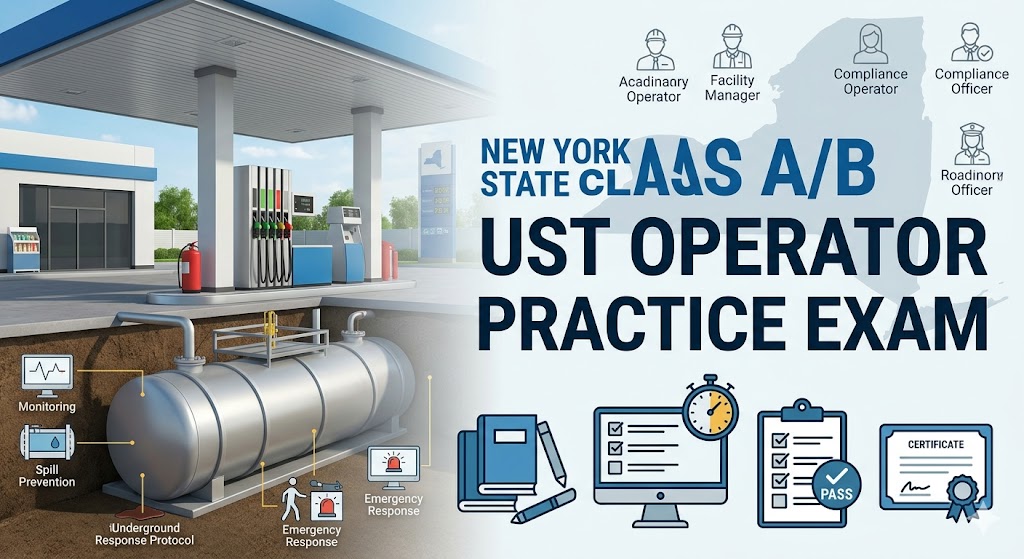
Additional Information
What the Course Entails and Exam Details
The certification course covers comprehensive knowledge and skills required for Class A (Operator) and Class B (Site operator) responsibilities. Key topics include:
Understanding New York State regulations (e.g., 6 NYCRR Parts 613-6) and EPA rules.
Spill prevention methods, including proper filling and unloading procedures.
Overfill protection systems and operational requirements.
Release detection methods, monitoring technologies, and testing protocols.
UST system equipment inspection and record-keeping procedures.
Emergency response planning and initial actions for releases or spills.
UST system closure requirements and site assessments.
Record-keeping and reporting procedures for compliance purposes.
The exam itself is a multiple-choice assessment designed to test your understanding of these critical areas.
What to Expect in the Final Exam
The final New York State Class A/B UST Operator certification exam typically consists of multiple-choice questions developed from the official curriculum and regulatory documents. While specific details may vary, the passing score is usually set by the New York State Department of Environmental Conservation (NYS DEC) or the examining authority.
Prepare to navigate questions that cover regulatory requirements, technical concepts, and operational scenarios. It's a closed-book examination, meaning no external resources or materials are allowed during the test.
Maintain focused time management to complete all sections of the exam within the allotted time frame. The questions are designed to challenge your understanding and application of safety and compliance principles rather than simple recall.
How to Study and Exam Centers
Effective preparation for the Class A/B UST Operator Practice Exam requires a structured approach. Here are actionable study strategies and information on taking the exam:
Review Official NYS DEC Guides: The official New York State DEC guidelines and regulatory documents are your foundation. Ensure you are familiar with relevant parts of 6 NYCRR Parts 613-6.
Utilize Authorized Online Portals: Many certifications and exams are managed through official online portals authorized by the DEC. Registration for the exam and official practice materials may be available there.
Take Practice Exams: Dedicate time to multiple-choice practice exams. These simulate the actual test experience, helping you identify areas where you need further study.
Access Authorized Schools and Training: While specific physical centers are less common for this type of test compared to general standardized tests, authorized schools and specific environmental consulting firms in New York State provide approved training and occasionally proctored exams.
Contact NYS DEC Directly: Always refer to the official New York State Department of Environmental Conservation (DEC) website for the most accurate information on current exam providers, official testing procedures, and contact details for questions regarding locations.
Job Opportunities from the Course
Earning your New York State Class A/B UST Operator Certification can lead to rewarding career paths in the environmental and facility management sectors. Specific job opportunities and career directions include:
Underground Storage Tank Operator (Class A/B): Directly manage compliance and operation for facilities with USTs.
Environmental Compliance Officer: Monitor and enforce adherence to environmental regulations for companies in the energy or logistics sectors.
Facility Manager: Oversee all operations, maintenance, and compliance for properties with fueling or chemical storage, such as transportation hubs or industrial parks.
Convenience Store Manager with Fueling Stations: Take on increased responsibility and higher salary potential by managing fueling operations in addition to general store functions.
Fleet Manager: For companies with their own fueling operations, ensure your fleet is fueling safely and in regulatory compliance.
Environmental Consultant: Advise other businesses on achieving compliance and managing environmental risks related to UST operations.
Regulatory Agency Inspector: Use your knowledge from the operator perspective to pursue roles within regulatory bodies like the NYS DEC.
Frequently Asked Questions
Reviews
5.0
Based on 0 reviews
Leave a Review
No reviews yet. Be the first to review!