
New Zealand CPL Meteorology Practice Exam
$69.00
- Buy to unlock unlimited access to all Quiz questions and Answers in this Quiz.
- After purchase you can print a PDF of the whole quiz at any point. The PDF will contain the questions and the correct answers.
About this Exam
The New Zealand CPL Meteorology (MET) exam is a crucial step for aspiring pilots seeking to obtain their Commercial Pilot License (CPL) in New Zealand. This exam tests candidates' knowledge and understanding of meteorological principles and their application to aviation. It is designed for individuals who have already completed their Private Pilot License (PPL) and are aiming to advance their career in the aviation industry, enabling them to operate commercial aircraft safely and efficiently.
Ready to test your knowledge?
Buy Now to Access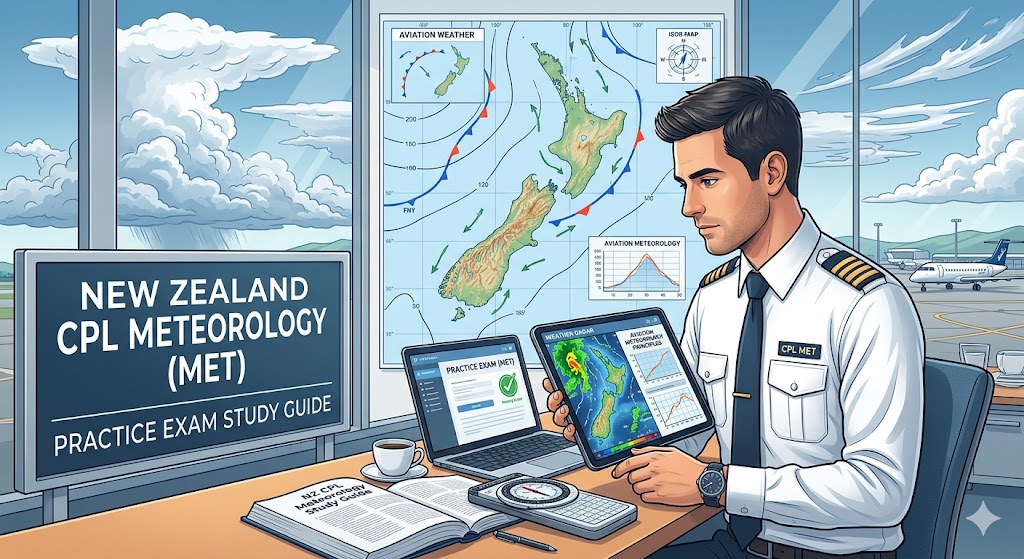
Additional Information
What the Course Entails and Exam Details
The CPL Meteorology course covers a wide range of topics essential for commercial pilots. These include:
Atmospheric physics: Understanding the composition, structure, and behavior of the atmosphere.
Weather systems: Analyzing different types of weather systems, such as fronts, depressions, and anticyclones.
Meteorological hazards: Identifying and mitigating weather-related hazards, including turbulence, icing, and low visibility.
Aviation weather forecasts and reports: Interpreting and utilizing various meteorological information sources, such as METARs, TAFs, and ARFORs.
Meteorological satellite and radar imagery: Using satellite and radar data to assess weather conditions.
Flight planning and decision-making: Applying meteorological knowledge to flight planning and operational decisions.
The exam itself is a written assessment that evaluates candidates' understanding of these topics. It typically consists of multiple-choice questions and may also include short-answer or essay questions.
What to Expect in the Final Exam
The New Zealand CPL Meteorology exam is a comprehensive assessment that requires a thorough understanding of the subject matter. Candidates can expect a challenging exam that tests their ability to apply theoretical knowledge to practical aviation scenarios. The exam format typically involves:
Multiple-choice questions: These questions test candidates' knowledge of factual information and their ability to identify correct answers from a range of options.
Short-answer questions: These questions require candidates to provide concise and accurate answers to specific questions.
Essay questions: These questions assess candidates' ability to analyze and synthesize information and present their arguments in a structured and coherent manner.
The passing score requirement for the CPL Meteorology exam is typically 70%. The exam has a time limit, which varies depending on the specific exam format. Candidates should be prepared to manage their time effectively during the exam.
How to Study and Exam Centers
Effective study strategies are essential for success in the CPL Meteorology exam. Candidates should:
Review the syllabus: Familiarize themselves with the course content and focus their studies on the key topics.
Use study materials: Utilize textbooks, online resources, and practice exams to enhance their understanding of the subject matter.
Attend ground school: Consider enrolling in a ground school program that provides comprehensive coverage of the CPL Meteorology course.
Form study groups: Collaborate with other students to discuss concepts and share study materials.
Take practice exams: Regularly take practice exams to identify areas where they need improvement and to become familiar with the exam format.
The New Zealand CPL Meteorology exam is typically administered at authorized testing centers across New Zealand. Candidates can find a list of approved testing centers on the Civil Aviation Authority (CAA) website.
Job Opportunities from the Course
Obtaining a Commercial Pilot License (CPL) with a strong foundation in meteorology opens up a wide range of job opportunities in the aviation industry. These include:
Commercial Pilot: Flying for airlines, charter companies, or corporate flight departments.
Flight Instructor: Teaching aspiring pilots and sharing their knowledge of aviation.
Air Traffic Controller: Managing air traffic and ensuring safe aircraft operations.
Aviation Safety Inspector: Conducting inspections and ensuring compliance with aviation regulations.
Meteorologist: Specializing in aviation meteorology and providing weather forecasting services for the aviation industry
Frequently Asked Questions
Reviews
5.0
Based on 0 reviews
Leave a Review
No reviews yet. Be the first to review!